
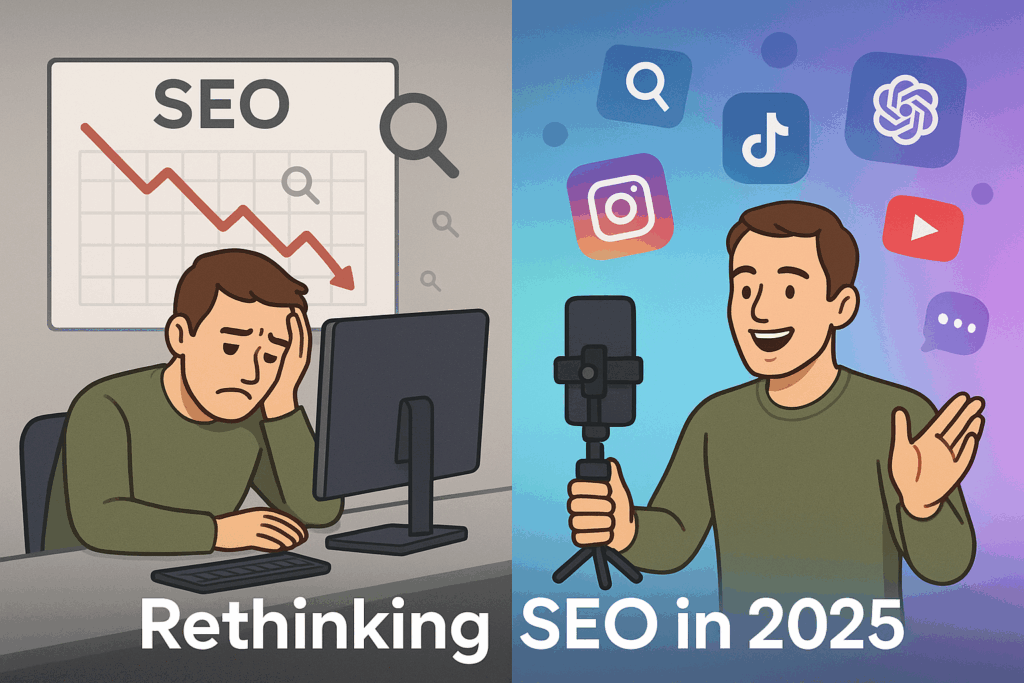
SEO isn’t the right strategy for every business. If no one is searching for your product or service, investing in SEO won’t deliver results. For businesses with novel or unique offerings, outbound marketing through social media videos typically performs better. However, as AI assistants like ChatGPT change how people find information, a new optimization strategy focused on AI citations is becoming essential.
Table of Contents
ToggleWhen SEO is a Waste of Money
The determining factor is simple: are people going to Google and searching for what you offer?
SEO only works when there’s existing search demand. If your product doesn’t have an established name or category that users search for, traditional SEO won’t drive traffic. As one industry analysis notes, “you might launch a great product, but if it’s named in a way no one searches for, it won’t surface where it should.”
Key indicators that SEO is the wrong strategy:
- No obvious keyword or category: Your product doesn’t fit a recognized category that people type into search engines
- Zero search volume: Keyword tools show near-zero searches for your product name and related terms
- No existing content: Google finds almost no pages about your product or similar offerings
- Novel product: Few people know your product exists until they see it
Even if you rank #1 for your product name, hardly anyone will find you when there’s no search demand.
@tjrobertson52 SEO might be wasting your money 💸 Here’s what works instead for unique products #MarketingTips #SEO #SmallBusiness
♬ original sound – TJ Robertson – TJ Robertson
Why Broad Keywords Don’t Work Either
When businesses can’t rank for their specific product, they often try targeting broad, competitive keywords. This rarely works.
Take terms like “personalized gift ideas” or “unique gifts.” These face three major problems:
Unrealistic ranking chances: Large publishers and e-commerce giants dominate these terms. A small business has a minimal probability of outranking established players.
Extreme advertising costs: Bidding on broad keywords is “prohibitively expensive” because larger competitors outspend small businesses. You’ll burn budget for little return.
Poor targeting: Broad keywords drive generic traffic. People searching “gift ideas” are often browsing for inspiration, not ready to buy. Conversion rates stay low.
Additionally, AI assistants are increasingly answering these broad queries directly. Users get their answer from ChatGPT or Google’s AI overview without clicking on any website. A Gartner forecast projects that by 2026, Google’s search volume could drop 25% as people shift to AI search.
What Works Instead: Social Media Video Strategy
If customers aren’t searching for you, you need to grab their attention. The most effective approach combines organic testing with targeted advertising.
Here’s the proven process:
Create Multiple Short Videos
Film 8-12 engaging videos (10-30 seconds each) showing your product in action. Demonstration videos work because they keep viewers engaged and communicate usefulness. Show the product solving a problem rather than just describing features.
Post Organically Across Platforms
Publish these videos on TikTok, Instagram Reels, YouTube Shorts, and Facebook without paid promotion. Monitor which videos get the most views, likes, and shares. Starting with organic content builds visibility and gathers audience insights at low cost.
Promote the Top Performer
Identify your single most engaging video. Create a 15-second version with a strong call to action. Run it as a targeted ad on the platform where you found the most interest.
This “test many, boost the best” strategy helps you avoid wasting money on unproven ads. You focus the budget only on what already works.
How to Structure Your Product Videos
Your videos must capture attention quickly and demonstrate value. Keep these elements in mind:
Show the product solving a problem: Start by visually showcasing your product in use. Highlight its unique benefit. This demo approach keeps viewers engaged.
Be concise and focused: Keep videos short (10-30 seconds). High-converting demo videos are “concise and focused on solving specific problems”. This avoids confusion and quickly shows why viewers need your product.
Include a strong call to action: End with an explicit next step. A powerful video CTA is “short and simple” and aligns with your video’s message. Use commands like “Buy now,” “Learn more,” or “Try it free.”
The Future: AI Optimization
As more people turn to AI assistants for recommendations, a new optimization strategy is emerging.
When someone asks ChatGPT for personalized gift ideas, the AI doesn’t just search once. It runs multiple hyper-specific searches across traditional search engines, looking through hundreds of pages to find the perfect recommendation for that particular user’s situation.
This creates opportunity. Instead of competing for broad keywords, you can:
- Identify reference pages: Determine which pages ChatGPT and other AI assistants cite when making recommendations in your industry
- Build mentions: Get your product or brand mentioned on these authoritative pages
- Create comprehensive content: Develop detailed content that answers specific questions AI models might encounter
This is what’s called Generative Engine Optimization (GEO). Unlike traditional SEO, which focuses on ranking positions, GEO focuses on being cited by AI’s answer. Success means “getting your content referenced or cited in the AI’s answer (brand presence in answers).”
Authoritative content has become the cornerstone of GEO success. AI models prioritize highly credible sources. This often means getting your product featured on other high-authority publishers, knowing that AI might cite those pages when giving recommendations.
Right now, the competition for AI visibility is low. This creates a window of opportunity to increase your presence before others catch on.
Where to Focus Your Marketing Budget
The answer depends on your timeline and goals.
Paid social ads deliver faster results. You can target users and drive conversions immediately. However, this requires ongoing spend. Paid marketing ROI is “short-term” and drops off as soon as you stop running ads.
AI optimization is a long-term play. You invest time and content now for benefits later. Organic strategies build trust and visibility that persist without continuous spending. Over time, this can grow your visibility at a lower marginal cost.
For new products, a balanced approach works best:
- Use a significant portion of the budget for social media ads now to quickly learn what messaging works and drive initial sales
- Allocate some resources to building AI-optimized content to lay the groundwork for future traffic
- Skip traditional SEO unless people are actively searching for your product category
As one analysis notes, paid ads give immediate payoff while AI/content investment is a future-proof hedge against the coming shift in search habits.
Making the Right Decision
Before investing in SEO, ask yourself one question: are people currently searching for what I offer?
If the answer is no, redirect that budget toward:
- Creating and testing short social media videos
- Running targeted ads with your best-performing content
- Building presence on pages that AI assistants reference
SEO remains valuable for established products and services with existing search demand. But for unique or novel offerings, outbound marketing delivers better returns.
The marketing landscape is shifting toward AI-powered recommendations. The businesses that adapt early by combining social media presence with AI optimization will have the advantage.
Need help determining the right marketing strategy for your business? TJ Digital specializes in both traditional SEO and emerging AI optimization tactics. We’ll analyze your specific situation and recommend the approach that will actually drive results. Contact us for a free consultation.