
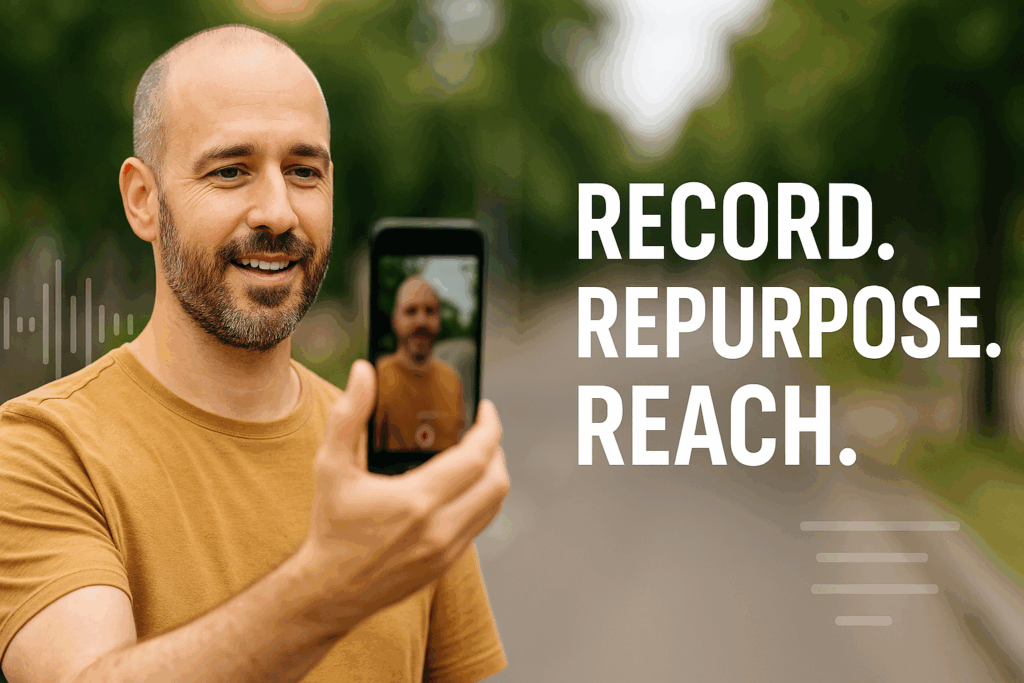
If you’re a business owner, you should be making videos. Short-form video is the most effective form of marketing right now, and it’s easier than you think. You can record a video like this in less than 20 minutes. That single video can then be repurposed into 10 pieces of high-quality content.
This isn’t just good for TikTok and YouTube. It’s also the best way to rank in Google and get recommended by AI platforms like ChatGPT. At our agency, it’s the only form of marketing we do for ourselves, and we’ve consistently had more leads than we can handle.
The people who reach out already know me because they’ve watched my videos. I don’t have to sell them on anything. The trust is already built.
Table of Contents
ToggleWhy Short-Form Video Works Better Than Long-Form
I’m talking about short-form video specifically. These are videos where you hold your phone in front of you and talk. Vertical format. Typically under four minutes.
Long-form horizontal videos can be effective, but they require a huge time investment. Short-form is easier to make, and every algorithm is pushing it right now. TikTok, Instagram, YouTube Shorts, LinkedIn, Facebook. They all want short-form video.
The reliability matters too. Your videos might not go viral, but they’ll get a predictable amount of views from people who could become your customers.
@tjrobertson52 How to Make Marketing Videos for Business in under 20 minutes. No fancy equipment. Just your phone and what you already know. Drop a 💯 if you’re finally gonna start! #videomarketing #businessowner #contentcreation #marketingtips
♬ original sound – TJ Robertson – TJ Robertson
The Biggest Mistake Business Owners Make
The biggest mistake people make when they start recording videos is putting way too much effort into it. I mean 10 or 20 times as much effort as they should be putting in.
Here’s the real tragedy: that extra effort actually makes their videos less effective.
Professional, polished videos fall flat. Research shows that audiences have seen too many glossy campaigns that promised perfection but delivered something mediocre. Overproduced content creates skepticism. Viewers treat it as a warning sign that a brand cares more about image than substance.
What works is real, authentic videos that respect the viewer’s time. People connect with people, not brands. 86% of consumers say authenticity matters when deciding which brands to support.
You Don’t Need Fancy Equipment
Don’t worry about professional equipment or a perfect setting. Just pull your phone out and record wherever you are. Walking around. Sitting in your car. At your desk. The more organic it feels, the easier it is to gain the viewer’s trust.
You’re also busy. Find a way to work this naturally into your day. I walk my dog every morning, so that’s when I record most of my videos. Five minutes a day is all it takes once you get comfortable.
How to Talk Naturally on Camera
The number one objection I hear is: “But TJ, I’m not like you. I can’t just talk naturally into the camera.”
Yes, you can. You already do it. Zoom calls. FaceTime. Video messages. You know how to talk into a camera. You’re just getting in your own head about it.
The cure is to start recording. Your first 10 videos will probably be a little rough. That’s fine. Eventually, it feels natural. And here’s the thing: I’m not talking for minutes straight either.
Look at how often my videos cut. I’m rarely talking for more than five seconds at a time.
Record One Phrase at a Time
You don’t need to know everything you’re going to say before you start recording. You just need to know what the next sentence is. Sometimes just the next half a sentence.
Here’s my actual process: record one phrase at a time. Give yourself plenty of time to think. If it doesn’t come out right, record it again. I often do two or three takes of a line before I get it right.
This jump-cut technique is standard in short-form content. Viewers are accustomed to it. It actually helps keep attention because the slight visual shifts create natural pattern interrupts.
The benefits:
- No big retakes. Mess up a line? Just re-record that one sentence.
- Less stress. Deliver each line with your best energy without worrying about remembering what comes next.
- Natural engagement. The jump cuts create snappier pacing.
Editing Takes 10 Minutes, Not Hours
You’re probably thinking this will take forever to edit. It won’t.
Modern video editors like Descript use AI to automatically remove retakes and shorten word gaps. TimeBolt claims it can remove silence and jump cut an hour of video in 13 seconds.
Even with all my pauses and retakes, the average video only takes about 10 minutes to edit. The software handles the grunt work of cutting silence and bad takes. What might have taken an hour now takes 10-15 minutes.
You don’t need to be an editing expert. Just let the AI do the initial cleanup, then do a quick pass to add captions or any overlays.
What to Talk About in Your Videos
The best ideas usually come from you. Try to think of a message that feels most important for your audience to hear right now. Something they would actually care about. Something where you can offer real value.
Common sources of inspiration:
- Questions you were recently asked by a customer
- Advice you found yourself giving to a potential customer or team member
- Something new you’re doing at your business
- Something new in your industry
If you’re our client, we’ll give you a big list of topics and hook ideas tailored to your business. But often the best content comes from paying attention to your daily interactions.
Every question a customer asks is likely something others wonder too. When you answer those questions on video, you demonstrate expertise and show you’re listening.
Don’t fall into the trap of thinking you can only use each topic once. You can and should use your most important topics over and over. Think of your favorite creators. I bet you can name a few things they always talk about. You’re probably not sick of hearing it because those are the most important things, and they talk about it a little differently each time.
Also, no one’s going to watch all of your videos.
Pick One Audience and Stick With It
It’s important to have an audience in mind. Some businesses have multiple audiences. I recommend picking one.
If you consistently create content that’s interesting to the same audience, the algorithms get really good at showing your content to those people. If different videos target different audiences, you’ll confuse the algorithm, and your videos will fall flat.
The Hook Is Everything
The hook is the first one to two seconds of your video. This is where the viewer decides if they’re going to watch or swipe away.
Here’s why it matters: video platforms care about one thing. Keeping users on the platform. When the algorithm decides which video to show someone, it’s looking for the video most likely to keep them engaged.
The primary metric is viewer retention. How much of your video does the average person watch before swiping away? Right below your video are a million other videos perfectly tuned for that user. You only have a few seconds to convince them to watch yours.
In those seconds, you need to do two things:
- Signal that this video is relevant to them
- Promise some value coming at the end
Make them feel like they’ll miss out if they swipe away.
Create a Curiosity Gap
By promising value that’s coming later, you create what’s called a curiosity gap. This is an open loop or unanswered question that makes viewers feel compelled to keep watching.
For example: “The one thing you should never do when negotiating is…” without immediately saying what it is. Or: “This trick will change how you think about hiring…” without giving away the trick yet.
Research shows that curiosity gap hooks can dramatically boost watch time. One analysis found they increase average watch time by 145% on YouTube Shorts.
In the simplest form: open the curiosity gap with your hook, then close it at the end of the video. If you have more to say after closing that gap, open a second curiosity gap before closing the first one.
Don’t Bore Your Viewers
Once you have your hook and curiosity gap, the most important thing is to respect the viewer’s time.
Your viewers will forgive you for a lot of things. They won’t forgive you for being boring.
Pack the video with as much value as possible. Cut anything that doesn’t add value. Get to the point.
One Video Becomes 10 Pieces of Content
Here’s what makes short-form video so powerful for business owners: repurposing.
That 20-minute investment in creating a short video can yield content for multiple platforms. You can turn one video into:
- Posts on TikTok, Instagram Reels, YouTube Shorts, LinkedIn, and Facebook
- A blog post using the transcript
- Social media text posts pulling key insights
- Newsletter content
- Reddit posts (on subreddits where your audience hangs out)
Repurposing video into text helps people who prefer reading, and it gives search engines content to index, boosting your SEO.
What makes this work is that the content comes from you. It has your actual insights, your voice, your expertise. AI can help format and distribute it, but the substance is yours. That’s exactly what Google and AI platforms are rewarding right now: unique, firsthand insights that can’t be fabricated.
Short-Form Video Helps You Rank in Google and AI
This isn’t just about social media. Short-form video is the best way to create content that ranks in traditional search engines and gets recommended by large language models like ChatGPT.
Google often features videos in search results, especially for how-to queries. When you repurpose your video into text with a transcript and blog post, you give search engines keyword-rich material to index.
AI platforms are also learning to use video content when answering queries. Google’s Search Generative Experience can point to specific video timestamps that answer a question. The trend is clear: video content with good transcripts and descriptions becomes highly visible to AI systems.
Just Start Recording
At this point, I’ve probably given you a lot to think about. You might be feeling overwhelmed. Please don’t let that stop you.
Keep in mind that no one does this perfectly. Most creators aren’t even thinking about any of this structure. More important than following the best practices is doing it in a way that feels authentic to you. Something you actually enjoy.
You started your business because you wanted to help people solve a specific problem. This is just one more way to help those people.
Here’s my challenge: forget everything I just said and go record a video. Assume it’s going to be terrible. You don’t even have to post it if you don’t want to. Commit to making 10 or 20 terrible videos first.
The good news? If it really sucks, the algorithm won’t show it to anyone anyway.
Just start. Your first 10 videos are for practice. No one will see them. And eventually, one of them will hit. Then you’ll start understanding what resonates with your audience.
Need Help Getting Started?
If you want to record videos but don’t have time to edit, distribute, and repurpose them, that’s what we do. We can edit your videos, distribute them to up to 10 platforms, and turn each one into multiple pieces of content that sound like you wrote them yourself.
Contact us for a free consultation on building a video content strategy for your business.