
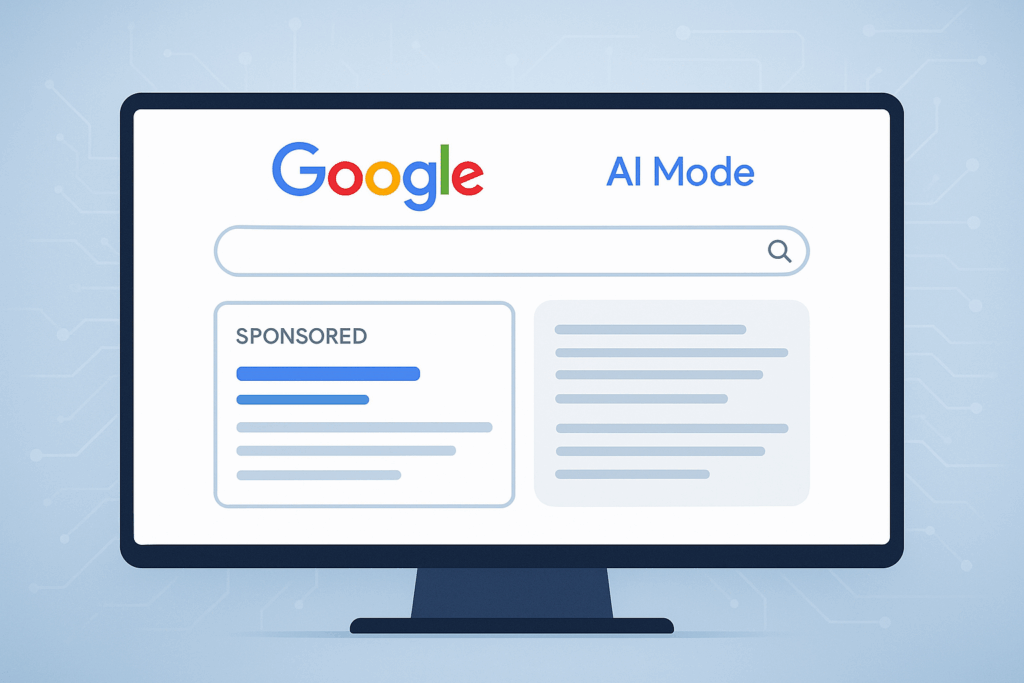
Google has started showing ads in its AI results. If you’ve been paying attention, you knew this was coming.
Google’s AI Mode will likely replace traditional search results over time. The question was never if Google would put ads in AI Mode, but how they would do it. The good news: they’re doing it the right way, at least for now.
Table of Contents
ToggleWhy Google Ads in AI Mode Was Inevitable
Google makes the vast majority of its money through advertising. Over 75% of Alphabet’s revenue comes from ads. Some people speculated Google might switch to a subscription model like ChatGPT, but anyone who’s actually managed Google Ads campaigns knew that would never work.
Here’s why: when someone clicks on a Google ad, Google makes between $0.25 and $25 per click. For high-value keywords in finance, legal, or insurance, they can make $30 to $50 or more per click. In rare cases, a single click generates over $100.
You might think nobody clicks on ads. Actually, upwards of 10% of clicks go to ads.
There’s no subscription Google could offer that would come close to this revenue. ChatGPT Plus costs about $20 per month. That’s $240 per year per user. A single high-intent searcher clicking ads throughout the year generates far more than that. The math doesn’t work for subscriptions at Google’s scale.
So it always had to be ads inside the AI response.
@tjrobertson52 Google Ads in AI Mode are here. Anyone running ads knew this was coming. Why it’s the best case scenario 👇 #GoogleAds #AISearch #DigitalMarketing
♬ original sound – TJ Robertson – TJ Robertson
Why This Is Actually Good News
The reason I say this is the best-case scenario: the ads are clearly marked as ads, separate from the rest of the AI response.
Google has confirmed that any ads shown within AI Overviews carry a prominent “Sponsored” label. This is the same labeling standard they use for traditional search ads.
The worst-case scenario would be brands paying Google to be recommended by the AI response without a clear sponsored label. If Google did that right now, the backlash would be too huge for it to make sense.
That said, Google now has the lead in AI search, and they’re progressing faster than competitors. There’s a possible future where we all become so dependent on Google’s AI that it could allow brands to purchase influence within the AI response itself. I still think that’s unlikely, but it’s worth watching.
For now, we should be happy to see clearly labeled ads within Google’s AI responses.
The Hidden Influence Risk
Here’s the concern worth understanding: when an AI answer reads like natural advice, an embedded promotion could be very subtle.
If a generative answer to “How to clean a pool” suddenly includes a specific pool vacuum brand, users might assume it’s a neutral suggestion. Even with a “Sponsored” tag, it’s easy to overlook in a chat-style flow.
Google insists its AI text isn’t biased by ad dollars. But without strong disclosure, there’s a real danger that some AI answers could become covert adverts dressed as content. This is something to watch as AI search evolves.
Could This Revitalize Google Ads Performance?
Anyone who’s been running Google Ads has probably seen a decline in performance over the last few years. I think this is primarily due to increased competition. More businesses are putting more budget into Google Ads, which drives up costs.
But these new ads appearing in AI Mode could change things.
AI context can make ads more relevant and prominent. When ads appear inside AI Overviews, they’re matched to nuanced queries in ways traditional search ads weren’t. Google reports that AI-enhanced ad campaigns are delivering measurable results. Travel site Kayak, for example, achieved a 12% lift in conversion value using Google’s new AI-driven campaigns.
We’ll have to wait and see how it plays out, but we could have a second golden era for Google Ads. Highly targeted ads meeting users at the exact moment of intent could outperform what we’ve seen in traditional search.
What About AI Search vs. Traditional Search?
Some worried that AI search would cannibalize Google’s ad business. The opposite appears to be happening.
Google CEO Sundar Pichai reported that AI features drove over 10% more queries on Google in Q2 2025. Rather than replacing search, AI is encouraging people to search more and ask new kinds of questions.
Google’s strategy is two-pronged: AI Overviews provide mainstream summaries atop results, while AI Mode offers conversational search. Both add new use cases. They coexist with standard blue-link results, keeping the traditional search engine intact for now.
The goal is to keep Google as the default information gateway. AI features help them compete with ChatGPT and Perplexity while retaining what makes search valuable.
What This Means for Your Business
If you’re running Google Ads or considering it, here’s what matters:
The fundamentals haven’t changed. Google Ads still requires good targeting, compelling ad copy, and landing pages that convert. AI Mode doesn’t change that.
Context may improve performance. Ads appearing in AI responses are matched to user intent in more nuanced ways. This could mean better qualified clicks.
Clear labeling protects trust. As long as ads remain clearly marked, users will still trust the AI responses. This is good for everyone.
Watch for changes. Google’s approach will evolve. Stay informed about how ads are being integrated and whether labeling standards shift.
The businesses that will benefit most are those already running well-optimized campaigns. AI Mode creates new inventory and new ways to reach customers at the moment they’re ready to buy.TJ Robertson is the founder of TJ Digital, a digital marketing agency focused on AI optimization and Google Ads management for small to medium businesses. Contact us to discuss how these changes might affect your advertising strategy.