
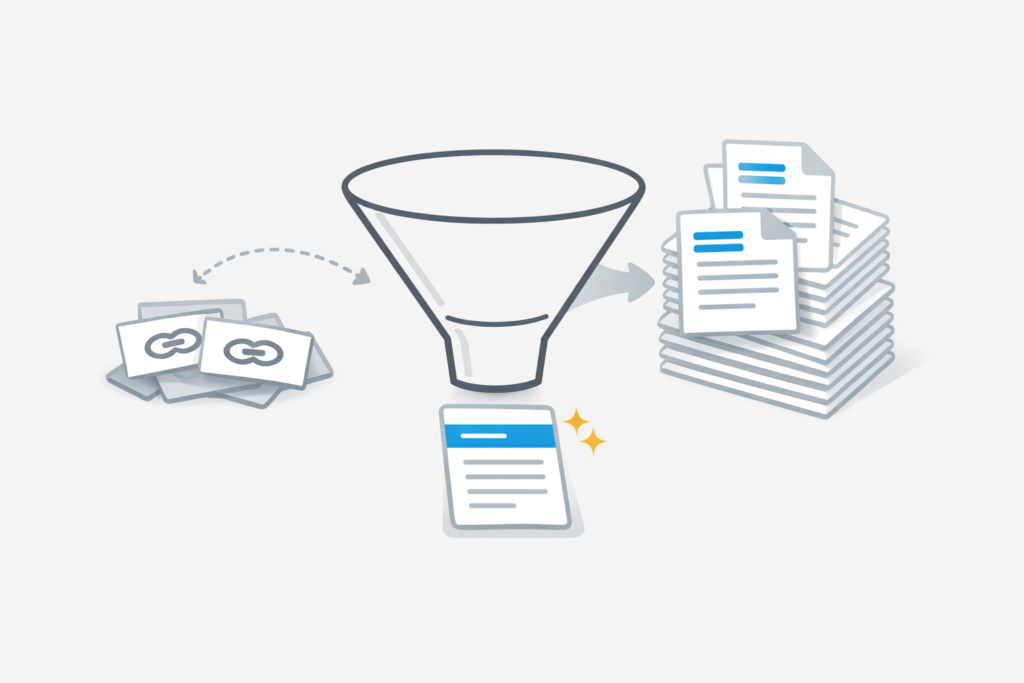
Most people doing GEO (Generative Engine Optimization) right now are spending 80% of their time on the wrong thing. They’re trying to get their brand mentioned on pages that AI models already cite. The far more effective approach is to create new pages that replace those citations entirely.
At TJ Digital, we spent about six months learning this through trial and error. We kept trying to get client recommendations onto already-cited pages, and the results were underwhelming. Then we flipped our strategy. Now we spend roughly 80% of our time creating content and only 20% chasing existing citations. The results have been significantly better.
I’ve been doing SEO for 17 years. A lot of GEO overlaps with traditional SEO. But the differences are where the real opportunity is. So let’s talk about what’s actually different and how to take advantage of it.
Table of Contents
ToggleHow AI Search Actually Works
@tjrobertson52 The best way to do GEO? Stop chasing pages that already rank. Create content that REPLACES them. Most SEOs have this backwards 🔄 #GEO #AIsearch #SEO #ChatGPT #marketingtips
♬ original sound – TJ Robertson – TJ Robertson
Before getting into strategy, you need to understand what happens when someone types a prompt into ChatGPT or Google’s AI mode.
The large language model doesn’t run one search. It performs a series of searches, often called Query Fan-Out. From a single prompt, the model might run 5 to 15 separate searches. Each sub-query targets a different angle of the question. From those searches, it retrieves roughly 100 pages. Then it narrows that down to about 5 to 10 cited sources. The final response is a synthesis of those cited pages, combined with whatever the model already “believed” before searching.
Here’s what that looks like in practice:
| Stage | What Happens |
| User prompt | Someone asks a question in ChatGPT or Google AI mode |
| Query Fan-Out | The model generates 5-15 sub-queries targeting different angles |
| Retrieval | ~100 pages are pulled from those searches |
| Citation selection | The model selects the 5-10 most relevant, authoritative passages |
| Response | A synthesized answer citing those selected sources |
This is fundamentally different from traditional search. Google returns a list of 10 links and the user picks one. In AI search, the model picks for you.
And it picks at the passage level, not the page level. A well-written paragraph on a smaller site can get cited if it directly answers one of those sub-queries. This is true even if the site wouldn’t rank on page one of traditional Google.
The Mistake Most GEO Practitioners Are Making
If you want a large language model to recommend your brand, you need the pages it’s citing to recommend your brand. That part is obvious.
So the strategy seems straightforward: identify the pages that are being cited for your target queries. Then find a way to get your brand mentioned on those pages.
The problem is that this is really hard to do.
In our experience, you can realistically get a recommendation on about 20% of these pages. These tend to be commonly cited Reddit threads, directories without too much competition, and pages from your own website. After that, you’re lucky to influence another 5% of the highly cited sources. We’re talking about pages on major publications, established industry sites, and high-authority domains that aren’t interested in mentioning your brand.
And yet, most people in the GEO space are putting 80% of their effort here. They’re doing outreach. They’re trying to get guest posts. They’re paying for directory listings and commenting on Reddit threads. All of that has some value, but the returns diminish fast.
The Better Approach: Create Pages That Replace Citations
Here’s what we figured out after months of testing. Instead of trying to get on the pages that AI models are already citing, create new pages that are better optimized for what the models are actually searching for. Then your pages replace the ones currently being cited.
Think about it. The AI is running sub-queries and looking for the best passage to answer each one. If you create a page that answers one of those sub-queries better than what’s currently ranking, the model will cite your page instead. And since you control your own page, you control the recommendation.
This works because of how Query Fan-Out functions. The model isn’t loyal to any particular source. It’s looking for the best available answer to each sub-query. Passage-level relevance now matters more than domain authority. If your content directly and clearly answers what the model is searching for, you’re in.
Where to Publish GEO Content
The easiest place to start is your own website. Blog posts and service pages that directly address the sub-queries AI models are running for your industry will get picked up over time. This is especially true for Google’s AI mode (Gemini), which heavily favors brand-owned, structured content.
But your own site isn’t the only option. Here are the main channels:
Your own blog. This is the foundation. Structured, well-written articles on your domain. One study found that over 52% of Gemini’s citations came from a company’s own website.
LinkedIn and Medium. These platforms get indexed quickly and can appear in AI retrieval. They’re especially useful for thought leadership content that positions you as an authority in your space.
Third-party industry sites. If you can find websites in your industry willing to publish content, those pages carry additional authority signals. Both ChatGPT and Gemini respect these signals. This could be through guest posting, partnerships, or paid placements.
Your own secondary sites. You can create niche content sites related to your industry and publish helpful content there. This gives you another domain the AI can pull from.
ChatGPT in particular draws about 49% of its citations from third-party directories and aggregator sites. Distributing content across multiple platforms gives you the broadest coverage across different AI models.
The 80/20 Rule for GEO
After testing both approaches extensively, here’s where we’ve landed at TJ Digital:
80% content creation. New, well-optimized articles and pages that target the sub-queries AI models run for our clients’ industries. This is where the bulk of results come from.
20% citation outreach. Getting recommendations on pages that are already being cited. This still matters for the easy wins like Reddit threads, directories, and review platforms. But it’s the supporting strategy, not the primary one.
This ratio lines up with what we’re seeing across the industry. Research suggests that producing high-quality, AI-optimized content at a consistent cadence accounts for roughly 80% of visibility impact. PR placements and directory listings make up the rest.
How to Create Content That AI Models Will Cite
Not all content is equally likely to get cited. Based on our testing and research from GEO specialists, here’s what makes a page more likely to be selected:
Self-contained paragraphs. Each section should make sense on its own. The AI might pull just one paragraph from your page. If that paragraph references “the above” or “as mentioned earlier,” it’s useless to the model.
Direct answers. Start each section by answering the question in the heading. Don’t build up to the answer. State it, then elaborate.
Specific data. AI models prefer concrete numbers over vague claims. “Reduces costs by 30%” is citable. “Significantly reduces costs” is not.
Clear structure. Use descriptive headings, short paragraphs, and logical organization. The model needs to identify which section answers which sub-query.
Freshness. Content that hasn’t been updated tends to lose about 50% of its AI citation performance within 12-18 months. Keep your best pages current.
GEO Is Already Changing How Businesses Get Found
AI search isn’t a future trend. ChatGPT now reaches roughly 800 million weekly users. Google’s AI Overviews appear in about 16% of searches. That number is going up, not down.
The businesses that build a GEO strategy now will have a significant advantage. The ones that waste their time trying to get mentioned on pages they can’t control will fall behind.
Focus on creating content. Control your own pages. Make it easy for the AI to cite you by being the best available answer to the questions your customers are asking.
Frequently Asked Questions About GEO
What is the difference between GEO and traditional SEO?
GEO (Generative Engine Optimization) focuses on getting your brand cited and recommended by AI models like ChatGPT and Google’s AI mode. Traditional SEO focuses on ranking in Google’s standard search results. Many of the fundamentals overlap, but GEO puts more emphasis on passage-level relevance, self-contained content sections, and being directly citable.
How long does it take to see results from GEO?
Most businesses start seeing changes in AI citations within 2 to 3 months of consistent content creation. That said, GEO is still a relatively new field. Results vary depending on your industry, the competition, and how much content you’re producing.
Can small businesses compete with larger brands in AI search?
Yes. One of the biggest differences between AI search and traditional search is that passage-level relevance matters more than overall domain authority. A well-written paragraph on a smaller site can get cited over a generic page on a major domain. This makes GEO one of the best opportunities for small businesses right now.
Do I need to optimize for every AI platform separately?
Each AI platform weights different signals. Gemini pulls heavily from brand-owned websites. ChatGPT leans more on third-party directories and aggregators. The best approach is to create content on your own site and distribute it across multiple platforms so you’re covered across all of them.
Get a Free GEO Audit
Want to see how your business currently shows up in AI search results? If you have questions about any of this, reach out through our contact page.