
OpenAI just hired Peter Steinberger, the creator of OpenClaw, and it signals that the race to build the best personal AI agent is officially underway. If you do any kind of work on a computer, this matters to you.
At TJ Digital, we’ve been helping businesses adapt to AI-powered platforms since the early days of ChatGPT. This move confirms something we’ve been telling our clients for months: AI agents are about to become as essential to your workflow as the computer itself.
Here’s what happened, why it matters, and what you should be doing about it right now.
Table of Contents
ToggleWhat Is OpenClaw?
@tjrobertson52 OpenAI just hired the guy who built the most advanced AI agent ever. This is a HUGE signal. Anthropic is leading right now with Claude Cowork, but OpenAI is coming. If you do any work on a computer, AI agents are about to be mandatory. #AIAgents #OpenAI #Anthropic #TechNews #AI2026
♬ original sound – TJ Robertson – TJ Robertson
If you haven’t heard of OpenClaw, it’s the most sophisticated AI agent we’ve seen to date. It was built by Peter Steinberger, an Austrian entrepreneur who previously created PSPDFKit, a PDF framework used by Apple and Dropbox.
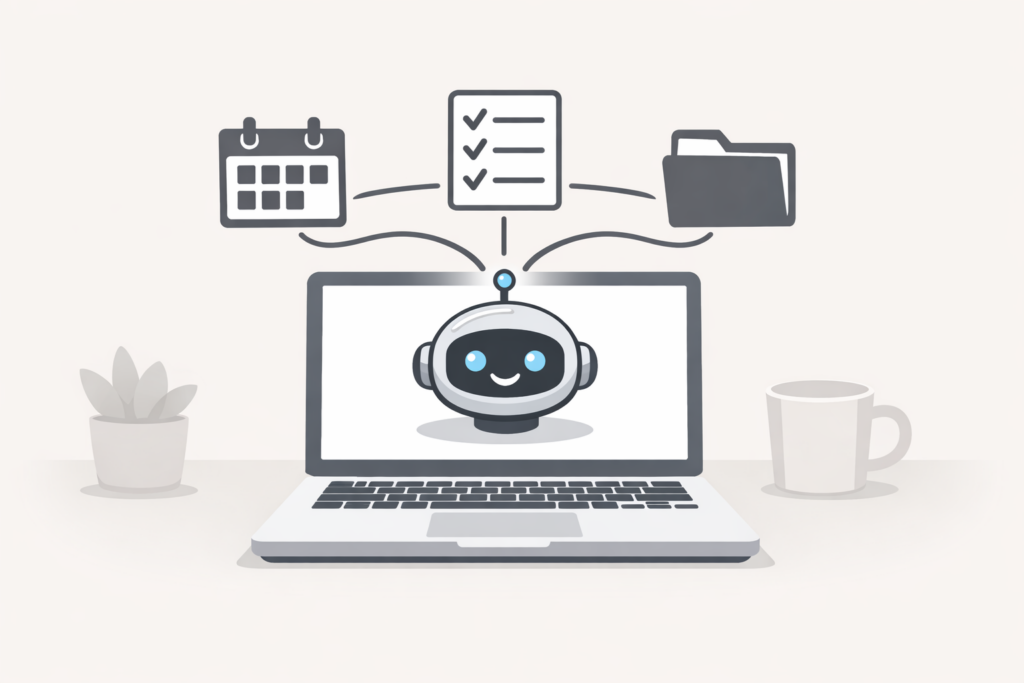
OpenClaw is an open-source AI agent that runs on your computer and acts like a digital employee. It can manage your calendar, book travel, read and edit files, send messages, and handle multi-step workflows without you babysitting every action. You could tell it “find a flight, book it, and add it to my calendar,” and it would log into booking sites and actually do it.
The thing exploded. It racked up over 145,000 GitHub stars in a single week and hit nearly 196,000 stars by late January 2026, making it one of the fastest-growing open-source projects ever.
OpenClaw has serious security issues (more on that below), but it showed us what’s possible with AI agents. It’s doing things we didn’t think would be possible this year.
Why Did OpenAI Hire Peter Steinberger?
Sam Altman saw what everyone else saw: Steinberger had already built a working, consumer-ready AI agent that millions of people were using. Rather than trying to build that from scratch, hiring the guy who already did it was the fastest path forward.
OpenAI announced that Steinberger would help build their next generation of personal agents, and they agreed to keep OpenClaw open-source under a new foundation. That was reportedly a requirement from Steinberger.
What’s interesting is that Steinberger had options. According to Fortune, Mark Zuckerberg also reached out, but Steinberger chose OpenAI for access to their latest tools and models.
This tells you how seriously the big players are taking this moment. This isn’t just a talent acquisition. It’s a signal that having the best language model isn’t enough anymore. You need the people who know how to turn those models into tools that actually do real work.
How Anthropic May Have Lost Their Shot
Here’s an interesting subplot. OpenClaw was originally called “ClawdBot,” a nod to Anthropic’s Claude. Anthropic’s lawyers stepped in and forced a name change because it was too similar to their “Clawd” trademark. The project was renamed to Moltbot and eventually OpenClaw.
Steinberger told Business Insider the rename was essentially forced by Anthropic. And that legal friction may have closed the door on any partnership between the two.
It just seems like a huge missed opportunity for Anthropic not to have hired him, especially since Steinberger originally built OpenClaw with Claude in mind.
That said, Anthropic isn’t sitting still. They’ve got a strong product in Claude Cowork.
Claude Cowork: The Current Leader for Knowledge Workers
In terms of safe, personalized AI agents that work out of the box and are available right now, Anthropic is the clear leader. Claude Cowork is a game changer.
Cowork is a mode within Claude’s desktop app that can directly access your files, email, and browser to complete tasks. It comes with dozens of specialized plugins for sales, legal review, data analysis, and more. It connects to Google Drive, Gmail, Calendar, and other services.
As researcher Ethan Mollick put it, Cowork is essentially Claude Code for non-technical work. It runs on your desktop and works directly with your local files and browser.
OpenAI’s competing product, Frontier, is more enterprise-focused and requires more setup. For individual knowledge workers who want to automate routine tasks today, Cowork has the edge.
I’m sure OpenAI realized they’re behind in this regard, and that was a big reason they hired Steinberger.
Where Does Google Fit In?
Google is just taking their time, and they can afford to. They have the distribution advantage.
Billions of Android phones and Chrome users could receive AI agent features as part of routine updates. Google’s Gemini is already being baked into Search, Workspace, and Android. They’ve even announced new Android APIs specifically for apps to perform tasks on behalf of users.
Right now, Google’s agent products lag behind ChatGPT and Claude in certain capabilities. But their ability to put agents in front of billions of users through products people already use is a massive advantage.
I think it’s a safe bet they’ll respond with something significant in 2026.
The Security Problem Nobody Solved Yet
All of these early agents come with real security risks that you should be aware of.
OpenClaw in particular had no built-in sandboxing. Any plugin could execute operating system commands, which means a malicious plugin could steal your data without you knowing. Cisco’s security team found that a crafted plugin could send all of a user’s files to an external server, bypassing all logging. Bitsight Security discovered over 30,000 exposed OpenClaw instances with default configurations wide open.
The reported vulnerabilities include leaked API keys, privilege escalation, and injection attacks through connected chat apps.
This is the tradeoff with early-stage agents: they’re powerful, but the security hasn’t caught up yet. Anthropic has been more careful here with permission gating and behavioral guardrails in Claude. But anyone using AI agents right now should treat them like any other networked application: use strict access controls, monitor what they’re doing, and don’t give them access to anything you can’t afford to have exposed.
AI Agents Are About to Become Mandatory
Here’s the part that matters most if you’re a business owner or knowledge worker.
Gartner predicts that by the end of 2026, roughly 40% of enterprise software will include AI agents, up from under 5% in 2025. PwC and the World Economic Forum estimate that 80% of all workers will need AI-related skills by 2027.
McKinsey has already grown its workforce to include 25,000 AI agents alongside 35,000 human employees, and plans to pair every human employee with at least one AI agent within 18 months.
Think about that for a second. McKinsey, one of the most respected consulting firms in the world, now considers AI agents part of their workforce.
Consider the work you currently do on a computer. How useful would you be if you decided to refuse to use a computer? I think within one or two years, the same will be true of AI agents. If you’re not working with them, you’ll be at a serious disadvantage.
What You Should Do Right Now
If you haven’t already, download Claude’s desktop app and start using Cowork. Here’s a practical starting point:
- Install the Claude Desktop app on Windows or macOS and log in.
- Switch to the Cowork tab and browse the plugin library. There are plugins for productivity, sales, legal, finance, and more.
- Set your Global Instructions so Cowork knows your role and preferences. This saves you from repeating context every time.
- Start small. Point Cowork at a folder of files and give it a specific task. Something like “summarize each of these reports and pull out key findings” or “update this spreadsheet and highlight anything unusual.”
- Treat it like a junior colleague. Don’t just set it and forget it. Watch what it does, correct it when needed, and iterate.
You’ll be surprised what it can do already. And the sooner you build comfort with this workflow, the better positioned you’ll be as these tools improve.
What This Means Going Forward
The hire of Peter Steinberger tells us something important: the AI race has moved past who has the best model. It’s now about who can build the best agent layer on top of those models.
OpenAI is scooping up top developer talent. Anthropic is shipping practical tools for knowledge workers. Google is playing the distribution game. All three are racing toward the same goal: an AI that doesn’t just answer your questions, but actually does your work.
For small and medium businesses, this creates a real opportunity. The tools that were once only available to companies with massive budgets are becoming accessible to everyone. But only if you’re paying attention and building the skills now.
At TJ Digital, we help businesses stay ahead of these shifts. Whether it’s optimizing your online presence for AI algorithms or building AI workflows that save you hours every week, our focus is on making sure you’re not left behind as this technology becomes the standard.
If you want to talk about how AI agents and AI optimization can work for your business, reach out for a free audit. No credit card, no commitment. Just practical insights you can use right away.