The software industry lost between $1 and $2 trillion in market cap in just the first few weeks of February 2026. Duolingo’s stock is down 83%. Investors are calling it the SaaSpocalypse.
Most people are pointing at AI and saying it’s going to make software easier to build, which means more competition for existing SaaS companies. That explanation sounds reasonable, but it completely misses what’s actually happening. At TJ Digital, our workflow is already 80-90% different than it was before ChatGPT, and the shift we’re seeing now goes well beyond workflow efficiency. The real story starts with Claude AI Skills.
Table of Contents
ToggleWhat Is the SaaSpocalypse?
@tjrobertson52 The software industry just lost $1-2 TRILLION and most people think it’s because AI makes software easier to build. Wrong. AI is making software irrelevant. Instead of shoving AI into apps built for humans, plugins just hand the data straight to AI. The future isn’t better software — it’s no software. #SaaSpocalypse #AI #SaaS #TechNews #Claude
♬ original sound – TJ Robertson – TJ Robertson
The SaaSpocalypse refers to the sharp, accelerating decline in software stock valuations that began in earnest in early 2026. SaaS multiples had been compressing since 2023, but the selloff went from a slow bleed to a cliff-drop in a matter of weeks.
The immediate trigger was the release of Anthropic’s Claude Opus 4.6 model and, more specifically, its plugin architecture. On February 4, 2026, Reuters reported that a new legal plugin for Claude’s agent triggered a broad selloff across software stocks as investors began to grasp what this technology actually means for enterprise software.
Why “More Competition” Isn’t the Answer
The popular take is that AI lowers the barrier to building software, so every SaaS category is about to get flooded with cheaper competitors. That would cause some market pressure, sure. It would not cause a trillion-dollar collapse in a couple of weeks.
The real reason is more fundamental than competitive pressure. It’s that AI is enabling something more useful than modern software itself.
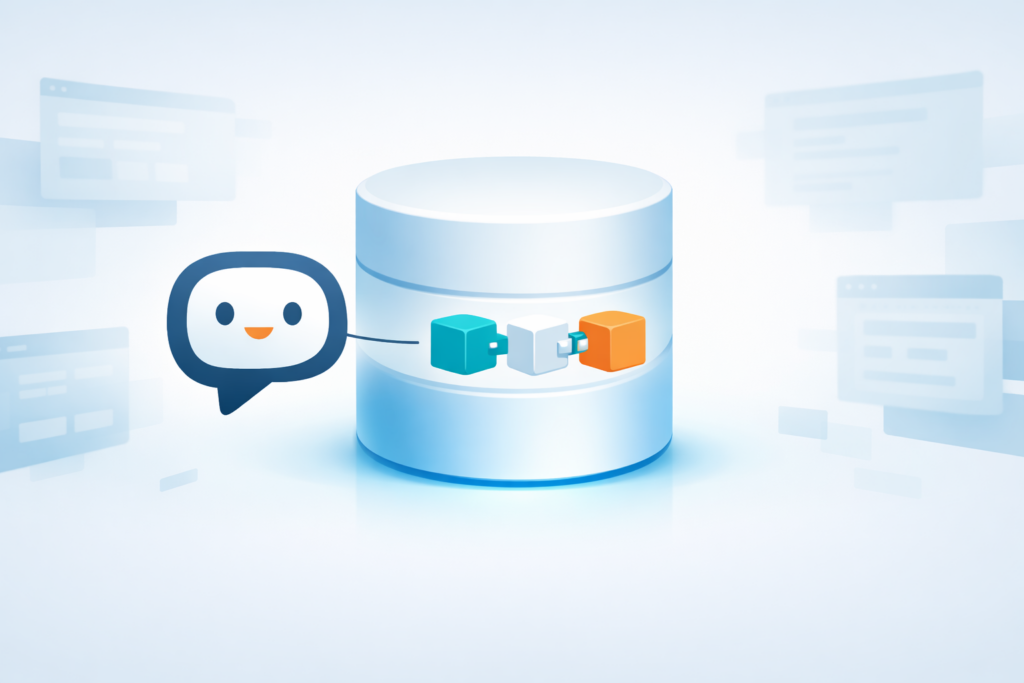
Think about what most software actually is. It’s a database, an interface sitting on top of it, and some basic logic connecting the two. Everything from your CRM to your project management tool to your accounting software follows this same pattern. The interface exists because humans need a way to interact with the database.
AI doesn’t need that interface.
What Claude AI Skills Actually Are
Claude AI Skills are modular capabilities that can be loaded into Claude to perform specialized tasks. Technically, each skill is a directory-based package with a SKILL.md file containing instructions, code, and reference data. When Claude needs to perform a specific task, it reads the skill’s contents into its context and executes accordingly.
The key shift here is architectural. Instead of forcing AI into existing software that was designed for humans, skills hand the data and the logic directly to the AI. Claude then either uses the software layer directly or spins up whatever it needs on the fly.
If a human ever needs to see something, Claude can generate a custom UI in real time. But in most cases, the software layer becomes invisible.
How Skills Fit Into the Bigger Picture
Skills are the building blocks of Claude’s plugin system. A plugin is essentially a collection of skills wired up to external services. That legal plugin that spooked investors? It’s Claude, equipped with the right skills, navigating legal workflows that previously required dedicated software.
The same pattern applies across every software category:
- Instead of logging into QuickBooks to review overdue invoices, you tell Claude what you need and it pulls the data, drafts the follow-ups, and sends them.
- Instead of opening your CRM, you describe what you’re looking for and Claude queries the database, scores the leads, and drafts outreach.
- Instead of opening Duolingo, you have access to a language teacher that knows exactly where you are, what you need to work on, and can run any scenario you ask for.
The software is still there in the background. You just stop thinking about it.
Vibe Coding vs. Building Claude AI Skills
A lot of people are responding to this moment by vibe coding, which means prompting an AI to write entire applications from scratch. If you can build something useful quickly and get real use out of it this year, that’s not a bad move.
But I wouldn’t put serious time into either vibe coding or building automations in tools like N8N right now. The reason is that both approaches are building on a layer that’s being disrupted.
Vibe coding produces fast prototypes. It doesn’t produce something you want to run a business on long-term.
Skills, on the other hand, are designed to be reusable, maintainable, and composable. You build one skill that does one thing well, and it can slot into any workflow that needs it. Other model makers are adopting the same architecture, so a well-built skill has a longer shelf life than a vibe-coded app.
| Vibe Coding | Building Claude AI Skills | |
| Speed | Very fast to start | Slower upfront |
| Maintenance | Often brittle over time | Modular, easier to update |
| Reusability | Usually standalone | Can be reused across workflows |
| Interoperability | Isolated product | Plugs into Claude’s agent ecosystem |
| Best for | Prototypes, one-off tools | Long-term automation, sellable assets |
| Risk | Technical debt accumulates fast | Lower long-term risk |
Why This Feels Familiar
The transition happening right now is similar to what happened when businesses moved from keeping books by hand to using spreadsheets, and then from spreadsheets to software like QuickBooks. At each step, it felt like you were adding complexity. Why would I tell software to do something I could just do myself?
But eventually the new approach proved it was just better. People stopped thinking about the layer underneath and started focusing on the outcome.
That’s where we’re headed with AI agents and skills. The software doesn’t go away, it just stops being the thing you interact with.
Should You Build Claude AI Skills?
At TJ Digital, we’ve already shifted our own workflows toward building skills. Anyone with domain-specific expertise can create a skill that adds a new capability to Claude. Once it’s built, you can share it with your team, publish it on GitHub, or sell it through platforms like Agent37, which lets skill creators keep around 80% of revenue.
If you’re not a builder, the more patient play is to wait for plugins that replicate your current software stack, only with a better interface. That’s not far off.
The businesses that are going to struggle are the ones that keep treating AI as a feature to bolt onto their existing workflows instead of recognizing that the workflows themselves are changing. If you want help understanding what this means for your digital marketing strategy, that’s exactly the kind of work we do.
FAQ
What caused the SaaSpocalypse?
The SaaSpocalypse was triggered by Anthropic’s release of Claude Opus 4.6 and its plugin architecture in early 2026. The launch of a Claude legal plugin on February 4, 2026 signaled to investors that AI agents could perform complex workflows that previously required dedicated enterprise software, putting the long-term value of traditional SaaS models in serious doubt.
How do Claude AI Skills differ from plugins?
Skills are the building blocks. A skill is a modular, directory-based package with a SKILL.md file that gives Claude a specific capability, like parsing invoices or querying a database. A plugin is what you get when you wire several skills up to an external service. Think of skills as individual features and plugins as finished tools built from those features. Skills can be reused across workflows, shared with teams, or sold independently.
Should I be building Claude AI Skills?
If you have domain expertise, yes. Skills let you package what you know into something Claude can use on demand. The architecture is being adopted across multiple AI platforms, so skills built today have more longevity than most software projects. If building isn’t your thing, focus on learning how to deploy and configure skills rather than building them from scratch.
Is vibe coding worth doing?
For short-term projects and experimentation, absolutely. If you can build something useful and get real value from it in the next year, go for it. Just don’t architect your business around something built on a paradigm that’s actively being replaced.
Ready to get ahead of this shift?
We help small and mid-sized businesses adapt their digital presence for a world where AI agents are the primary interface. If you want to understand how this affects your business specifically, get in touch for a free audit and we’ll walk you through it. No fluff, just a clear look at where your biggest opportunities are right now.