Google Search is becoming AI search. That’s a direct quote from Nick Fox, Google’s Senior Vice President of Knowledge and Information, the executive who oversees Search, Ads, and Commerce. If there was any remaining doubt that AI search is going to replace traditional Google results, Google’s own leadership just removed it.
At TJ Digital, we track AI search visibility across roughly 40 client campaigns and monitor thousands of AI-generated responses daily. We’ve been saying for over a year that Google’s traditional search results are on borrowed time. Now Google is saying it too. About 60% of Google searches already end without a click to any website, according to Bain & Company. That number is only going up. The businesses that prepare now will own visibility in the next version of Google. The ones that wait will be scrambling to catch up in a search environment they no longer recognize.
Table of Contents
ToggleWhat Did Nick Fox Actually Say About AI Search?
@tjrobertson52 Google’s own SVP just said “search is becoming AI search.” Still optimizing for the 10 blue links? You’re already behind. ⚡ #SEO #GoogleAI #AISearch #MarketingTips
♬ original sound – TJ Robertson – TJ Robertson
In a December 2025 interview on the AI Inside podcast, Nick Fox confirmed that Google is starting to think of AI Overviews and AI Mode as a single product. His words: the way to optimize for Google’s AI experiences is very similar, “the same,” as how to perform well in traditional search.
That sounds reassuring on the surface, but the bigger signal is what it implies. Google isn’t treating AI Mode as a side feature anymore. They’re merging it into the core search experience. Fox described the vision as one “fluid experience” that starts with a quick AI overview and transitions into a deeper conversation when the user needs it.
AI Mode has already grown to 75 million daily users. Users in AI Mode write queries that are two to three times longer than traditional searches. They’re asking Google complex, multi-part questions and expecting a synthesized answer, not a list of links.
This matches my intuition that by the end of 2026, Google Search will just be one cohesive AI experience. The “10 blue links” aren’t disappearing overnight, but they’re being absorbed into something bigger.
How Does AI Search Work Differently Than Traditional Google?
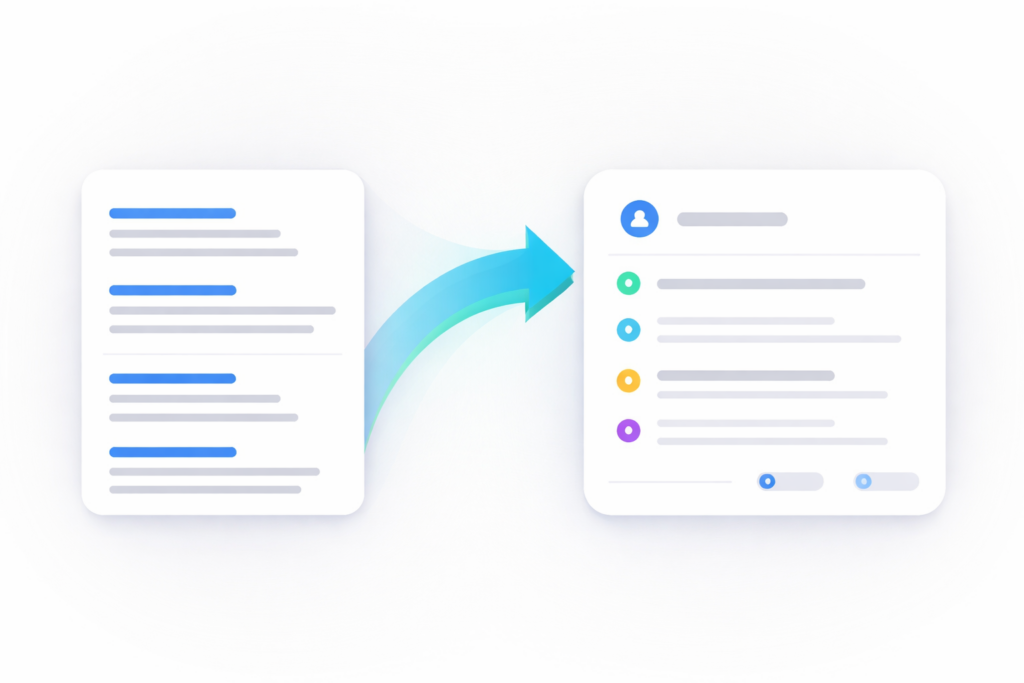
Traditional Google Search works like an index. You type a query, Google returns a ranked list of pages, and you click through to find your answer. AI search flips that model. Google’s AI takes your query, breaks it into multiple sub-searches, pulls content from the top results across all of those sub-searches, and synthesizes a single answer with source citations.
The difference matters because it changes what “ranking” means. In traditional search, if you’re result number one, you get the most clicks. In AI search, if your content gets cited in the generated answer, you get visibility. If it doesn’t, you might as well not exist, even if you technically “rank” on page one.
Here’s how the two experiences compare:
| Traditional Google Search | AI-First Google Search | |
| What the user sees | Ranked list of links | Synthesized answer with source links |
| How Google selects content | Ranking algorithm based on relevance, authority, links | AI pulls from multiple sources to build a complete answer |
| User behavior | Click a result, read the page | Read the AI answer, maybe click a source for more detail |
| What “winning” looks like | Rank #1 for your target keyword | Get cited in the AI-generated response |
| Zero-click rate | ~60% of searches | ~93% of AI Mode searches (Semrush) |
| Query length | Short, keyword-based | 2-3x longer, conversational |
According to Semrush, roughly 93% of AI Mode searches end without a click to an external website. For AI Overviews specifically, click-through rates drop by about 47% compared to traditional results. The traffic game is changing fast.
Why Is Zero-Click Search a Problem for Businesses?
Zero-click search means the user gets their answer directly from Google’s results page without visiting any website. This has been a growing trend for years, but AI is accelerating it dramatically.
For news queries specifically, Similarweb reported that no-click rates jumped from 56% in 2024 to 69% by mid-2025. Bain’s research found that brands may lose 15 to 25% of organic traffic to AI-generated summaries. And according to research compiled by Position Digital, only about 1% of users click on sources cited within AI Overviews.
Even if your content gets cited by Google’s AI, you’re not necessarily getting the click. You’re getting brand visibility, but the traffic model is fundamentally different.
For small and medium-sized businesses, this creates a real problem. If your entire marketing strategy depends on people clicking through to your website from Google, you’re building on a foundation that’s eroding. The businesses that adapt are the ones rethinking what “visibility” means in a search environment where Google answers the question before anyone clicks anywhere.
Is SEO Dead in 2026?
No. But what SEO means is changing.
Nick Fox was clear on this point: the fundamentals still work. Build great sites, build great content. Google’s developer documentation confirms there are no special requirements to appear in AI Overviews or AI Mode. The same best practices for traditional SEO apply.
But here’s the part most people miss. “The same best practices” doesn’t mean “keep doing exactly what you’ve been doing.” It means the things that actually matter for traditional SEO (quality content, clear structure, topical authority) are the same things that matter for AI search. The stuff that never really mattered, like obsessing over keyword density or chasing technical audit warnings, matters even less now.
The real shift is in how you measure success. A number-one ranking on Google no longer guarantees that anyone sees your content. If Google’s AI synthesizes an answer from three other sources and your page sits below it, your “number one ranking” is invisible to most users. The new metric is: does Google’s AI cite your content when answering questions in your space?
How Should Businesses Prepare for AI Search?
If you’re still optimizing for traditional search and the 10 blue links, you’re missing the boat. By the time you’ve implemented a traditional SEO strategy, AI search will have replaced the results you were targeting.
Here’s what actually moves the needle:
Structure your content so AI can use it. That means clear heading hierarchies, direct answers at the top of each section, comparison tables, and FAQ sections. Google’s AI pulls from pages it can easily parse. If your content is a wall of text with vague headings, it’s getting skipped. We’ve written a full breakdown of how to structure content for this purpose.
Get mentioned on other websites. This is the single most effective tactic for AI visibility right now. Large language models and Google’s AI Mode both weigh third-party mentions heavily when deciding which brands to recommend. If the only place your brand is mentioned is your own website, AI has no external validation to draw from.
Build pages that answer the questions AI is being asked. AI search queries are longer and more specific than traditional searches. Users are asking things like “what’s the best window tinting shop in Phoenix that does ceramic tint for under $400.” If you have a page that answers that specific question, you’re far more likely to get cited than a generic “window tinting services” page.
Create content from real human expertise. Google’s algorithms are increasingly trying to reward content with unique, firsthand insights. A blog post generated entirely by AI with no original perspective is exactly what Google is learning to filter out. Content built from actual experience, like a video transcript from someone who does the work every day, is what performs.
Track your AI visibility, not just your rankings. Traditional rank tracking tools don’t tell you whether your brand is showing up in AI-generated answers. You need to be monitoring how AI platforms respond to queries in your industry. At TJ Digital, this is built into every campaign we run.
What Happens If You Don’t Optimize for AI Search?
The risk of doing nothing is straightforward: declining traffic with no clear explanation.
If your content isn’t structured for AI to cite, you slowly become invisible in search results that are increasingly AI-generated. Your competitors who do adapt will capture the visibility you’re losing. And because AI search tends to consolidate recommendations around a smaller set of trusted sources, the gap between businesses that adapt early and those that wait gets wider over time.
This is already happening. The businesses that moved early on AI optimization are seeing their brands recommended in ChatGPT, Google’s AI Mode, and Perplexity while their competitors don’t even know those recommendations are happening.
Frequently Asked Questions
When Will Google Fully Switch to AI Search?
Based on Nick Fox’s comments and Google’s current pace, the expectation is that by late 2026, Google Search will function as a unified AI experience. AI Overviews launched in mid-2024, AI Mode reached 75 million daily users by late 2025, and Google is actively merging these into a single product. The transition is already well underway.
Does My Website Need to Change for AI Search?
Your website doesn’t need a complete overhaul, but your content strategy does. Focus on clear heading structures, direct answers to common questions, comparison tables, and FAQ sections. Make sure your brand is mentioned by name on authoritative third-party websites. These changes help both traditional SEO and AI search visibility.
Will Google Still Send Traffic to Websites?
Yes, but less of it. Google’s AI will continue including source links in its answers, and Nick Fox has emphasized that Google sees driving traffic to publishers as core to its mission. But the data is clear: click-through rates drop significantly when AI answers appear. The businesses that thrive will be the ones that get cited by AI, not the ones waiting for clicks from a traditional results page that fewer people are seeing.
If you’re not sure where your business stands with AI search, we can help you figure that out. Contact TJ Digital for a free audit of your current AI visibility.