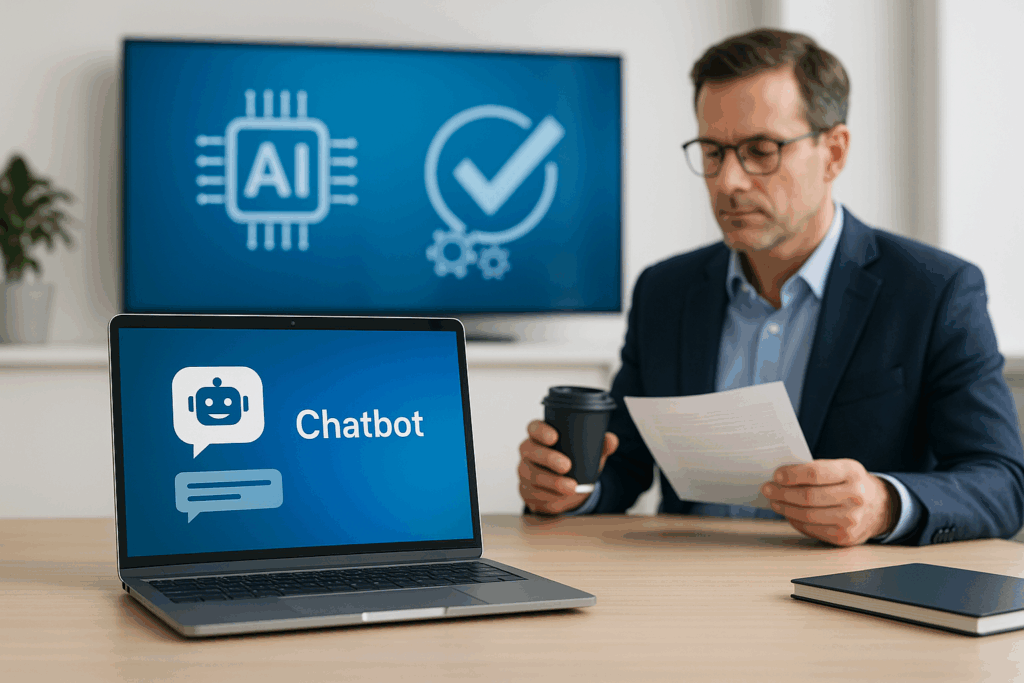
AI use in the workplace is becoming normalized, but the conversation is shifting. A year ago, getting caught using ChatGPT to draft an email felt universally embarrassing. Today, the question isn’t whether you used AI. It’s how you’re using it.
My prediction: within a few years, using AI to sharpen your writing or work more efficiently won’t just be accepted. It’ll be expected. The criticism will become more nuanced, focused on careless AI use or using AI to mislead people rather than on AI use itself.
Table of Contents
ToggleThe Stigma Is Real, But Fading
There’s no denying that AI use still carries social weight in some workplaces. A 2025 Duke University study found that workers who use tools like ChatGPT anticipate and receive negative evaluations regarding their competence and motivation.
But here’s what I’m seeing among the people I actually work with: if the AI is genuinely improving the message, and if you can stand behind every word coming out of it, people don’t really care. Often, they even appreciate it.
Companies are starting to catch on. HR analysts now encourage leaders to normalize AI use openly by celebrating AI wins in meetings and newsletters. The goal is to make AI just another supported tool rather than something people hide. HRMorning reports that organizations are weaving AI success stories into daily workflows while emphasizing that employees still own the quality and accuracy of AI-aided work.
@tjrobertson52 What is the future of AI in the workplace? It’s shifting from embarrassing to expected 👀 same thing happened with Google Docs #AIatWork #FutureOfWork #WorkplaceTech #AI
♬ original sound – TJ Robertson – TJ Robertson
Careless AI Use vs. Productive AI Use
The line between unprofessional and effective AI use comes down to oversight and integrity.
Careless AI use means accepting outputs without review. You’re risking hallucinations, tone-deaf phrasing, and outright embarrassment. Fast Company documented a case where a salesperson blindly used ChatGPT to draft emails and ended up with archaic salutations like “I hope this email finds you in good health.” That’s what happens when you don’t review.
Productive AI use treats the tool as a draft generator or editor. MIT’s Dazza Greenwood, speaking to the American Bar Association, put it well: use AI only as a first draft and be prepared to stand behind every word it produces.
I evaluate AI output the same way I would if it were written by a very talented intern. If I need to make edits, I make edits. But as long as I can stand behind every word, I’m happy for people to know it was written by AI.
Using AI to Sharpen Your Writing (Not Replace It)
The best way to use AI is as a writing partner that refines your message. You might give ChatGPT a draft email and ask it to make the tone more concise, or have it summarize a long report for a quick reply.
But here’s what matters: after AI rephrases content, inject your own touch. Add specific examples, personal insights, or nuance that a generic model won’t know. As one AI writing coach put it: “ChatGPT is not a ghostwriter. The soul of the writing still has to come from you.”
Treat AI output as a rough draft. Restructure it for clarity, trim the fluff, and swap any robotic phrases for your own style. This way, you elevate the clarity of your thinking without outsourcing your voice.
Will AI Proficiency Become a Mandatory Skill?
Almost certainly yes.
Industry analysts predict AI literacy will soon be as basic as email or spreadsheets. LinkedIn data shows professionals are now twice as likely to add AI-related skills compared to 2018, and over half of hiring managers say they won’t hire someone without AI literacy.
A 2025 Thomson Reuters report put it bluntly: “AI will not replace professionals, but AI-powered professionals will.” The same report found that workers with strong AI skills were 2.8 times more likely to unlock organizational benefits.
This tracks with what I’m seeing. Every day, I watch business owners and marketers doing things the way we did them two years ago, not realizing most tasks can be done twice as fast or ten times as fast without sacrificing quality. The ones who embrace AI gain a competitive edge. The ones who ignore it risk falling behind.
AI’s Normalization: A Parallel to Google Docs
The evolution of AI tools resembles past tech shifts.
I’m old enough to remember when putting something important into a Google Doc was seen as unprofessional. Does anyone else remember this awkward phase? It was totally fine to put something into a Word document, save it to your desktop, and send it as an attachment. But if you just sent a link to a Google Doc? That was somehow too casual.
You could have raised valid criticisms back then. People forgot to share files. There was risk of accidentally sharing sensitive information with the world. But those weren’t criticisms against Google Docs. Those were criticisms against the careless use of Google Docs.
Today, Google Docs is used by companies and schools all over the world. It changed how we write, work, and learn. The same shift is happening with AI.
Should You Disclose AI Use in Work Communications?
Etiquette here varies. Most workplaces don’t require explicitly flagging AI usage in routine emails or memos. Many professionals treat AI the way they would any other writing aid, like spellcheck or a thesaurus. The final message matters more than its origin.
That said, some companies encourage transparency for sensitive communications. One corporate guidance blog suggests adding email footers like: “This message was drafted using AI technology to enhance communication efficiency; a real person has reviewed it for accuracy.”
The key is integrity. If asked, be honest that you used AI as a helper. Think of it like a talented intern. You might credit it casually, but it’s not mandatory unless rules require it.
From what I’ve seen in discussions among experienced professionals, AI-polished emails are fine as long as the sender has reviewed them fully. Most teams care more that your ideas and tone are clear rather than whether they were first drafted by a chatbot.
The Bottom Line
I’m not hiding my use of AI at all. The criticism is shifting from “you used AI” to “you used AI carelessly.” And that’s a healthier place for us to be.
If you’re using AI to sharpen your message, if you’re reviewing every word, if you’re adding your own insights and standing behind the final product, you’re doing it right. That’s the standard that’s emerging. Get comfortable with it now, because it’s quickly becoming the expectation.
TJ Robertson is the founder of TJ Digital, a digital marketing agency specializing in AI SEO and content strategies for small to medium businesses. Contact TJ Digital for a free digital marketing audit.