
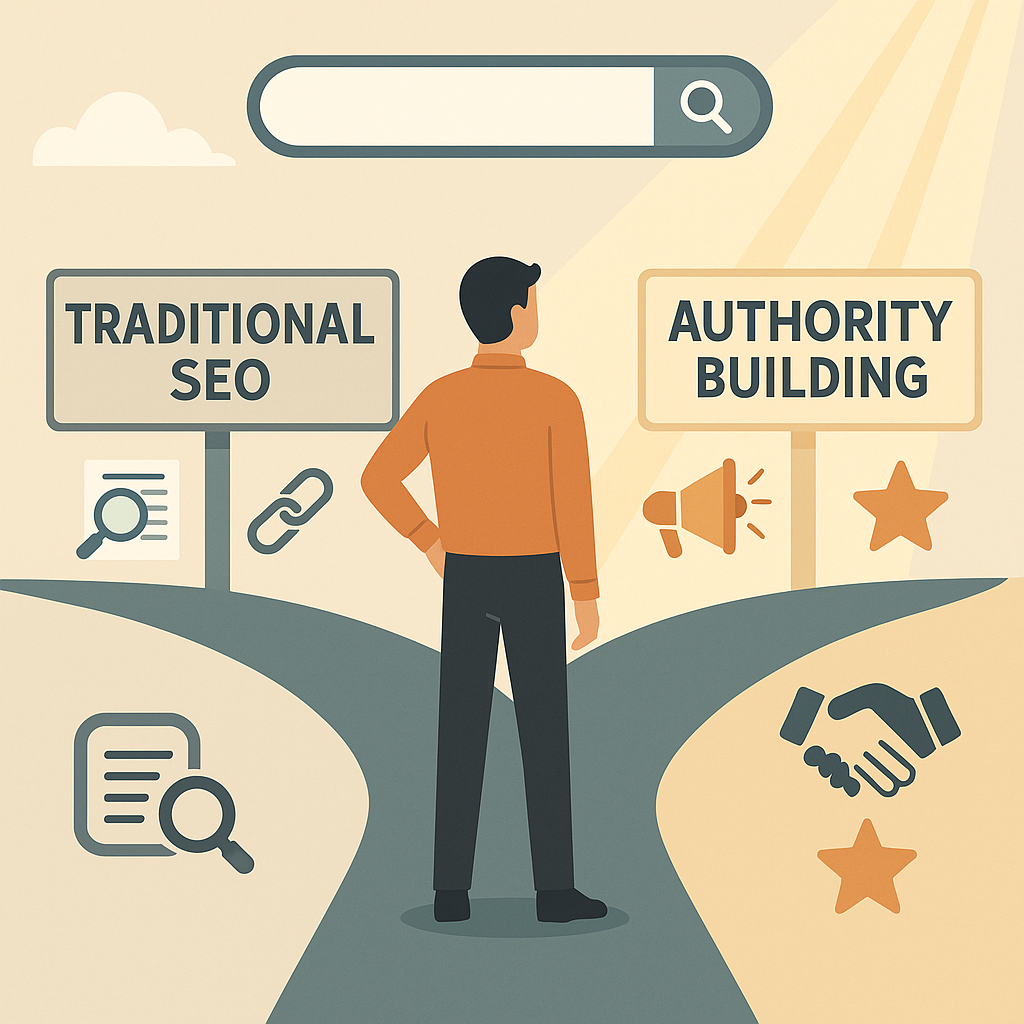
Google’s ranking works through three main steps. First, it gathers results based on traditional factors like backlinks and keywords. Then, it uses AI systems to rank those results by which ones will best satisfy users. Finally, it measures how accurately it predicted user satisfaction through behavior signals. Over time, these systems get better at predicting which results actually help people.
Most SEOs are still focused on that first step—traditional ranking factors. But as Google’s AI models improve, those factors matter less. The real question isn’t how to make Google think you’re authoritative. It’s how to actually become authoritative in your space.
This shift has been happening for at least a decade. It’s just accelerating now.
Table of Contents
ToggleGoogle’s AI Is Getting Smarter
Google uses specialized AI models like RankBrain and BERT to understand search intent and evaluate which pages satisfy users. RankBrain learns from how people click and engage with results. It has outperformed human engineers by about 10% in picking relevant pages. BERT helps Google understand the intent behind queries, not just literal keywords.
These aren’t large language models like ChatGPT. They’re smaller, specialized models built for specific ranking tasks. They’re far from perfect at evaluating quality. But they’re getting better very quickly. And the cheaper and faster these models get, the better Google can deliver results that actually meet search intent.
Traditional ranking factors are still important. They’re the cheapest way for Google to build that initial set of results. But their importance is declining.
@tjrobertson52 SEO is changing fast — and the best strategy might sound crazy: stop optimizing for Google. 😳 Focus on being the best resource for your audience, and Google will catch up. #SEO #GoogleUpdate #SearchEngineOptimization #BrandBuilding
♬ original sound – TJ Robertson – TJ Robertson
Traditional SEO Still Works (For Now)
Keywords and backlinks haven’t disappeared. High-quality, relevant backlinks remain a major trust signal. If respected sites link to you, Google notices. But Google’s algorithms are now smarter about which links count. Volume and manipulation don’t work anymore. You need to earn genuine mentions in context.
Keywords still signal relevance. But Google’s AI favors natural language and comprehensive topic coverage over exact-match repetition. SEO expert Marie Haynes puts it this way: “Many of the things we have traditionally done in the name of SEO are far less important now. Instead of keyword research, we should be focusing on intent research.”
Traditional SEO tactics—content optimization, site structure, keyword targeting, and link building—still work. But their weight is diminishing. Google’s AI looks first for user satisfaction and expertise.
What Google Actually Values Now
Google employs around 16,000 quality raters. These contractors evaluate search results using a set of guidelines. The ratings help Google determine whether algorithm updates move things in the right direction.
These guidelines don’t tell us exactly how Google ranks websites. But they tell us what Google wants to prioritize. And what shows up over and over again in these guidelines is the value of being known as the go-to source in your industry.
The guidelines emphasize E-E-A-T: Experience, Expertise, Authoritativeness, and Trustworthiness. While raters don’t directly affect rankings, Google’s AI learns from this feedback. The message is clear: content from trusted authorities is what Google wants at the top.
Stop Gaming Google, Start Becoming Authoritative
How exactly Google determines you’re the go-to source in your industry is still a mystery. As AI handles more of the ranking process, it might even be a mystery to Google’s engineers. But that’s the point.
The better these AI systems get, the harder it will be to figure out exactly how they work. You can’t game a system you can’t fully understand.
Instead of trying to make Google think you’re authoritative, focus on actually becoming authoritative. If your brand is too small to dominate your entire industry, pick a subset you could own. Then create content, tools, and resources that are genuinely helpful to your audience.
How to Build Real Authority
Create comprehensive, helpful content. Write in-depth guides that fully address what your audience needs. Cover all aspects of a topic so your page becomes the definitive answer. Pages with broad topical coverage rank better. Update content regularly if users click your result and stay because they got answers, Google notices.
Demonstrate expertise and trust. Show who you are and why you know your stuff. Include author bylines with credentials. Publish case studies or original research. Prove you have real experience, not just recited facts. This is the “Experience” in E-E-A-T.
Earn reputation signals. Build your brand’s visibility beyond your own site. Get mentioned or featured on reputable outlets—news sites, industry blogs, expert roundups. Each time a credible source cites you, it reinforces your authority. Google’s AI learns from context, not just links. Even unlinked brand mentions matter. As one SEO-PR analysis notes, publishing executive interviews, guest commentaries or being quoted builds “topical depth” and shows AI you’re an expert.
Stay consistent. Maintain a cohesive brand presence. Make sure your company name and topics are described the same way across your website, social profiles, and other platforms. Google notices consistency. Contradictory or sparse information confuses the AI. Encourage positive reviews and engage with feedback. A strong reputation signals the “Trust” in E-E-A-T.
Small Businesses Can Compete
Small businesses struggle to outrank big brands on broad terms. If you’re a single plumber, your chances of outranking national companies with million-dollar marketing budgets are small. But you can win by niching down.
Target local and long-tail keywords. Instead of trying to rank for “plumbing services,” go after “emergency plumbing repair [Your City].” These queries have fewer competitors and more qualified traffic. Become the recognized expert on a narrow topic or market segment. A small HVAC business might own “24-hour AC repair [City]” while national chains chase broader terms.
Optimize your Google Business Profile. Get local media coverage. Earn links from community sites or local chambers. Local reviews and citations boost credibility in your area. This hyper-local authority can outweigh a big brand’s generic presence in your region.
Balance SEO and Brand Building
Split your budget between short-term SEO and long-term brand investment.
Short-term: Technical SEO and content. Make sure your site is fast, mobile-friendly, and well-structured. Optimize around the right keywords, especially niche and long-tail terms. On-page SEO, quality link-building, and content optimization drive results now. These tactics deserve a steady budget because they work today.
Long-term: Brand and authority. Invest in building brand equity and user trust. This includes content marketing, PR, and improving customer experience. One SEO-PR expert notes: “You can’t SEO your way to the top without building brand equity.” Funds spent on PR and brand campaigns may not boost rankings instantly. But they create the recognition and trust that Google’s AI increasingly rewards.
A practical split: allocate half your budget to SEO fundamentals and half to brand-building. Adjust over time as your brand authority grows. Use SEO tactics for immediate visibility. But future-proof your site by investing in becoming a trusted name.
Google’s algorithms are moving toward entity-based, brand-first signals. Underinvesting in brand means underinvesting in SEO’s future.
Where Traditional SEO Is Headed
We haven’t arrived in this future yet. Traditional SEO is still very effective. But we need to focus not just on where Google is now, but where it’s heading.
This isn’t a new trend. It’s been going on for at least a decade. Google has been trying to get away from factors like backlinks and keywords for years. They want to deliver results that actually meet search intent. The AI models are just helping them do it better and faster.
The trend is accelerating. As these systems improve, traditional ranking factors will matter less. What will matter is whether you’re actually the go-to source people trust.
The Bottom Line
Could the best way to rank in Google be to ignore Google? Not exactly. Traditional SEO still works. But obsessing over traditional ranking factors while ignoring brand authority is a losing strategy.
Focus on becoming the go-to source in your niche. Create genuinely helpful content. Build real expertise and trust. Earn reputation signals outside your own site. Let traditional SEO support that work, not replace it.
Google’s AI is getting better at ranking websites the way it intends to rank them. Fighting that trend is harder than adapting to it.
Ready to Build Authority That Ranks?
At TJ Digital, we help small to medium businesses build authority through AI-optimized SEO and strategic content. We don’t just optimize for where Google is now. We prepare you for where it’s heading.
We start with a 90-minute discovery call to understand your business, audience, and goals. Then we build AI workflows customized for your brand that create genuinely helpful content your audience values—and Google rewards.
No long-term contracts. Complete transparency. Just results-focused work that adapts as Google evolves.
Contact us for a free digital marketing audit of your website and current efforts.