
The way people find businesses is changing. AI is doing the research for us now. The better these AI systems get, the more we’ll trust their recommendations.
The key for any brand looking to be found online is simple: be as noisy as possible.
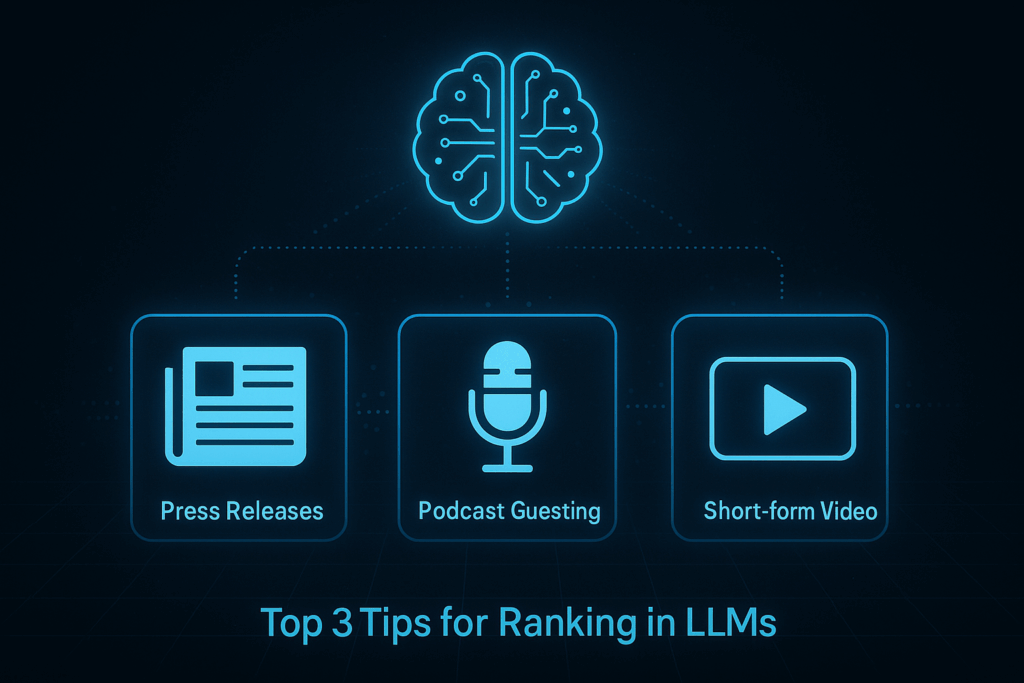
Here are the three highest leverage activities to get found by AI and large language models in 2025.
Table of Contents
TogglePress Releases: Your Fast Track to AI Visibility
Press releases used to dominate SEO. They stopped ranking competitively years ago.
But here’s what changed: you don’t need to rank competitively to be found by AI.
AI models routinely crawl press release wires to learn current facts about companies. As long as your content is indexed in search engines, AI will find it. Each press release becomes part of the model’s memory and is often the first source AI uses to answer queries about your company.
Creating a press release with the terms you want to rank for in the title gets your content posted to 500+ websites. That’s 500+ signals telling AI systems who you are and what you do.
@tjrobertson52 Traditional SEO is dead. Here’s what actually works for getting found by AI 🤖 Press releases, podcasts, and short-form video are the move. #AISearch #SEO2025 #ContentStrategy #DigitalMarketing
♬ original sound – TJ Robertson – TJ Robertson
Which Press Release Service Should You Use?
For premium distribution: I recommend The News Guy. Their Standard, Advanced, and Premium packages pitch your story to 450-700+ high-domain-authority news sites. The Premium package hits up to 700 outlets with a potential reach of over 6 billion. Your press release can appear on Yahoo, AP, CNN affiliates—sites that massively boost trust signals.
For budget-friendly distribution: Try PRLog. It’s largely free with affordable paid upgrades ($29-$99) that add features like linking and minor syndication. PRLog won’t get you on major news sites, but it does get your story into AI-indexable form.
Use PRLog to start. Use The News Guy when you need a major visibility push.
How to Write Press Releases for AI
Write for both AI and humans. Use the inverted-pyramid style—answer core questions in the first paragraph. Include bullet points and headings to highlight facts. Cover the who, what, when, where, why, and how.
This answer-focused formatting means AI can easily extract your key messages. Even if your press release doesn’t climb to #1 on Google, it will still feed AI models with fresh facts about your brand.
Podcast Guesting: Low Effort, High Impact
Appearing as a guest on other podcasts is the fastest way to gain exposure with minimal setup.
Use a service like PodMatch.com to get matched with podcasts in your industry. Going on someone’s podcast takes 30 minutes to an hour of your time.
Here’s what you get:
- Exposure to their established audience
- Instant credibility (“I was interviewed on X podcast”)
- At least one backlink to your site
- Content posted to multiple websites
- Podcast hosts often cut long episodes into short-form video clips
Most podcasts post transcripts or detailed show notes. These transcripts become SEO content on the host’s site or in directories. Search engines and AI crawlers have more text to rank and cite. That text is in your voice, with your insights.
Should You Start Your Own Podcast?
There are way more people who want to be podcast guests than there are hosts. As a host, you can get guests that are way outside your league.
Hosting your own show takes more work. But it compounds over time. You speak regularly to your target audience, deepening familiarity and trust with each episode. You control the content and can feature guests you choose. The transcripts and recordings become content you can repurpose into blog posts, video clips, and more.
If you want results fast with low overhead, start by guesting. If you have the capacity for long-term goals, launch your own podcast later.
Short-Form Video: Content That Multiplies
Every single platform is pushing short-form video right now. Google is showing them more often in search results.
Short-form videos build a rich library of content. AI systems see these videos as evidence of your active presence. More importantly, you can repurpose each video’s transcript into numerous assets.
Here’s how one video becomes dozens of pieces of content:
Transcript → Blog Article
Convert the entire video into text with an AI transcription tool. Edit it lightly. Post it as a blog article on your site. This boosts your SEO—search engines prefer fresh, long-form content. It ensures all the video’s insights are crawlable by AI.
Use headers and short paragraphs so readers and AI can easily skim.
Social Media Snippets
Identify 5-10 second highlights from the video. Turn them into TikToks, Instagram Reels, YouTube Shorts, or LinkedIn posts. Tools like Riverside’s Magic Clips automatically pick shareable clips. Each clip is a new chance to reach people and drive them back to your original content.
Quotes and Graphics
Pull out memorable quotes or data points. Turn them into text-image posts. Create quote cards, infographics, or carousels featuring those snippets. Infographics and stat charts are highly shareable and can get you backlinks from journalists or bloggers.
Email Newsletter Content
Use the transcript as a draft for an email newsletter. Many subscribers prefer reading key takeaways. This is low-effort since you already have the content written out.
Podcast or Audio Clip
If the video is an interview or presentation, repurpose the audio as a podcast episode. Upload the audio to YouTube or SoundCloud for another platform signal.
As Riverside notes, one recording can fuel blogs, podcasts, short clips, emails, and more. These serve as signals for AI to cite you. By systematically recycling one video’s content, you exponentially increase your brand’s footprint across the web.
Do Traditional SEO Fundamentals Still Matter?
Yes. AI optimization builds on core SEO principles, it doesn’t replace them.
Google’s studies show that AI-generated answer panels overwhelmingly cite websites already ranking in the top search results. To be the “answer” in AI, you first need to be authoritative in classic search.
SEO fundamentals remain the entry ticket to AI recommendations:
- High-quality content
- Clear site structure
- Relevant keywords
- Fast page speeds
- Strong backlinks
Clean HTML structure and schema markup (FAQ, HowTo, VideoObject) help AI parse your content. E-E-A-T signals (Expertise, Experience, Authoritativeness, Trust) that Google values are even more vital when AI decides which brand to trust.
Think of Answer Engine Optimization as SEO with an AI spin. You still optimize with clear headings, bullet points, and useful answers. But you also consider how an LLM might extract and use your text.
What still wins is helpful, human content that directly answers questions, with a clean technical foundation and clear calls to action.
The Bottom Line
AI optimization enhances SEO. It doesn’t negate it.
Your multimedia distribution strategy—press releases, podcasts, videos—gains maximum effect when supported by on-page SEO best practices.
Together, they create a content engine where every piece helps AI know who you are and recommend your business when questions arise.
Ready to get your business recommended by AI? Contact TJ Digital to develop a comprehensive AI optimization strategy tailored to your business.