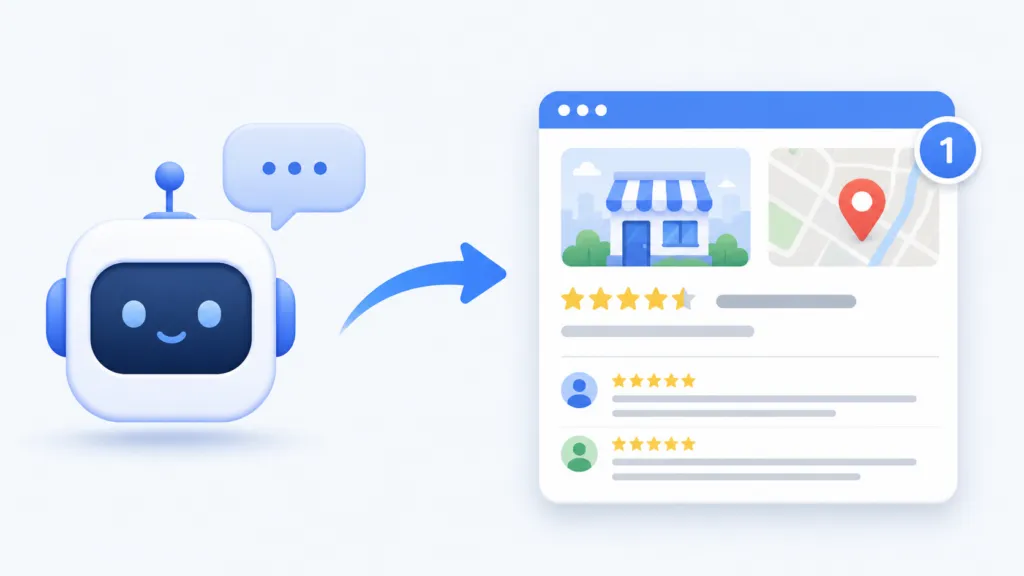
Yelp matters more for local businesses in 2026 than it has in years, and the reason is AI search. At TJ Digital, we track AI citations across roughly 50 industries, and Yelp is consistently the most cited directory when someone asks ChatGPT, Google’s AI Mode, or Perplexity for a local service recommendation. On average, Yelp shows up in about 39% of local AI searches.
If you’re a local service business, you probably hate Yelp. That’s what I’ve learned doing SEO for about 100 local service businesses over the years. But as all search becomes AI search, writing Yelp off is getting harder to do.
That doesn’t mean you should abandon your Google Business Profile. You need both. Below is what’s actually going on and what you should do about it.
Table of Contents
ToggleWhy Does ChatGPT Cite Yelp More Than Google Business Profiles?
This surprises a lot of people, but there’s a straightforward reason for it. ChatGPT doesn’t have built-in access to Google’s local data the way Google Search and Google Maps do. Google Business Profile was designed to power Google’s own products.
ChatGPT and similar AI tools work differently. They search the open web, find pages with relevant information, and pull from those pages.
Yelp’s business pages are publicly accessible web pages built around local businesses, packed with review text, category data, and location information. That makes them easy for AI to find, read, and cite.
OpenAI confirmed as much in early 2026 when Yelp announced it had signed an agreement with OpenAI to extend the reach of its content across the AI ecosystem. A large-scale study from Local Dominator, covering over 267,000 AI citation mentions, found that when you combine Yelp’s mobile and desktop domains, Yelp actually had more total AI citations than Google across their dataset.
Google Business Profile still matters inside Google’s ecosystem. But outside of Google, Yelp has the edge because its pages already exist as public web destinations that AI systems can cite directly.
@tjrobertson52 AI cites Yelp for 39% of local search recommendations, and it’s not your listing, it’s the listicles. Are you showing up? #LocalSEO #Yelp #AISearch #LocalBusiness
♬ original sound – TJ Robertson – TJ Robertson
Which Yelp Pages Does AI Actually Cite?
Most people assume AI is pulling from their individual Yelp listing. It almost never does. AI cites the listicles.
These are those automatically generated pages like “Best General Contractors in Dallas” or “Top Plumbers in Phoenix.” Every major directory generates pages like this, and they are the pages AI systems pull from when someone asks for a local recommendation.
If your business isn’t showing up near the top of these listicle pages, you might as well not be on Yelp. At least as far as AI search is concerned.
BrightLocal’s 2025 local AI study confirmed this pattern. They found that directories appeared in AI results across every industry they tested, and Yelp specifically showed up in 33% of overall searches. Perplexity used Yelp in every industry in their test set.
The effect is strongest in categories like restaurants, beauty, fitness, dental, and home services.
How Yelp Decides Which Businesses Show Up on Listicle Pages
Yelp’s own documentation explains how its “Recommended” search results are ordered. The factors include the user’s search terms, distance, ratings, user engagement data, and reviews relevant to the query.
What’s notable is what isn’t on that list. A perfectly completed profile, by itself, doesn’t win the default sort. That matters because a lot of local SEO advice stops at “claim and fill out your Yelp profile.”
Claiming your page is free and foundational because it lets you control your hours, photos, and contact information. But the ranking factors that determine whether you show up on the high-visibility listicle pages go beyond basic profile completion.
| Factor | Impact on Listicle Ranking | What You Can Control |
| Primary category accuracy | High | Yes, choose the most specific category |
| Review rating | High | Indirectly, through service quality |
| Review relevance to query | High | Indirectly, reviews that mention specific services help |
| Recommended review count | High | Indirectly, encourage organic reviews |
| User engagement (clicks, calls) | Medium | Indirectly, through profile quality and photos |
| Profile completeness | Low-Medium | Yes, fill out all fields |
| Yelp transaction features | Medium (category-dependent) | Yes, enable quotes, booking, or reservations |
Category accuracy and review relevance matter more than a merely filled-out profile. If you’re a roofing contractor listed under “General Contractor” instead of “Roofing,” you’re competing in the wrong listicle.
Why Review Velocity Matters More Than Total Reviews
Just like Google, it’s more about how frequently you get reviews than how many total reviews you have. But Yelp adds an extra layer of complexity with its recommendation filter.
Yelp’s recommendation software evaluates every review using hundreds of factors related to quality, reliability, and reviewer activity. Only recommended reviews count toward your visible star rating and review count. According to Yelp’s support documentation, about three-quarters of reviews are recommended overall.
The question that actually matters is “how many recommended Yelp reviews do I have, and how fresh are they?”
Yelp’s default review sort considers recency, user voting, and review quality factors. The snippets shown in search results are chosen algorithmically based on keyword relevance and whether a review is currently recommended. Those snippets can change as new reviews come in.
A steady stream of organic reviews from active Yelp users is far more valuable than a burst of five-star reviews from accounts that were just created. Academic research (a University of Texas at Arlington paper accepted to ICWSM 2025) supports this, finding that reviews from less-established users are more likely to be filtered as “not recommended.”
Why Yelp Hides Positive Reviews and What You Can Do About It
Yelp is explicit about this. Don’t ask for reviews. Solicited reviews may not be recommended.
A sudden spike of reviews from low-activity accounts is exactly the pattern Yelp’s filter is designed to catch.
Reviews get hidden when Yelp’s automated system has concerns about reviewer activity, reliability, conflicts of interest, or solicitation patterns. The recommendation status of a review can also change over time as Yelp learns more about the reviewer.
You can’t reliably “unhide” reviews on demand. The only real strategy is defensive.
- Make it easy for happy customers to find your Yelp page on their own (a small sign near checkout, a link on your website)
- Stop directly asking customers to “leave a Yelp review” since that creates the exact patterns that trigger filtering
- Focus on service quality that makes customers want to write about their experience without being prompted
- Accept that some legitimate reviews will get filtered and plan around it
The safest path is to stop trying to engineer Yelp reviews and instead reduce the conditions that cause filtering.
Should You Pay for Yelp Ads?
Now, no matter how many reviews you get, you will always be underneath the sponsored results on Yelp’s own pages. If you want to show up at the top, you have to run ads.
I know you hate Yelp and you swore you’d never give them a dollar because they’re extortionists that hide all your positive reviews unless you pay them. I can’t tell you whether or not paying Yelp is a good idea. I’m just here to provide the information.
Here’s what we know for certain. Yelp ads buy placement on Yelp’s own search experience. Sponsored results appear before the numbered organic results.
Buying ads will increase the chance that you show up near the top of the listicle pages on Yelp itself. This won’t put you at the top consistently unless you’re spending a lot of money, but it will increase your visibility.
What Yelp ads do not do, according to Yelp’s own statements, is change how the recommendation software treats your reviews. Yelp says advertisers and non-advertisers are treated the same by the recommendation system.
Do Yelp Ads Improve AI Search Visibility?
This is the question most local businesses actually want answered. The honest answer is probably not directly.
I haven’t found any strong public evidence showing that businesses buying Yelp ads are systematically cited more often by ChatGPT, Google AI Mode, or other AI tools. It’s plausible that a sponsored placement could increase AI citation odds if the AI happens to encounter your business at the top of a Yelp page during its web search. But plausible isn’t proven.
Think of Yelp ads as distribution spend for Yelp’s own platform, not as a trust or review-control mechanism, and not as a proven shortcut into AI citations.
| Yelp Ads (Paid) | Organic Yelp Optimization | |
| Visibility on Yelp | Immediate top-of-page placement | Depends on reviews, ratings, category fit |
| Impact on AI citations | Plausible but unproven | Strong, since AI cites organic listicle rankings |
| Review treatment | No special treatment (per Yelp) | Same recommendation software |
| Cost | Auction-based CPC (rising ~10% year over year) | Free, but requires ongoing review velocity |
| Best for | High-LTV businesses with strong reviews already | Any local business serious about AI visibility |
| Risk | Paying for clicks that land on a weak profile | Slower results, no guaranteed placement |
Yelp ads are most defensible when you have high customer lifetime value, strong close rates, a category where Yelp has strong local authority, and enough recommended reviews that a paid click lands on a credible page. If your margins are thin, your review quality is weak, or Yelp isn’t a major player in your industry, the ROI likely won’t be there.
What Does a Strong 2026 Local SEO Strategy Look Like?
The best approach in 2026 requires strength across three layers that matter most for AI visibility.
Google Business Profile is still the foundation for Google’s own local experiences. Google AI Mode still leans heavily on GBP data even when it cites other sources like Yelp. If you’re not optimized there, you’re missing the largest single search platform.
Yelp is the citation layer for AI search. Its publicly accessible pages, massive review corpus (330 million cumulative reviews as of the end of 2025), and category-organized listicles make it structurally ideal for AI systems looking to answer “who’s the best X in Y” questions.
Your website is the canonical source AI systems increasingly cross-check. As AI platforms get smarter about verifying information across sources, having a strong, well-structured website gives you control over how your brand is represented.
If you’re only optimizing GBP and ignoring Yelp, you’re missing the platform AI cites most. If you’re only on Yelp but have a weak website, you’re leaving money on the table when AI cross-references your information.
Does Yelp Matter Equally for Every Industry?
No, and this is important. The data varies significantly by industry.
BrightLocal found that in sectors like law and dentistry, niche directories (Super Lawyers, FindLaw, TopRatedDentist) can be just as important as or more important than Yelp. For restaurants, beauty, fitness, and home services, Yelp has an outsized role.
The business question goes beyond “how do I get to the top of Yelp’s listicles?” You also need to know which high-authority pages AI trusts in your specific vertical. For some businesses, the answer might be Angi, HomeAdvisor, Thumbtack, BBB, or an industry-specific directory.
The only way to know for sure is to track which sources AI is actually citing for your specific industry and location. Generic advice about Yelp’s average citation rate won’t tell you what matters for your business.
What Should Local Businesses Do About Yelp Right Now?
At minimum, every local service business should take these steps.
- Claim your Yelp page and fill it out completely with accurate category, services, photos, hours, and contact information
- Make sure your primary category is the most specific option available for what you do
- Focus on building a steady stream of organic recommended reviews rather than chasing total review count
- Stop directly soliciting Yelp reviews to avoid triggering the recommendation filter
- Consider Yelp ads only if you have high customer lifetime value, strong existing reviews, and your industry is one where Yelp carries significant weight in AI citations
If you’re not sure which directories matter most for your industry, that’s where AI citation tracking comes in. We can tell you exactly which sources are driving recommendations in your space.
What Else Do Local Businesses Ask About Yelp and AI?
How many Yelp reviews do you need to show up on Best of pages?
There is no published minimum. Yelp’s ranking algorithm weighs ratings, relevance, engagement, and recommended review count together. In practice, businesses with a steady flow of recent, recommended reviews from active Yelp users tend to rank higher than those with a large but stale total count.
Does Google AI Mode use Yelp data?
Yes. BrightLocal’s 2025 testing found that Google AI Mode often displayed Google Business Profile information alongside Yelp citations. Google AI Mode leans on GBP as its primary local data source but still cites Yelp and other directories when they provide relevant context.
Can you get Yelp to stop filtering your positive reviews?
Not directly. Yelp’s recommendation software is automated, and review visibility changes over time as Yelp learns more about each reviewer. The most reliable approach is to stop soliciting reviews entirely and instead make your Yelp page easy to find so customers with established Yelp accounts can leave reviews on their own.
Ready to Find Out Where AI Is Sending Your Customers?
Most local businesses have no idea which platforms AI is citing when someone searches for their services. Reach out to TJ Digital and we’ll show you exactly where you stand and what to do about it.