
Just when it seemed like Microsoft had ceded the AI agent race, they announced Scout. It looks truly incredible.
At TJ Digital, we track over 4,000 AI prompts per day across ChatGPT, Google AI Mode, and Perplexity for roughly 40 to 50 client websites. We pay very close attention to how the major platforms are positioning their AI products.
Scout is a new always-on AI agent that lives inside Microsoft 365. Google just announced Gemini Spark, which does the same thing inside Google Workspace. And open-source frameworks like OpenClaw and Hermes have been doing this for months already.
Every business should be paying attention to always-on AI agents right now. The real question is which one fits your business. The answer depends almost entirely on your company size and the platforms you already use.
Table of Contents
ToggleWhat Is Microsoft Scout?
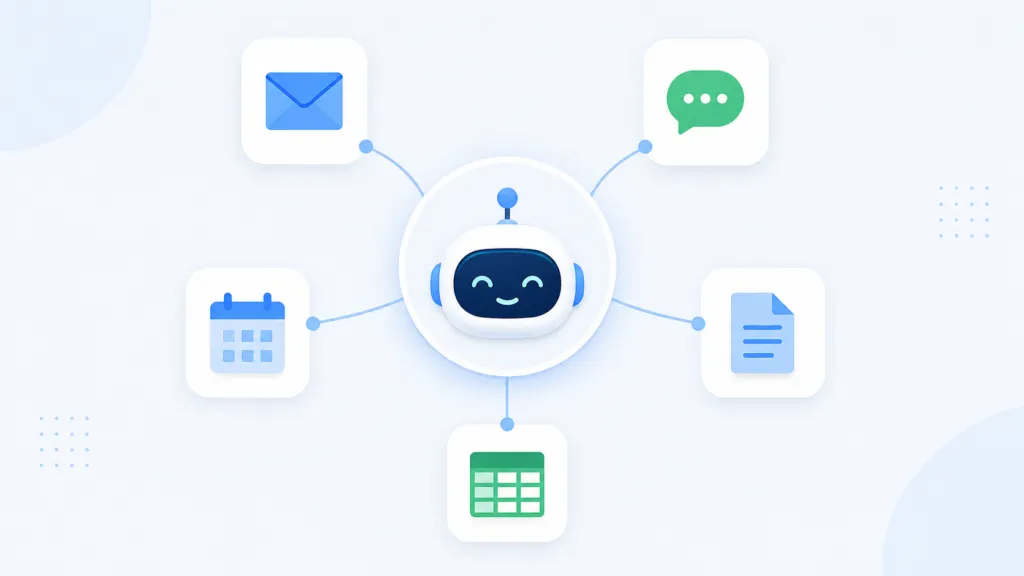
Scout is an always-on AI agent that works inside Microsoft 365. It has its own identity and permissions within your organization. Instead of going to a separate app like ChatGPT, Scout responds in real time the way a teammate would.
It can respond to emails through Outlook. It can answer messages in Teams. It can work across your calendar, docs, spreadsheets, and any other Microsoft product, and it can connect with external tools.
Scout is built on top of OpenClaw, the open-source agent framework that went viral in early 2026. That’s part of what makes it potentially so powerful. The other part is the price.
Microsoft has made a strategic move to intentionally stay about six months behind the frontier models so they can keep their costs much lower. Microsoft AI chief Mustafa Suleyman has been open about this approach. They’re choosing to run slightly older, more efficient models instead of chasing the absolute newest releases.
I think that’s super smart on Microsoft’s part. A lot of companies are realizing they can’t keep spending on AI the way they have been.
@tjrobertson52 Microsoft Scout vs OpenClaw vs Google Spark: which one fits YOUR business? #AIAgents #SmallBusiness #MicrosoftScout #Tech
♬ original sound – TJ Robertson – TJ Robertson
What Is Google Gemini Spark?
Gemini Spark is Google’s version of the same idea. It’s a 24/7 AI agent that runs inside Google Workspace. It connects to Gmail, Calendar, Drive, Docs, Sheets, Slides, and even YouTube and Maps.
Spark runs on Google’s Gemini 3.5 Flash models, which are designed for fast, cost-efficient processing. It also uses an orchestration model called Antigravity for multi-step tasks. Each task runs in a fresh, isolated virtual machine in Google’s cloud, which handles the security side.
To access Spark, you need Google’s AI Ultra plan at $100 per month. That targets power users and businesses rather than casual consumers. Spark can also connect to non-Google tools through enterprise connectors, including Microsoft SharePoint, OneDrive, ServiceNow, and Salesforce.
Why Are Companies Burning Through Their AI Budgets?
Here’s the thing. A lot of companies are learning the hard way that always-on AI agents eat through budgets fast. The problem is token consumption.
An AI agent that runs autonomously burns far more tokens per task than a simple chatbot. It repeats queries in sequence across multiple steps, and the costs add up quickly.
Uber exhausted its annual AI budget in just four months. Their CTO disclosed the overrun in April 2026, and the company has since capped employees at $1,500 per month per agentic coding tool. One industry report found that a separate firm hit $500 million in AI usage in a single month after lifting caps on their Anthropic Claude access.
This is exactly why Microsoft’s off-frontier approach matters. With the right setup, you don’t need the smartest model for most work.
Microsoft is also making it easy for businesses to fine-tune on their own data and processes, which should further improve performance without increasing the cost.
Should Your Enterprise Use Scout or Spark?
For any large enterprise already using Microsoft 365 or Google Workspace, the decision is going to be pretty obvious. You just use the AI agent built into your existing workspace.
If your team’s emails, files, and workflows live in Microsoft 365, Scout plugs directly into what you already have. It uses your existing Entra identity and governance, and your IT team can manage it through the same tools they use for everything else.
If your organization runs on Google Workspace, Spark is the natural fit. It natively connects to Gmail, Docs, Sheets, Drive, and the rest of the Google ecosystem.
Both agents accomplish the same core goal. They reduce manual work like scheduling, summarizing, and drafting so your team can focus on higher-value tasks. The difference is entirely about which ecosystem you already live in.
What About Custom AI Agents Like OpenClaw and Hermes?
For solopreneurs, the decision is easy. You should build your own custom agent using OpenClaw or Hermes.
OpenClaw is a 24/7 AI co-worker that you run on your own machine or server. It connects through chat apps like WhatsApp and Telegram, and it has full access to your email, calendar, files, and browser. You define its personality and tasks through simple text files, and it can run scheduled jobs or respond to events on its own.
Hermes is a self-improving agent framework from Nous Research that’s optimized for local hardware. It automatically writes and refines its own skills from experience, spawns contained sub-agents for tasks, and runs large local models on your own GPUs.
The appeal of a custom agent is the control. You can integrate it with your CRM, your databases, and your internal APIs. You can have it run nightly jobs and encode your exact business logic.
The out-of-the-box enterprise agents can’t do any of that.
You pay an upfront development cost, but then you own the agent outright with no per-user subscription fees. Over time, it becomes an owned asset that typically breaks even within one to two years.
What Are the Limitations of Scout and Spark for Small Teams?
For smaller organizations with fewer than 50 people, I think both Scout and Spark are likely to have guardrails and limitations that are hard to swallow.
Enterprise AI products prioritize security and compliance, often at the expense of flexibility. In practice, Scout and Spark will only read and summarize content or perform simple tasks within approved apps. They can’t autonomously run an end-to-end workflow across your custom tools.
They can’t write back into your proprietary databases or trigger private APIs. They won’t run a 2 AM batch task on their own. And they can’t incorporate business rules beyond what their model already knows.
The subscription model is also a problem at a smaller scale. A 50-person team would pay tens of thousands per year in Copilot or Google AI Ultra licenses. That’s real money for a small business, and you might still be missing the deeper automation you actually need.
By contrast, open-source frameworks like OpenClaw and Hermes have no built-in guardrails beyond what you impose. You control exactly what the agent does and how it connects to your tools. That requires technical skill and careful security planning, but for a small team that needs flexibility, it opens up far more possibilities.
How Do Scout, Spark, and OpenClaw Compare?
| Feature | Microsoft Scout | Google Gemini Spark | OpenClaw / Hermes |
| Workspace | Microsoft 365 (Teams, Outlook, SharePoint) | Google Workspace (Gmail, Docs, Sheets, Drive) | Any (connects via APIs, chat apps, browser) |
| Cost Model | Per-seat Copilot license | $100/month AI Ultra plan per user | One-time dev cost, no per-seat fees |
| Best For | Enterprises on Microsoft 365 | Enterprises on Google Workspace | Solopreneurs and small teams under 50 |
| Customization | Limited to Microsoft ecosystem and approved connectors | Limited to Google ecosystem and enterprise connectors | Fully customizable with any tool, API, or database |
| Security Model | Entra ID identity, scoped credentials, audit trails | Ephemeral VMs, data-loss prevention, explicit approvals | You set your own security boundaries |
| Underlying AI | OpenClaw framework with off-frontier models | Gemini 3.5 Flash with Antigravity orchestration | Your choice of model (local or cloud) |
| Setup Difficulty | Low (IT deploys through existing M365 admin) | Low (requires AI Ultra subscription and config) | High (requires developer to build and maintain) |
Which AI Agent Should Your Business Use?
There is no single best agent for every business. Here’s how I’d break it down.
Large enterprises (100+ employees) should choose the agent that matches their platform. Microsoft 365 shops should go with Scout, and Google Workspace organizations should go with Spark. Both offer strong security and IT controls, and they’ll handle a lot of the repetitive work that bogs teams down.
Mid-sized companies (50 to 300 employees) should evaluate based on their platforms and their appetite for customization. If your workflows are fairly standard, Scout or Spark still makes sense.
But do the math on licensing costs per seat. At some point, building a custom agent for your critical workflows is actually cheaper than paying for Scout or Spark across the whole team.
Small businesses and solopreneurs (under 50 people) are almost always better off going the custom route. Deploy an OpenClaw or Hermes agent on a server or even a powerful desktop. It can read your email, run on a schedule, integrate with your CRM, and encode your exact business logic, all without per-seat fees.
You’ll need technical help to set it up. But the long-term savings and flexibility make it worth it.
The shift toward always-on AI agents is happening right now. Every major player understands this is coming. The businesses that prepare for AI agents now will have a significant head start over those that wait.
AI costs keep climbing, but the right agent architecture can keep spending predictable while dramatically increasing what your team can accomplish.
Is Microsoft Scout available yet?
Scout is currently in private preview for organizations enrolled in Microsoft’s Frontier program. Access requires Frontier enrollment, Intune policy configuration, an opt-in attestation, and a GitHub Copilot license. Microsoft has not announced a general availability date.
What happened between Anthropic and OpenClaw?
Anthropic announced in April 2026 that Pro and Max subscribers can no longer route their subscription quota through third-party frameworks like OpenClaw. OpenClaw users now pay per-token API rates instead of using their flat monthly subscription, which leads to roughly 50x higher costs for heavy agentic use.
The move came shortly after OpenClaw’s creator, Peter Steinberger, was acqui-hired by OpenAI. Anthropic is reportedly developing its own enterprise agent called Orbit.
Can Scout or Spark connect to tools outside their ecosystem?
Yes, both offer connectors for third-party services. Scout integrates with external tools through Microsoft’s Copilot ecosystem, and Spark has enterprise connectors for services like Microsoft SharePoint, OneDrive, ServiceNow, and Salesforce. The range of integrations will grow over time, but neither agent currently matches the flexibility of a custom-built solution.
How Can TJ Digital Help With AI Strategy?
We help small and medium-sized businesses figure out where AI fits into their operations and marketing. Reach out to TJ Digital to talk about your AI strategy.