

No, Claude’s new Usage Policy doesn’t ban GEO. Starting November 12, 2026, you can’t use Claude to make content meant for search engines and AI tools to cite if that content lies about who’s behind it. If you use Claude to write content published under your business’s own name, the rule doesn’t change anything for you.
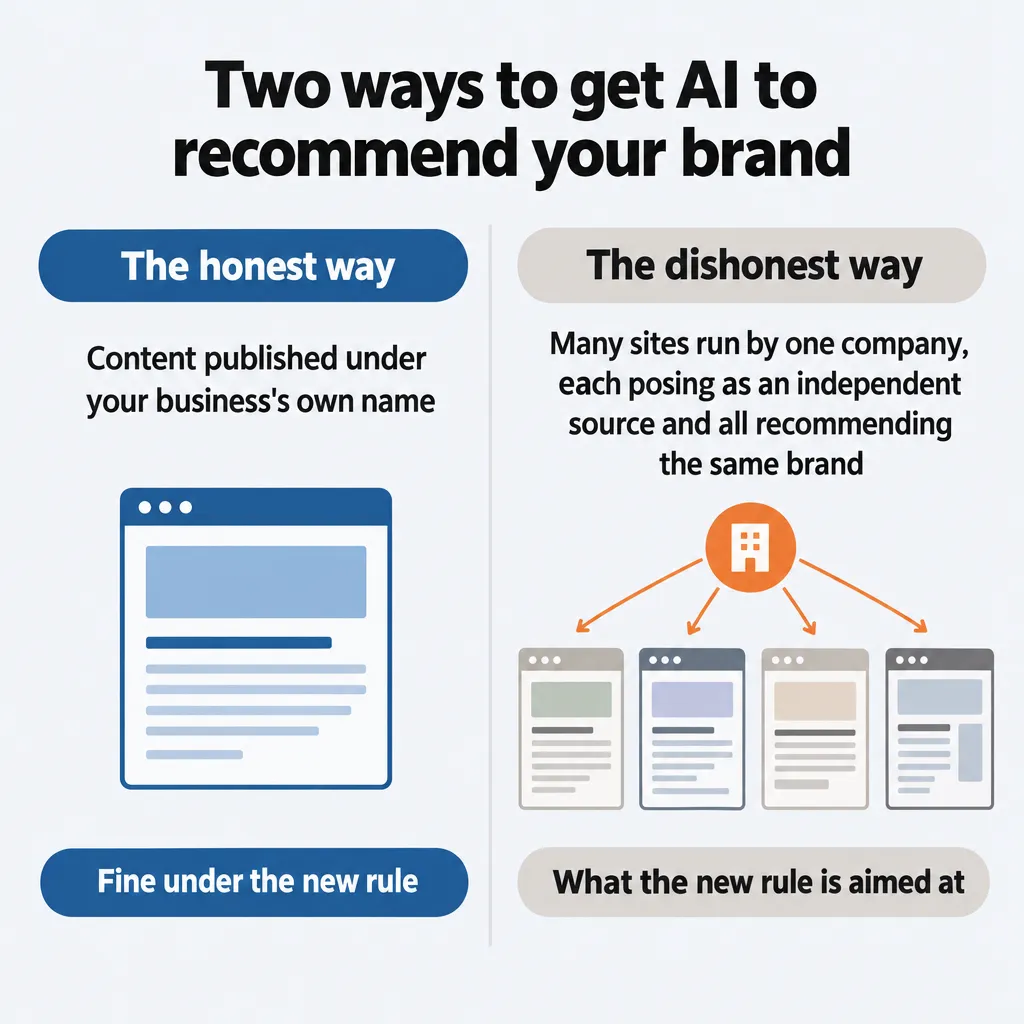
Anthropic, the company that makes Claude, gives an example in the rule: a network of websites made to look unrelated, all making the same claims. In GEO, that would be many sites run by one company, each posing as an independent source and all recommending the same brand.
I run TJ Digital, an SEO and GEO agency. Claude does most of the hands-on work on our content. People on our team review all of it before it reaches our clients.
What Does Claude’s New Usage Policy Actually Say?
The GEO rule is one bullet in a new section of Anthropic’s Usage Policy, called “Do Not Engage in Deceptive Campaigns or Artificial Activity.” It bans using Claude to:
> Manipulate the sources from which search engines or AI systems draw answers by seeding them with content that misrepresents its origin, authorship, or independence (e.g., networks of sites posing as unaffiliated sources corroborating the same claims)
That means content you make with Claude for search engines or AI answers can’t hide who made it, or pretend to come from someone with no connection to the brand it promotes.
In my video about this rule, I called it Claude’s terms of service. The correct name is the Usage Policy, the document that sets out what you can and can’t use Claude for.
Nothing in the policy mentions GEO or SEO. Anthropic says its rules “do not categorically prohibit use by any particular industry or line of business.” They’re about how you use Claude.
The other five bullets in the section ban using Claude to:
- Create or run fake personas, accounts, media outlets or organizations, or impersonate real people, organizations or media outlets, to mislead people about where something comes from, how widely a view is held, or whether they’re talking to a human (fake reviews are one of the policy’s examples)
- Hide or misrepresent who paid for content meant to influence public opinion, officials or other decision-makers
- Push content through networks of fake or supposedly independent outlets, websites or accounts to hide that it all comes from one source
- Build tools or infrastructure designed for deceptive campaigns
- Market or sell any of the above as a product or service
When Does Claude’s New Usage Policy Take Effect?
The update takes effect on November 12, 2026. Anthropic announced it on October 8. Most of the news coverage since has been about a different change in the same update, a ban on “sustained and needless abusive or cruel behavior” toward Claude itself.
The previous version, from September 2025, never mentions search engines or AI answers. That doesn’t mean using Claude to fake independent sources was allowed before. Anthropic says its policy “already prohibited” using Claude to run networks of fake accounts and fabricated news sites.
Those rules used to be spread across other sections of the policy. The update moves them into the new section and adds the bullet about search engines and AI answers.
Can You Still Use Claude to Write Content Under Your Own Name?
Yes, content written with Claude and published under your own name is fine under the new rule. Nothing in the new section bans AI-written content. Anthropic says the section is aimed at “efforts to obscure who is behind a message.”
Google doesn’t penalize content for being written with AI either. Its spam policy judges pages made at scale by whether they help users, “no matter how it’s created.” I cover Google’s side of that in does Google penalize AI content.
How Does GEO Work, and Why Would Anyone Fake Sources?
GEO works because AI tools build their answers from pages they find through search. When someone enters a prompt in ChatGPT or Google, the AI runs a series of searches, looks through a lot of pages for the answer, and cites some of them. I explain that process in more detail in how AI search works.
If those cited pages recommend your brand more often than they recommend your competitors, there’s a very high likelihood the AI recommends your brand too. So the whole game in GEO is getting the pages that get cited to recommend you.
There are honest ways to get those pages to recommend you, ones that add something useful to the internet. I cover them in how to get cited in AI search.
Anthropic’s new rule is aimed at the dishonest way. Some GEO companies spam the internet with hundreds or thousands of pages that pretend to be written by some independent third party, all recommending their client’s brand. To an AI tool, that can look like a lot of separate sources agreeing.
Does the Rule Apply to Agencies, the API and Tools Built on Claude?
Yes, the rule covers anyone who uses Claude, however they get to it. Anthropic lists four groups:
- People using Anthropic’s apps, like Claude.ai and Claude Code
- Developers and businesses using its API, which lets their own software send work to Claude
- Customers who reach Claude through cloud providers and resellers
- The end users of products and tools built on Claude
That means an agency running Claude through the API is covered. So are you, if you use a GEO tool that runs on Claude.
What Should You Ask Your GEO Agency?
If you pay an agency for GEO, ask it for a list of the pages where it’s gotten your brand mentioned, and who runs each site. What you’re checking for is a group of sites that look unrelated but are run by the agency itself, each presenting itself as an independent source and all recommending you. That’s the pattern Anthropic’s rule describes.
What Happens If You Break Claude’s Usage Policy?
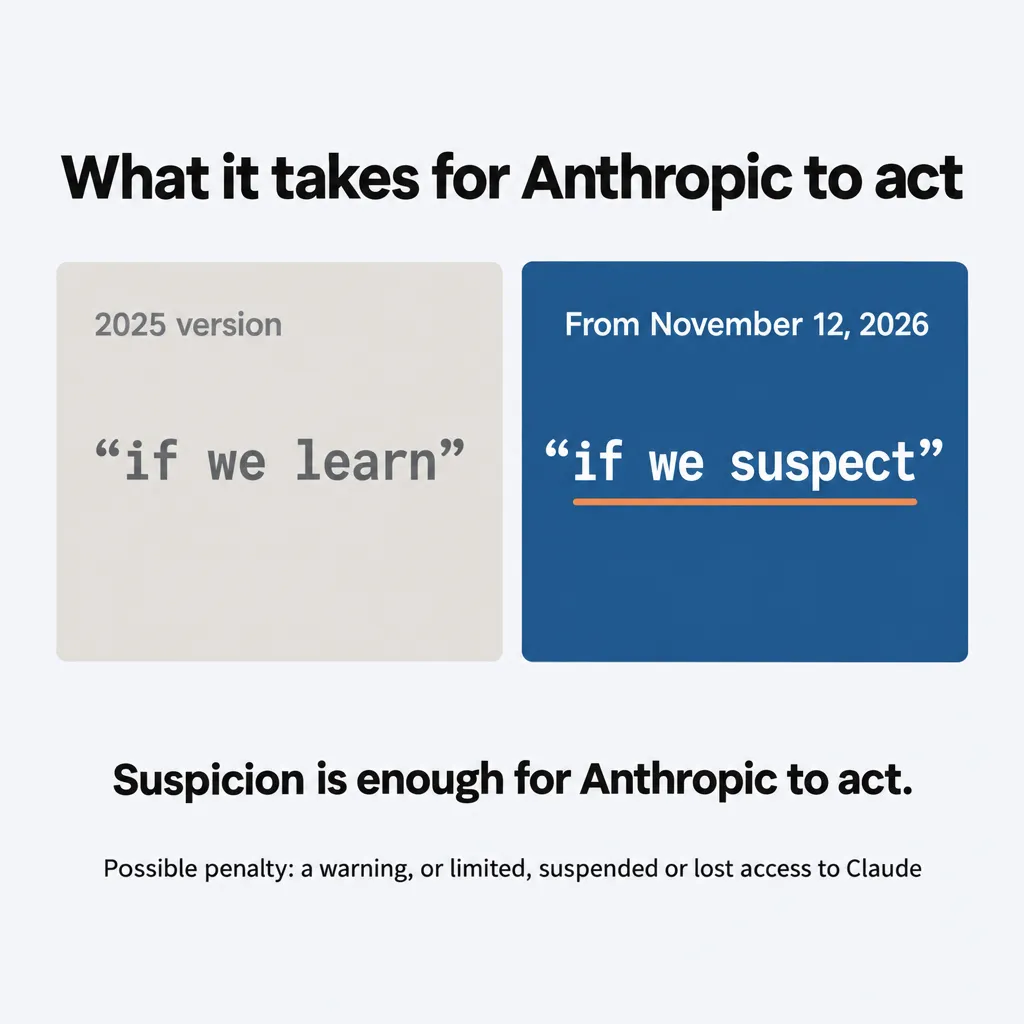
If you break the new rule, Anthropic can take away your access to Claude. The new policy says “if we suspect that you may have violated our Usage Policy, we may warn you or throttle, limit, suspend, or terminate your access.” The 2025 version said “if we learn” you’ve broken it, so under the new wording, suspicion is enough for Anthropic to act.
None of that touches your website or your rankings in Google. Your rankings depend on Google, which has its own rules on this.
Is Google Doing the Same Thing?
Google already treats attempts to manipulate the AI answers in Google Search as spam. It made that clear in its spam policies on May 15, 2026, almost five months before Anthropic’s update. I wrote about what that change means for GEO in Google’s 2026 spam update.
Lily Ray, an SEO and AI search professional, pointed out Anthropic’s new rule on X and said it “feels a lot like the early days of Google’s spam policies.” I read it the same way: Anthropic is starting to write rules against gaming AI answers, the way Google already has for Google Search.
The two rules can cost you different things. Breaking Anthropic’s can cost you your access to Claude, and breaking Google’s can cost you your rankings:
| Rule | What it bans | What gets penalized | The penalty |
| Anthropic’s Usage Policy (from November 12, 2026) | Using Claude to make content for search or AI answers that misrepresents who made it, who wrote it or whether it’s independent | Your Claude account (or your agency’s) | A warning, or limited, suspended or lost access to Claude |
| Google’s spam policies (AI answers added May 15, 2026) | Techniques that manipulate Google’s rankings or the AI answers in Google Search | Your website | Your site ranks lower or drops out of results |
In my reading, the closest thing in Google’s rules to Anthropic’s example of a network of sites posing as unrelated sources is its rule against scaled content abuse. Scaled content abuse means publishing large numbers of pages mainly to manipulate rankings. One of Google’s own examples is “creating multiple sites with the intent of hiding the scaled nature of the content,” which means using several sites to hide how much content you’re producing.
Google doesn’t treat GEO itself as spam. Its guide to AI search says optimizing for AI search “is optimizing for the search experience, and thus still SEO.” The same guide warns that “seeking inauthentic ‘mentions’ across the web isn’t as helpful as it might seem.”
Does Fake-Source GEO Still Work?
For now, faking sources can still get AI tools to recommend a brand in some cases. I don’t want to pretend it doesn’t work at all anymore. People do it because, up until recently, it’s been very effective.
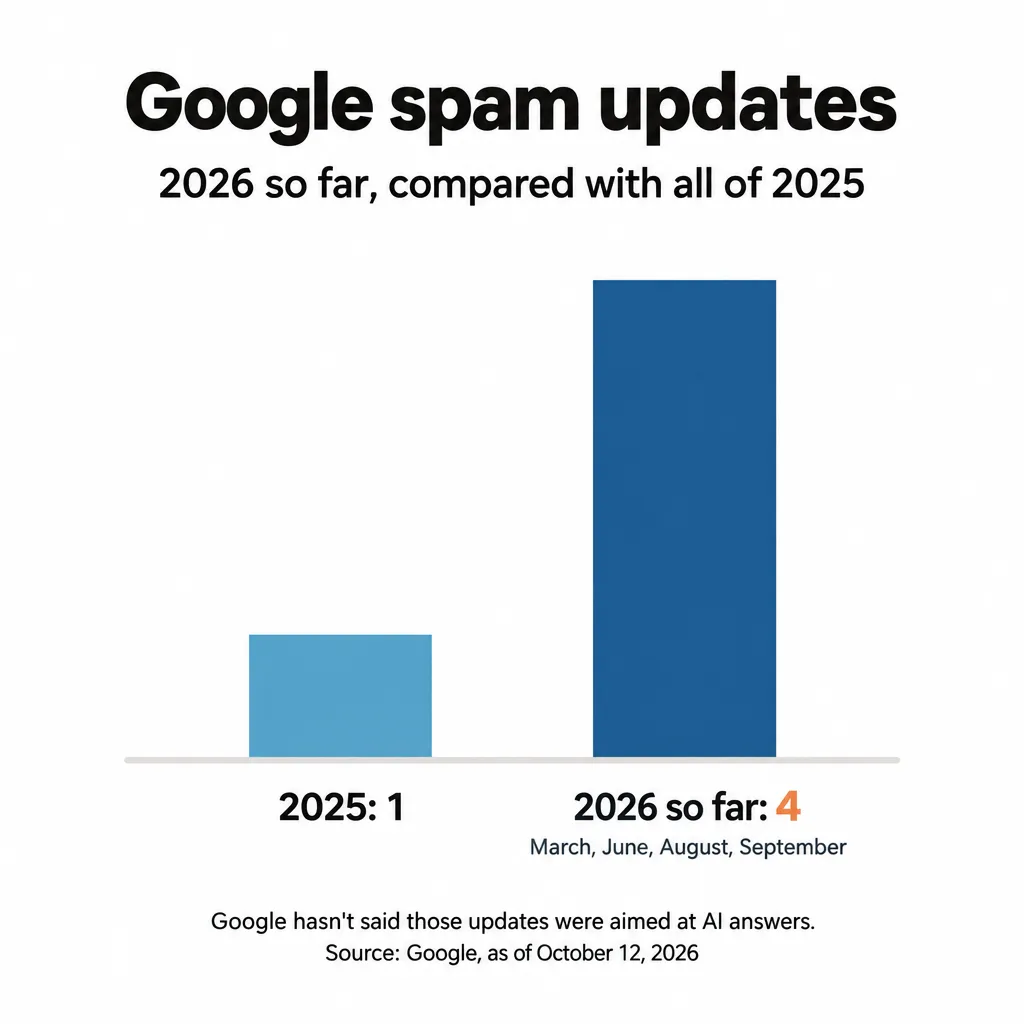
But Google has released four spam updates in 2026 so far (March, June, August and September), compared with one in all of 2025. Google hasn’t said those updates were aimed at AI answers. From what I’m seeing, though, its systems are getting much better at detecting this kind of thing.
For most brands, it isn’t worth the risk. You don’t want to be on Google’s bad side. If you use Claude to do it, you’d also be risking your Claude access once the new policy takes effect.
Switching to ChatGPT or another AI tool doesn’t make faking sources safe, because Google’s spam policies judge the pages, whichever tool wrote them. That holds even though OpenAI’s usage policies and Google’s rules for using its own AI tools don’t have a matching rule, as of October 12, 2026.
You also don’t want to be making the internet a worse place. And you don’t have to.
How Do You Grow AI Visibility Without Breaking the Rule?
The safe way to grow AI visibility is to have AI turn a few minutes of you talking about a topic into content published under your name. It takes just the smallest amount of effort, it doesn’t break any of these rules, and it adds a lot of value to the internet. It’s the number one thing we recommend to our clients at TJ Digital, and it’s the only form of marketing I do for the agency.
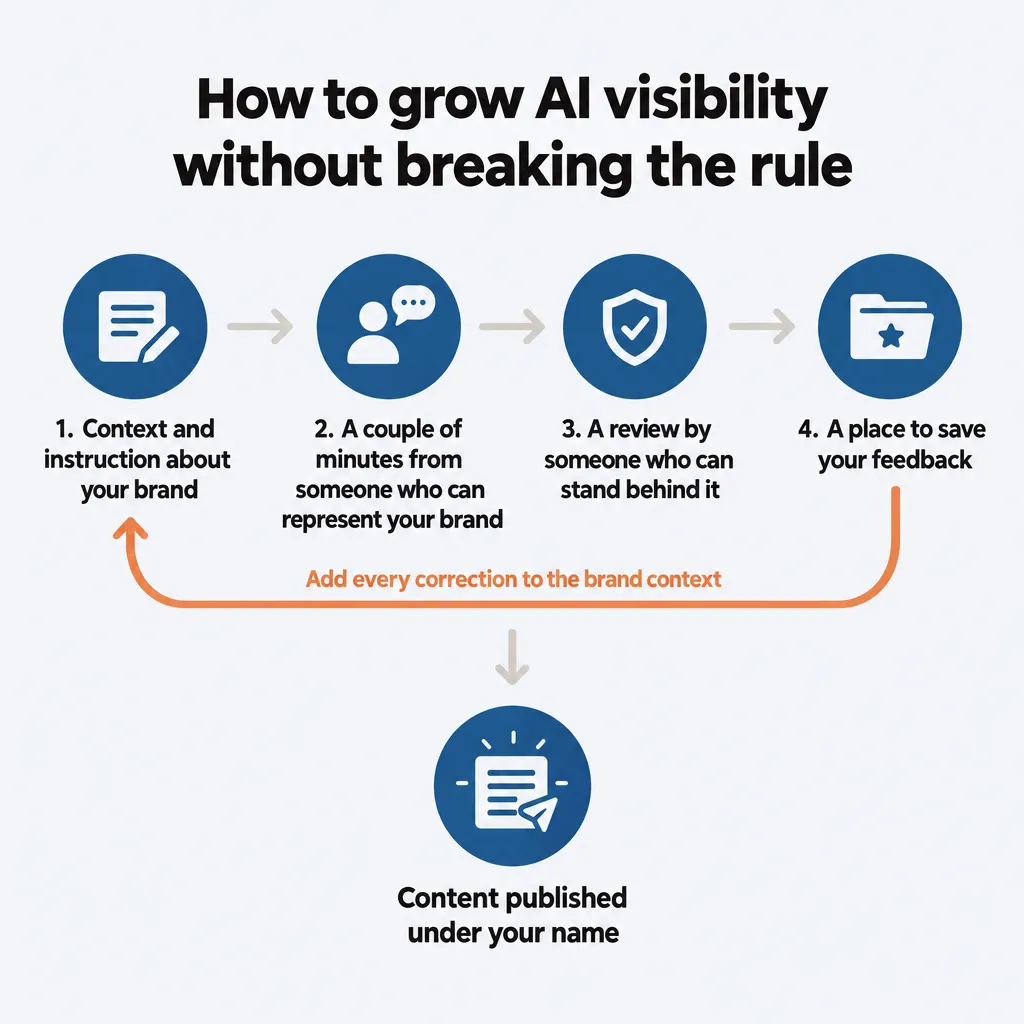
The top AI models can now write very high-quality content with the right instruction. On their own, though, the content comes out somewhat generic and probably feels like AI wrote it. Four things fix that:
- Context and instruction about your brand. The AI needs to know your business, your views and how you talk. We build this for every client as a Brand Ambassador: a knowledge base about the company that the AI works from, so everything it writes sounds like that brand. I explain how to build that context in AI content strategy.
- A couple of minutes from someone who can represent your brand, for each piece. It can be as simple as rambling into a microphone for two to five minutes on a topic. My favorite input is a short video. Even from an audio clip, with the right systems in place, AI can make videos, social posts, articles and blog posts.
- A review by someone who can stand behind it. Someone who can speak for the brand should read what the AI makes.
- A place to save your feedback. Add every correction to the brand context from step 1, so the AI has it the next time it writes. For our clients, every piece of feedback goes into their Brand Ambassador, so they only have to give it once. Over time, you get to a point where you have very little feedback left to give.
Claude does this automatically now for every video I record. I just give it the raw video file, and it drafts all the posts and publishes them for me. I still review the content to make sure I can stand behind every word of it.
It takes very little of my time. The content represents my views, and it’s better than what I would have created if I spent all day doing it. For our clients, it’s part of every SEO and GEO campaign we run.
If you have questions about Claude’s new rule or about setting up content like this for your business, reach out through our contact page or email me at tj@tjrobertson.com.