
How to Do a Website Content Audit in 2026
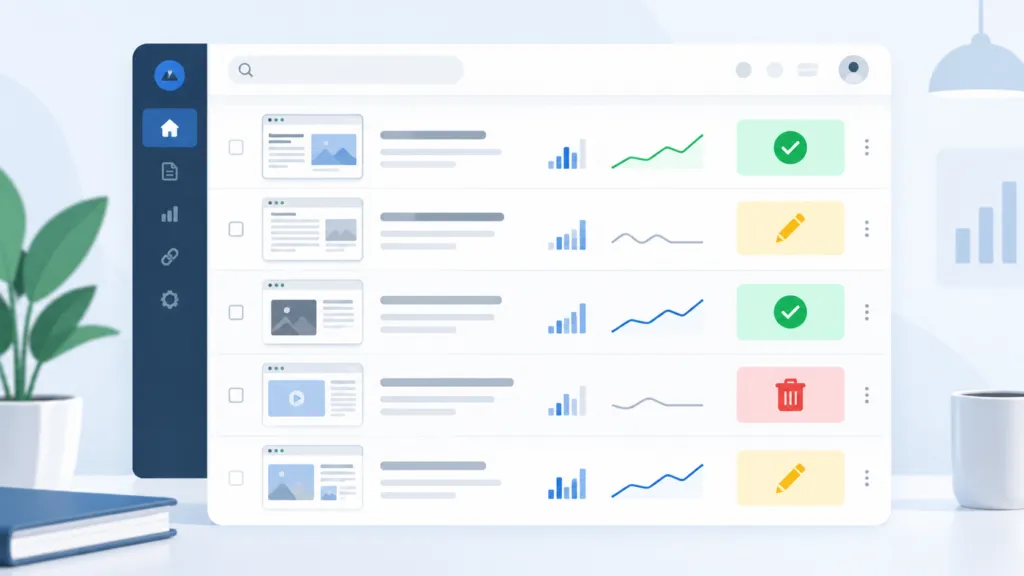
A website content audit is a page by page review of every URL on your site that ends in one decision per page. Keep it, rewrite it, or remove it. You pull crawl data, Google Search Console data, and Google Analytics data into one spreadsheet, review each page against that data, and then act on […]
How Much Content Is Too Much? Safe AI Publishing in 2026
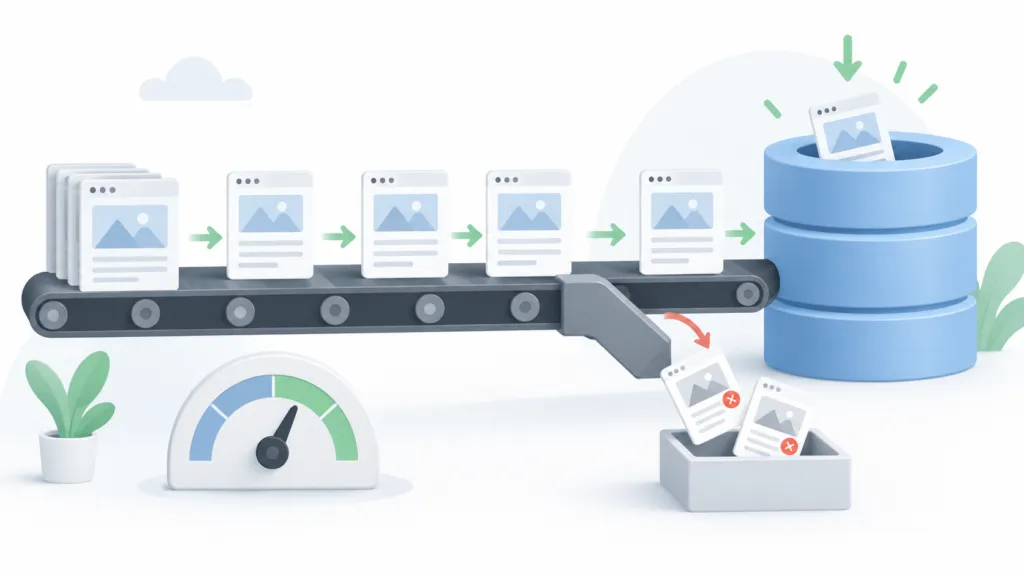
There’s no page-per-day limit in Google’s guidelines. For most websites, one strong page per week is a safe starting pace. About one page per day becomes reasonable once you have 50 or more pages already pulling in search traffic. At TJ Digital we manage content for more than 40 client websites, and one number tells […]
How to Structure Your Company Data for AI in 2026
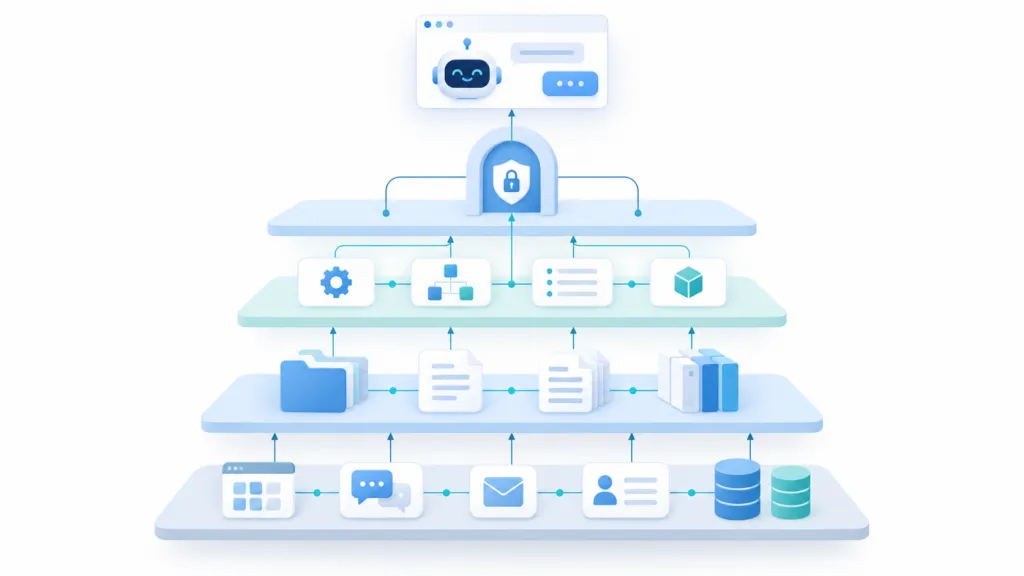
Structure your company data in four layers: the live systems you already use, a curated knowledge base of canonical documents, a skills repo that holds your instructions, and a gateway that controls how AI reaches all of it. Keep live data live. Compile durable knowledge into documents an AI can read. Package repeatable work as […]
How AI Is Changing How We Work in 2026

AI is changing work by moving people out of production and into supervision. The parts of your job that happen on a computer (writing the draft, building the deck, pulling the report, formatting the data) are increasingly handled by a model. The parts that stay human are accountability, relationships, and judgment. At TJ Digital, we […]
GPT-6 Astra: What It Means for Your Business in 2026

GPT-6 Astra is OpenAI’s frontier model, released on September 3, 2026. It operates software on your behalf. It browses, fills out forms, updates CRM records, works inside document editors, writes and tests code, builds and QAs websites, and runs multi-step workflows while you do something else. For most business owners, the useful move is to […]
Gemini 3.8 Flash: Is Google Back in the AI Race?

Google is back in the top tier of the AI race. Gemini 3.8 Flash, released on September 2, 2026, scores 74% on the DeepSWE v1.1 benchmark for software engineering, tying GPT-6 Astra and Claude Opus 5. It does that at an average cost of $2.36 per task against $11.84 for Opus 5. On raw intelligence, […]
Claude Fable 5.1 Review: Why It’s the Best Model for Work in 2026

Claude Fable 5.1 is a bigger update than the version number suggests, and for most work there is no longer a reason to use Fable 5. It more than doubled the previous high score on Anthropic’s agentic science benchmark, going from 24.7% to 52.6%. It also handles long-running multi-step tasks better, follows instructions more reliably, […]
Does Your Website Need a Markdown Version in 2026?

No. A Markdown version of your website will not help you rank higher in Google, and it will not get you recommended more often by ChatGPT. Google has now said that directly, and the crawler experiments published over the past year back it up. I still think you should do it. Same with an llms.txt […]
Does Google Penalize AI Content? What the August 2026 Spam Update Actually Targeted
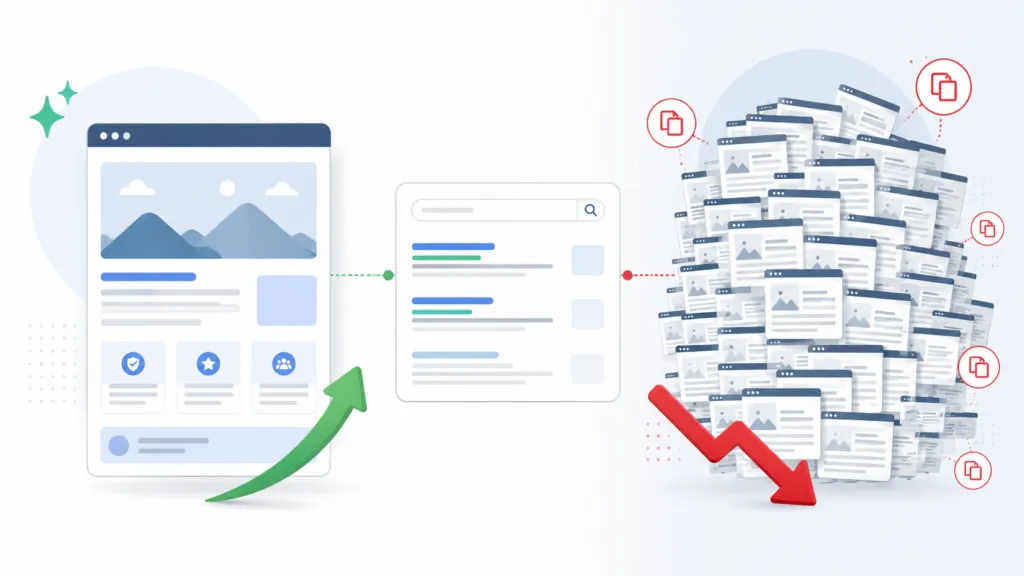
Google’s August 2026 spam update did not penalize AI-generated content. It penalized low-quality content produced at scale, regardless of whether a human or an AI wrote it. At TJ Digital, we create content for about 60 websites, and 100% of it is AI-generated. I just finished comparing our clients’ data from the 10 days after […]
AI Website Management: How to Automate Without Losing Quality

AI agents can now manage nearly every part of a website, from content creation and design to maintenance and deployment, without any loss in quality. In fact, you should expect quality to go up. At TJ Digital, where we manage AI-driven content strategies for roughly 40 to 50 websites, the biggest project we’ve been working […]