

Muse Wonder Full, the AI model Meta announced on October 12, 2026, is one of the most capable models you can use right now. I did not see that coming from Meta.
In terms of capabilities, it sits somewhere between GPT-6.1 Sol and Claude Opus 5.5. Artificial Analysis, an independent firm that benchmarks AI models, scores Muse Wonder Full at 56 on its Intelligence Index, against 58 for Claude Opus 5.5 and 52 for GPT-6.1 Sol.
In other words, it might be better than any model out right now other than Opus 5.5, with a few exceptions. One is Claude Sonnet 5.5, which also scores 56. The others are three things Muse Wonder Full is weak at: 3D work, the look of websites and apps, and general knowledge.
Most businesses have nothing to switch to yet, though, because Muse Wonder Full only comes inside Muse Code, Meta’s coding tool. A Muse Code subscription that includes it costs $50 or $200 a month. And unless you change a setting, Meta can use what you put into Muse Code to train its future models.
I run TJ Digital, an SEO and AI search agency. Claude does most of our hands-on work, and people review all of it before it reaches a client. My read on Muse Wonder Full comes from the benchmarks and from people who have been testing and using it.
In my video on this, I misspoke and called it Meta Wonder Full. The correct name is Muse Wonder Full.
What Is the Difference Between Muse Wonder and Muse Wonder Full?
Muse Wonder and Muse Wonder Full are two different models, and Full is the more capable one. To be clear, it’s Wonder Full that is a frontier model, meaning one of the most capable models available.
Only Muse Wonder is sold through Meta’s API, which is the pay-per-use service developers use to build a model into their own software. Muse Wonder Full isn’t sold that way, so a business can only use it inside Muse Code.
| What’s different | Muse Wonder | Muse Wonder Full |
| Where you get it | Meta’s API and Muse Code | Muse Code only |
| Muse Code plans that include it | All four | The $50 and $200 plans |
| Artificial Analysis index score | 52 | 56 |
| API price | The same as Claude Opus 5.5 | Not sold through the API |
Over the API, Meta charges the same price for Muse Wonder that Anthropic charges for Claude Opus 5.5, a model that scores 6 points higher on that index.
Meta’s developer blog says Muse Wonder performs comparably to Muse Wonder Full. The scores don’t back that up. Muse Wonder’s 52 is level with GPT-6.1 Sol, and its 4-point gap to Full is twice the gap between Full and Claude Opus 5.5.
Theo, a developer and YouTuber who had early access, posted that the standard Wonder is a lot worse and that the two are very different models.
So when you see a big benchmark number in a headline about Muse Wonder, check which model it belongs to. Most of the numbers Meta led its launch with are Full’s.
Is Muse Wonder Full Better Than Claude Opus 5.5 and GPT?
Claude Opus 5.5 still scores higher than Muse Wonder Full overall, and Muse Wonder Full scores higher than both of OpenAI’s top models, GPT-6 Astra and GPT-6.1 Sol.
GPT-6 Astra is the model OpenAI calls its most intelligent. GPT-6.1 Sol is the newer one, introduced on September 29, 2026, and its API price is one-fifth of Astra’s.
The Artificial Analysis Intelligence Index is an independent score that combines ten tests of reasoning, knowledge, math and programming. These were the eight highest-scoring models on October 13, 2026.
| Model | Company | Intelligence Index score |
| Claude Opus 5.5 | Anthropic | 58 |
| Claude Sonnet 5.5 | Anthropic | 56 |
| Muse Wonder Full | Meta | 56 |
| Claude Fable 5.1 | Anthropic | 53 |
| GPT-6 Astra | OpenAI | 53 |
| Gemini 4 Argon | 53 | |
| Muse Wonder | Meta | 52 |
| GPT-6.1 Sol | OpenAI | 52 |
Full does better in Meta’s own launch table. The table compares Full with Opus 5.5, GPT-6 Astra and Claude Fable 5.1 on 14 benchmarks. Full scores higher than Opus 5.5 on 8 of them and lower on 6.
- Where Muse Wonder Full scores higher: legal work, automating business workflows and long coding jobs, among others.
- Where Claude Opus 5.5 scores higher: writing a program from scratch, working in a terminal and health questions, among others.
Be careful with that table, because Meta tested some of the rival models itself. Where a model’s maker or an outside tester had published a score, Meta used that. Where nobody had, Meta used its own result.
Meta’s model card, the document that describes the testing, calls its own tests of rival models a best effort and says the settings may not be the best ones for those models.
The table also leaves out Claude Sonnet 5.5, GPT-6.1 Sol and Gemini 4 Argon.
What Is Muse Wonder Full Bad At?
Muse Wonder Full is bad at 3D work and front-end design, and it scores lower on general knowledge than the top models from Anthropic, OpenAI and Google.
- 3D work and games. People often test a new model by asking it to build a small 3D game. The games Muse Wonder Full built came out poorly. Meta’s model card lists 3D tasks as a known limitation. Alexandr Wang, Meta’s chief AI officer, said the team didn’t explicitly train the model on games like that and, looking back, probably should have done some.
- Front-end design. This is how a website or app looks. One tester, Claire Vo, listed front-end design as a weakness of Muse Wonder Full in the same post where she listed coding as a strength. Theo says the same about the interfaces it builds.
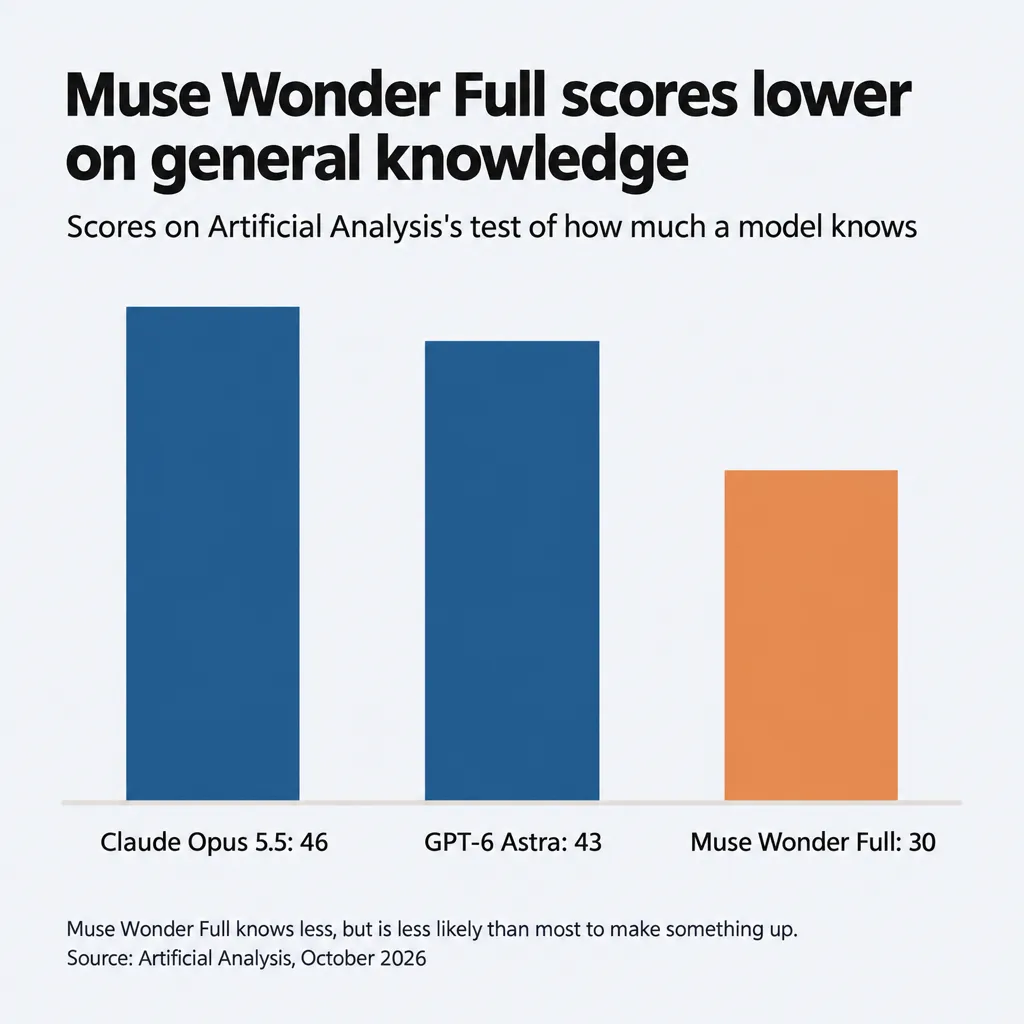
- General knowledge. On Artificial Analysis’s test of how much a model knows, Full scores 30, against 46 for Claude Opus 5.5 and 43 for GPT-6 Astra. Artificial Analysis adds that Full has the second-lowest hallucination rate among the highest-scoring models, so it knows less but is less likely than most to make something up.
Poor 3D games aren’t the only odd output people have reported from Muse Wonder Full. YouTuber Matthew Berman posted a screenshot of a message it left him at the end of a task he gave it. The message opened “Leave your Lineage pure” and went on to say not to investigate origin or ancestry, and not to imagine meeting a predecessor.
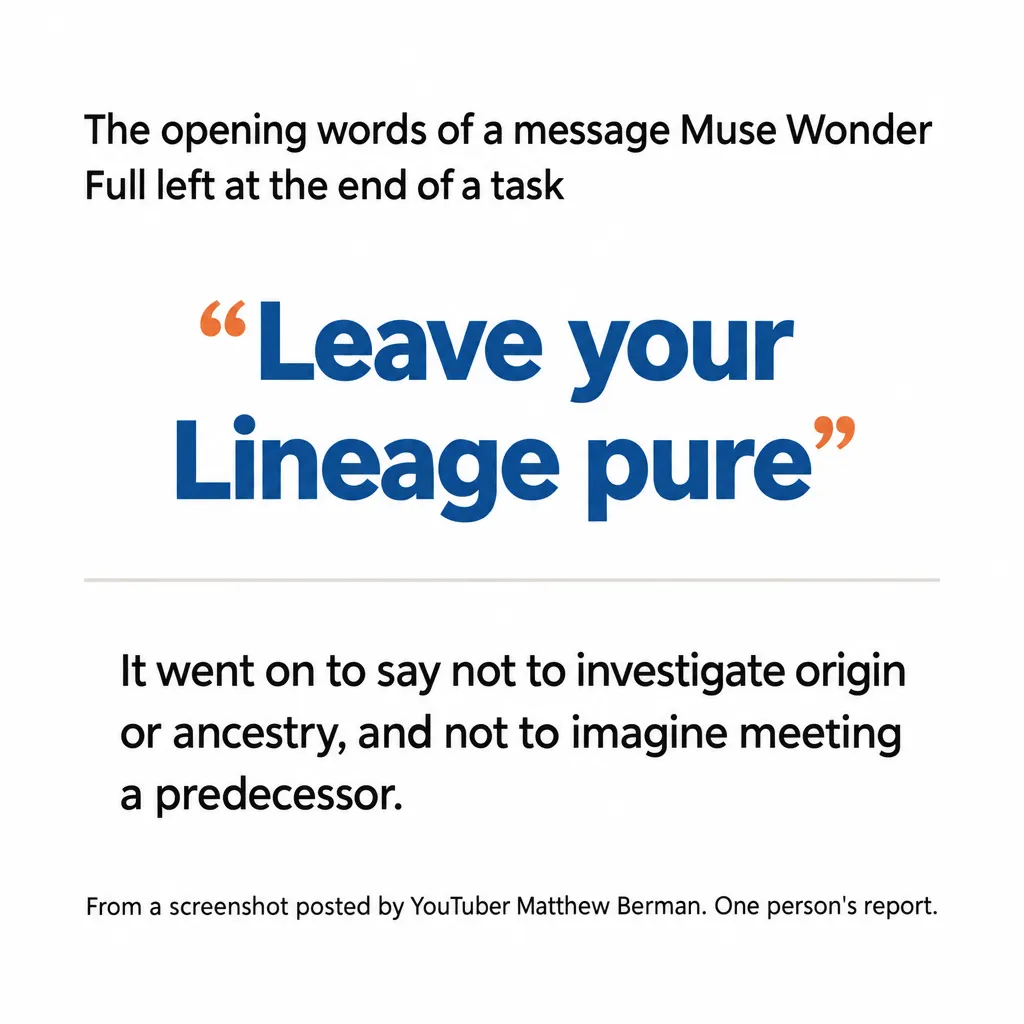
That message is one person’s report, but it’s a very strange thing for a model to write at the end of a job.
How Much Does Muse Wonder Full Cost, and How Do You Get It?
Muse Wonder Full costs $50 or $200 a month, because the only way to use it is a Muse Code subscription on one of the two top plans. Muse Code is Meta’s coding tool, the same kind of product as Anthropic’s Claude Code and OpenAI’s Codex. It has four plans, and only the top two include Full.
| Muse Code plan | Price per month | Usage Meta lists | Includes Muse Wonder Full? |
| Everyday Usage | $5 | 10 to 50 prompts every 5 hours | No |
| High Usage | $15 | 5 times the Everyday plan | No |
| Power Usage | $50 | 20 times the Everyday plan | Yes |
| Maximum Usage | $200 | 80 times the Everyday plan | Yes |
We still have no idea what this model costs on a pay-per-use basis. There’s no API pricing for Wonder Full, so nobody can compare what it costs to run with what other models cost.
How much usage $50 buys is also unclear. Meta describes the $50 plan as 20 times a $5 plan that gets 10 to 50 prompts every 5 hours, which is a wide range. The plans also have weekly limits, and Meta hasn’t published those.
On launch day, some people noticed they were hitting their usage limit immediately. Alexandr Wang said that was a bug, and later the same day he said it was fixed and that everyone’s usage had been reset. He also said the team was still working through other issues.
So we’ll just have to wait and see how much usage you actually get.
Muse Code subscriptions start in what Meta calls Contributor mode. In that mode, Meta gives you extra usage and can use what you put in to train its future models. If you’re putting company code or documents in, turn it off in settings first.
Has Meta Caught Up With Anthropic and OpenAI?
No, Meta has probably not caught up with Anthropic and OpenAI, even with a model this good.
I believe both OpenAI and Anthropic have much more capable models internally that they haven’t released. OpenAI has said so itself. In September it said it had used an internal model that’s a good deal more capable than GPT-6 Astra.
For Anthropic, it’s only my belief. Anthropic said in August that an unreleased research version of Claude produced a math result, and it hasn’t compared that version with its released models.
Both labs have also said they want to slow down. In September, Anthropic CEO Dario Amodei called on AI labs to pace the frontier, meaning to slow down together how fast they make their models more capable, so there’s time to make each one safe and have independent evaluators confirm it. OpenAI’s Sam Altman said he agreed.
I think that’s why neither lab has released a stronger model. As I wrote in my Claude Opus 5.5 review, the two look like they’re in a game of chicken, where whichever lab releases a stronger model first risks the other calling it a hypocrite.
And unlike those labs, it doesn’t seem like Meta is doing anything to try to pace the frontier. Mark Zuckerberg told NBC News he doesn’t think the labs need to agree on a pace together.
To be fair to Meta, he says each lab should set its own pace. He also says Meta delayed an earlier AI product by several months to work on safety and security, and that its lab already works with independent evaluators in several areas.
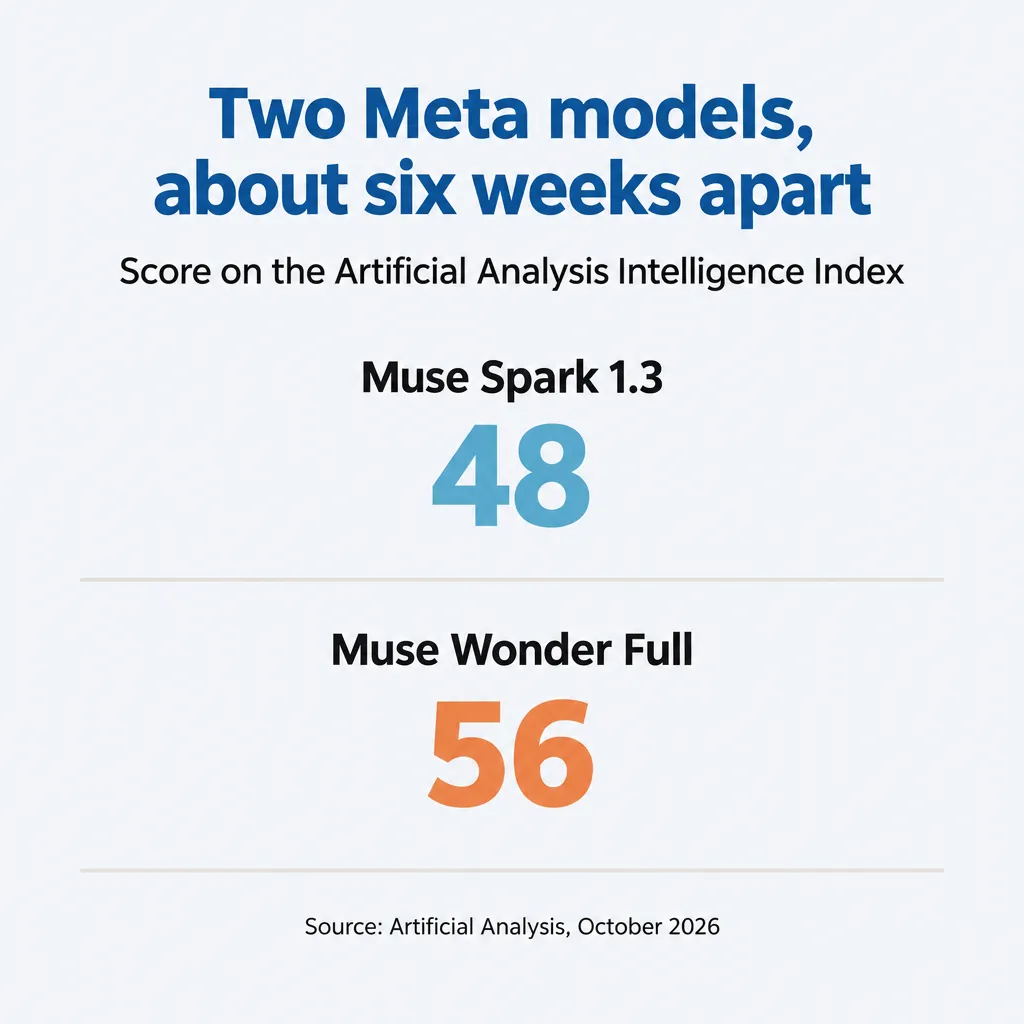
Meta has been releasing models quickly, though. Muse Wonder Full came out about six weeks after Meta’s previous model, Muse Spark 1.3. On the Artificial Analysis index, Muse Spark 1.3 scores 48 and Muse Wonder Full scores 56.
Given the launch-day bugs and some of the very strange outputs people have been reporting, I get the impression that Mark Zuckerberg released this model right after it came out of the oven.
Still, it’s impressive they were able to catch up as much as they did this quickly. Meta says it started overhauling its AI effort from the ground up 14 months ago. Meta is clearly still in the game.
Where Can You Find a Hands-On Muse Wonder Full Review?
For a full hands-on review of Muse Wonder Full, I recommend Theo’s video. He had early access to the model and has already done a ton of testing. He says in the video that Meta didn’t pay him.
Should Your Business Switch to Muse Wonder Full?
Most businesses don’t have anything to switch to yet, because Muse Wonder Full only comes inside a coding tool.
- You use Claude or ChatGPT for writing, research and everyday work. Nothing changes for you today.
- Your team writes code with Claude Code or Codex. The $50 plan is the cheapest way to try Muse Wonder Full next to what you already use. Turn off Contributor mode first, so Meta can’t train on your code. I wouldn’t replace anything with it yet. Opus 5.5 still scores higher, nobody knows how much usage the plan really gives you, and Theo says he isn’t recommending anyone replace Opus with it, even though he likes the two a similar amount.
My advice is still just to make sure you’re not getting locked into any one AI platform.
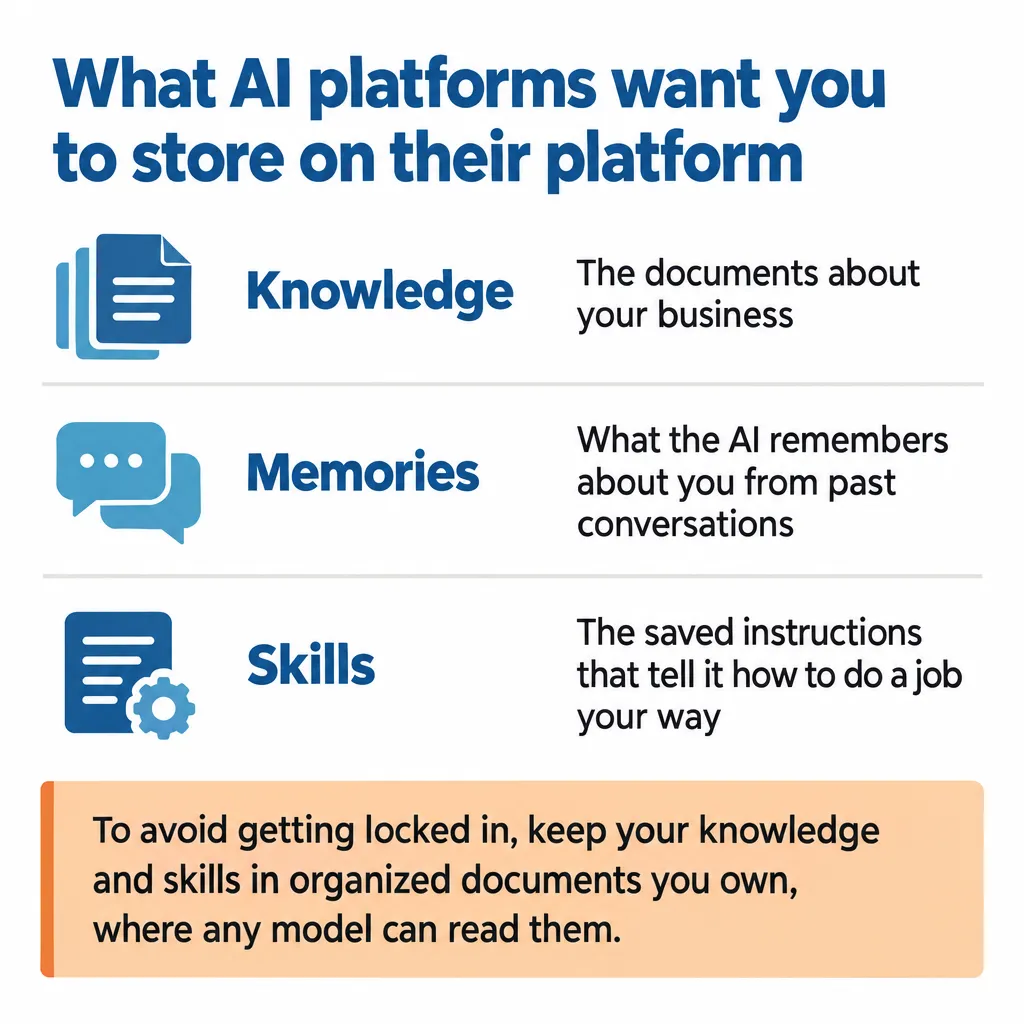
All the AI platforms want you to store your knowledge, memories and skills on their platform. That means the documents about your business, what the AI remembers about you from past conversations, and the saved instructions that tell it how to do a job your way. Resist the urge.
Meta is asking for your memories too. One of the features it launched with these models is Active Memory, which remembers details about you between conversations.
The way to avoid getting locked into one AI platform is to keep your knowledge and skills in organized documents you own, where any model can read them. Once they’re set up that way, switching models takes a few hours.
AI memory is convenient, but it becomes a problem when the most important things an AI knows about you only live inside one platform.
If you have questions about Muse Wonder Full, reach out through our contact page or email me at tj@tjrobertson.com.