
Yes, AI can now make videos good enough to represent your business, as long as it’s editing real footage of real people. The best AI-edited videos hold up next to professionally produced ones, and they still feel human. Video that AI generates from scratch is still hit or miss.
All AI needs from your business is a few minutes of someone knowledgeable talking about what they know. You don’t need special equipment to record it.
The quality stays high when a person decides what each video says and how it looks, and when every lesson from one video is written down as instructions the AI follows on the next.
At TJ Digital, Claude (Anthropic’s AI) edits all of our videos, for our clients and for our own channels, and people review every one before it’s posted.
What’s the difference between AI-edited and AI-generated video?
AI-edited video is made from footage you recorded of real people, and the AI does the editing. AI-generated video is created by AI from a written prompt, so nothing in it was ever filmed. If nobody at your business wants to be on camera, there’s a third option: a video AI makes from one of your existing blog posts.
| AI-edited video | Video made from a blog post | AI-generated video | |
| – | – | – | – |
| What’s on screen | Your real people, products and work | Visuals built from your post, with no one on camera | People and places that were never filmed, or an AI avatar of a real person |
| How polished and human it looks in 2026 | The best ones look as polished as professionally produced video and still feel human | Feels less human, because no real person is on screen | Hit or miss; the people and voices can look and sound fake |
For a business, I recommend AI-edited video whenever someone can be on camera. If you scrolled through my X or YouTube feed right now, you’d see far more videos made with AI than you would have a few months ago, and most of them were edited by AI rather than generated.
Not all of these AI-edited videos are good. But some of them really are good.
Generated clips can work for some jobs, like replacing stock footage. I covered when they make sense in my post on AI video generators in advertising. For videos that represent your business, we advise against AI avatars or AI presenters of you or your people, because viewers tend to feel tricked.
Will people be able to tell it’s AI, and will it hurt trust?
Some viewers will be able to tell that AI edited your video. In my view, that won’t hurt trust, because an AI-edited video is still a real person talking, with AI’s help. People are far more comfortable with AI helping a person than with AI making something on its own.
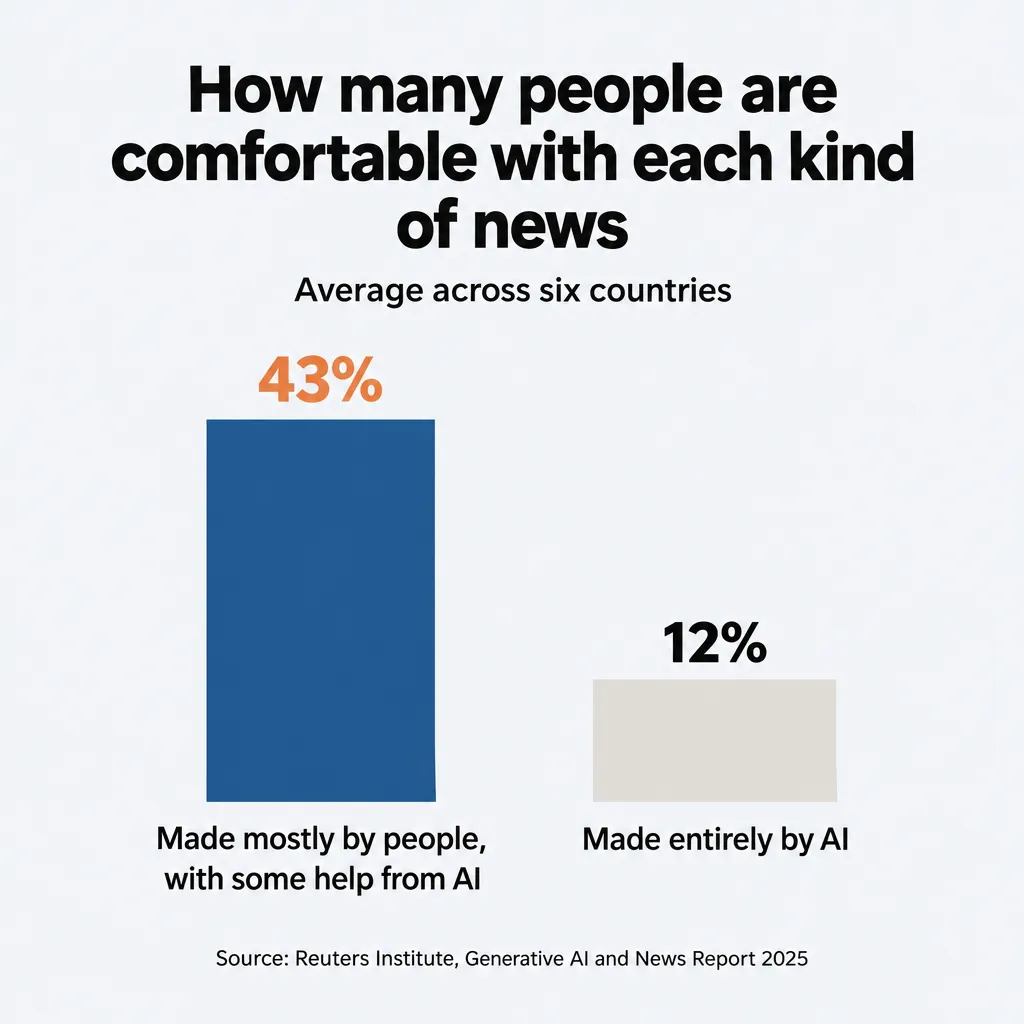
No survey I’ve found compares AI-edited and AI-generated business video directly. The closest is the Reuters Institute’s research on news: across six countries, 43% of people were comfortable with news made mostly by people with some help from AI, compared with 12% for news made entirely by AI.
In a Gartner survey from mid-2026, 57% of US consumers said AI-generated content from brands has made them less trusting of brand messaging.
What has surprised me most is how human the best AI-edited videos feel. Even when you can tell AI did the editing, you can also tell that a real person spent dozens or maybe a hundred hours of their own on the video.
It might be a video they’d been thinking about making for years. With AI doing the editing, they could finally make it with the limited time and resources they had. In other words, people are getting better at using AI as a tool for human expression, the same way they have for decades with editing software like Adobe Premiere.
Creators making their own videos still spend dozens of hours on the planning, the recording and the decisions, even with AI doing the editing. When a business has someone else make its videos with AI, its part stays the few minutes of recording.
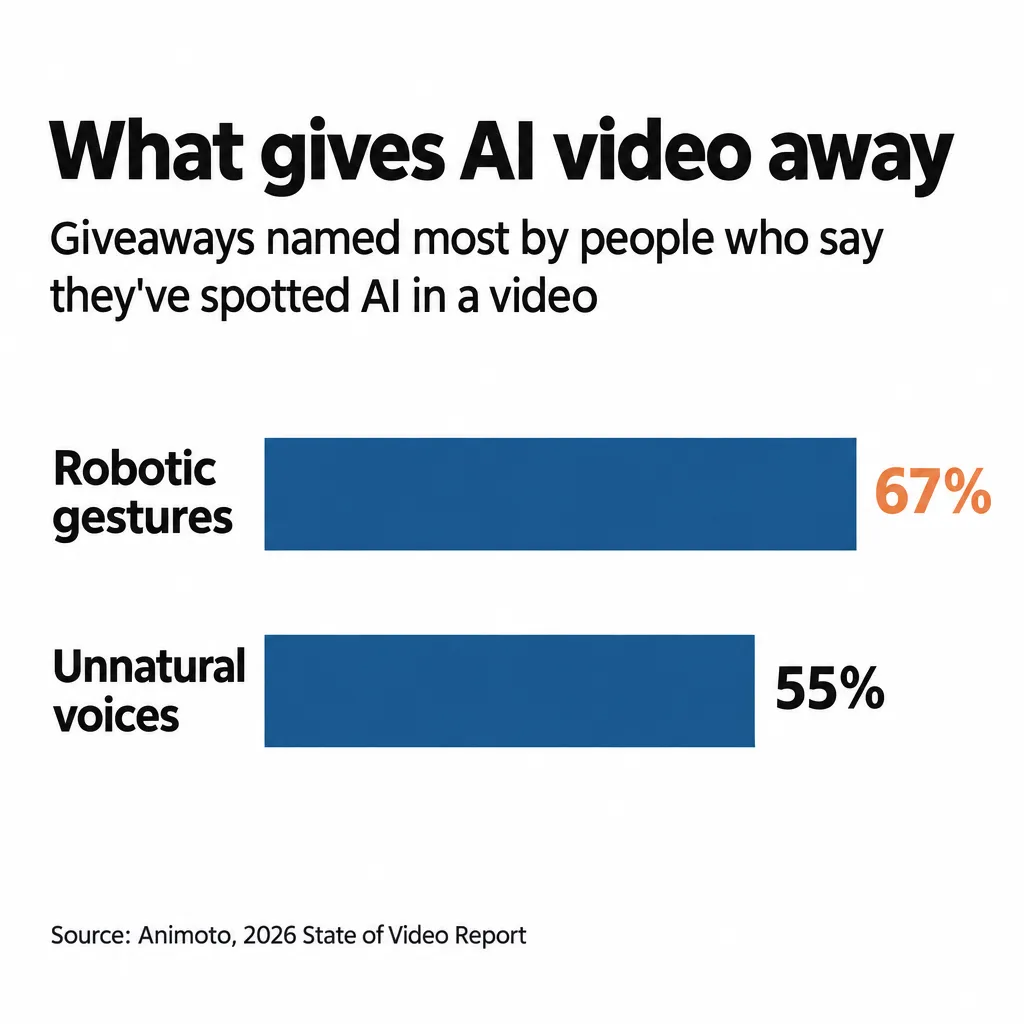
In a 2026 survey by Animoto, a video software company, the signs people named most for suspecting a video was AI-generated were robotic gestures (67%) and unnatural voices (55%). A real person on camera, speaking in their own voice, has neither problem. It’s one reason I think videos with real people on camera carry more weight now that generated video is so common.
Do you have to label AI-edited videos?
Label your video if AI adds anything realistic to it that wasn’t filmed, because that’s the kind of content all three platforms’ labeling rules cover. For basic edits, YouTube says AI captions and voice repair don’t need a label. TikTok and Meta don’t name cuts, voice cleanup or captions at all.
| Platform | Basic AI edits (cuts, voice cleanup, captions) | What needs a label |
| – | – | – |
| YouTube | Captions and voice or audio repair don’t need a label. Cuts aren’t mentioned. | Realistic content that could mislead viewers, like a real person made to say something they didn’t or a realistic scene that never happened |
| TikTok | Doesn’t name these edits. TikTok encourages a label when AI edits a video beyond minor corrections or enhancements. | Realistic content that AI generated or modified |
| Meta (Facebook, Instagram) | Doesn’t name these edits. | Realistic video or audio that was digitally created, modified or altered (Meta may require a label) |
What does AI do when it edits a video?
When AI edits a video, it does the hands-on work an editor would do:
- Cutting the recording down to the best take of each line, without the false starts, long pauses and repeats
- Cleaning up the voice by removing background noise and echo
- Adding captions timed to the words
- Adding a text hook: a short line of text on screen in the first few seconds that gives viewers a reason to keep watching
- Adding a chart or a screenshot beside the person talking, when something would be hard to follow from their words alone
How do you keep AI-edited videos high quality?
You keep AI-edited videos high quality by writing every lesson from each video into instructions the AI follows on the next one.
Every time I correct something in one of my videos or decide how something should be done, Claude writes that into the instructions. When we started adding more graphics and on-screen text to my videos, for example, many of my viewers commented that they preferred the videos from before the heavier editing.
They liked that my videos felt raw, like direct access to me. So the instructions now put only two things on screen, a text hook and captions, unless something has to be shown to be understood.
Writing lessons down works because there’s almost nothing AI can’t learn to replicate. And once it can replicate something, it can improve it.
As an illustration, say you’re editing your own videos with AI, and your first really good one takes a hundred hours. If you catalog everything you learned along the way as instructions, the second video might take 10 hours and come out even better. After that, it might take one hour, then five minutes.
From my point of view, nothing prevents you from getting faster this way while keeping everything that made that first video feel so human.
Our instructions come in two layers:
- Style instructions, one set for each kind of video we make, such as an edited video of someone talking to camera or a video made from a blog post. As of October 2026, there are instructions for about a dozen styles. I expect we’ll eventually have over a hundred. Because every client’s videos use the same style instructions, an improvement made for one client benefits all of them.
- Brand instructions, one set for each client, on how to make a video specifically for their brand. The rule to keep my videos to a text hook and captions is part of TJ Digital’s brand instructions.
What does a person still decide?
A person still makes the decisions that determine whether a video is any good:
- What the video says. It comes from the person on camera: what they know, and the experience and opinions AI can’t invent.
- How it looks. The client decides, and Claude writes their feedback into their brand instructions.
- Whether it’s ready. For our clients, an account manager reviews every video before the client sees it, and the client approves it before it’s posted.
How long does it take to make a business video with AI?
Our own editing time, as of October 2026, is about 12 hours for the first video in a new style and a couple of hours for the second. We’re working toward less than an hour per video. Your part doesn’t change: the few minutes of recording.
In early October, Claude Opus 5.5 made our video editing much better. Over the past month, I’ve been obsessively spending most of my free time on the instructions.
I’ve been in digital marketing for 17 years, and I got my start in video production. The videos we make this way are much higher quality than anything we’ve been able to make in the past. As of October 2026, we’ve made videos this way for about a dozen of our clients, and it’s going really well.
The kinds of videos brands have been paying tens of thousands of dollars for can now be made this way without sacrificing quality. On Clutch, a site where businesses review the agencies they’ve hired, the average video production project costs about $42,000.
Most projects on Clutch cost less than $10,000. The average is higher because some projects cost far more than most.
For our clients, video is included in their monthly SEO and GEO campaign, so there’s no separate production bill. That campaign is the work we do to help a business show up in Google and get recommended when people search with AI tools like ChatGPT.
Is video worth it for a business in 2026?
Video is worth it for most businesses right now, because one recording can be posted to several platforms, and each post can show up in search results or be cited in AI answers. Each of my own videos goes to six platforms: YouTube, TikTok, Instagram, Facebook, LinkedIn and X.
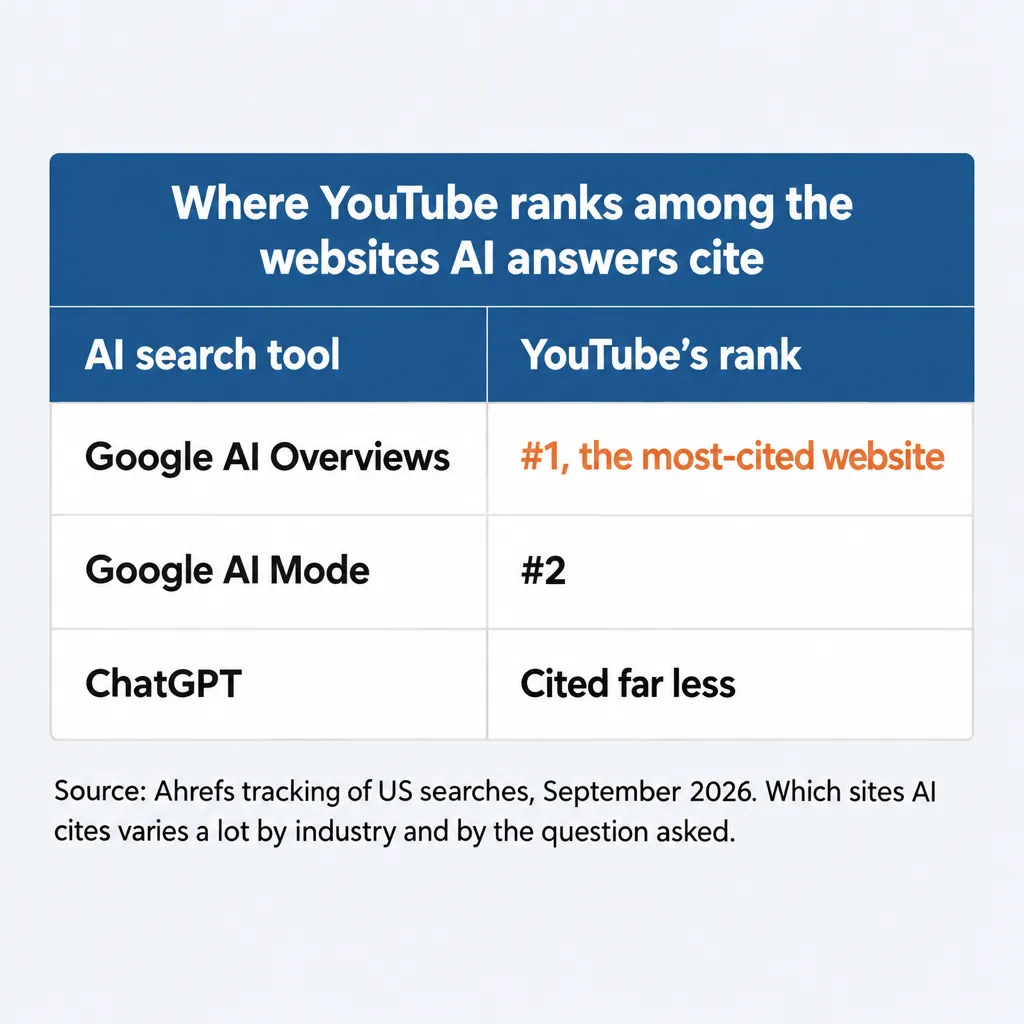
Google’s AI answers cite video heavily. AI Overviews are the AI summaries at the top of many Google results. AI Mode is Google’s chat-style AI search. In Ahrefs’ tracking of US searches in September 2026, YouTube was the most-cited website in AI Overviews and the second most cited in AI Mode.
ChatGPT cites YouTube far less, so for now the benefit comes mostly from Google. Which sites AI cites also varies a lot by industry and by the question asked.
In my experience, there’s way less competition in video than in written content like blog posts, mostly because business owners think making videos is harder than it is.
A 2024 survey of which content B2B marketers use backs up only part of this. In the Content Marketing Institute’s survey, 76% had used video in the past 12 months, compared with 92% who had used short articles or posts and 69% who had used long ones. So fewer used video than short posts, but three in four were still using it.
My prediction is that we’re about to see a new set of very talented, very prolific creators, the kind who used to make a few masterpieces a year and will be able to make a few every day. I think 2027 is going to bring a wave of very high-quality videos, and I recommend your business be part of it.
What do you need to start making videos with AI?
To start making videos with AI, you need someone knowledgeable at your business to spend a few minutes talking on camera about what they know. My guide to making marketing videos for your business walks through how to record it. If nobody wants to be on camera, a video made from one of your blog posts is the fallback.
For our clients, we turn the recording into an edited video and post it to the platforms that fit. The same recording also becomes social posts and a blog post, written from the person’s own words.
If you’re weighing whether video makes sense for your business, reach out through our contact page or email me at tj@tjrobertson.com.