

If your business runs on Google Workspace, you should use Gemini agent once it reaches your plan. Just don’t let it become the only place your company’s knowledge lives.
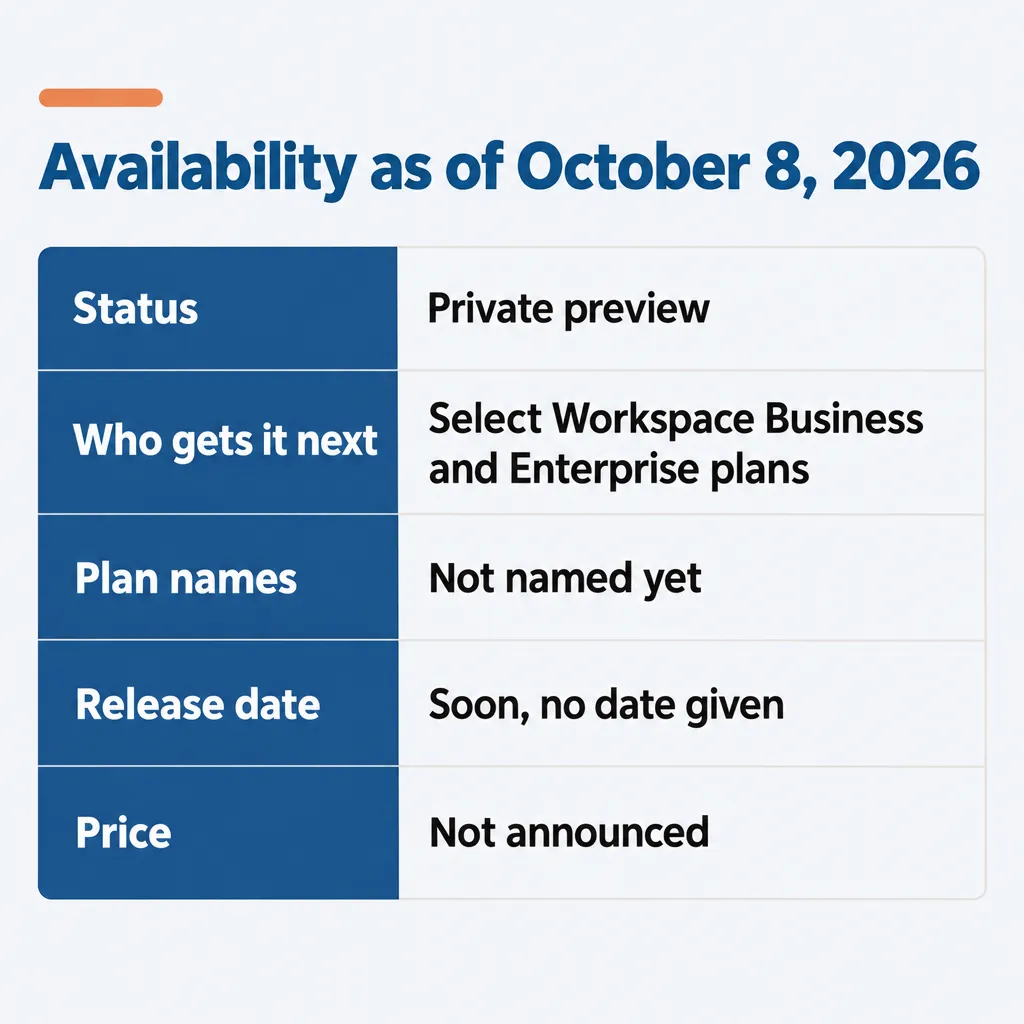
Most businesses can’t use it yet. Gemini agent is in private preview, open only to a limited group of customers. Google hasn’t named the plans that will get it, given a date or announced a price.
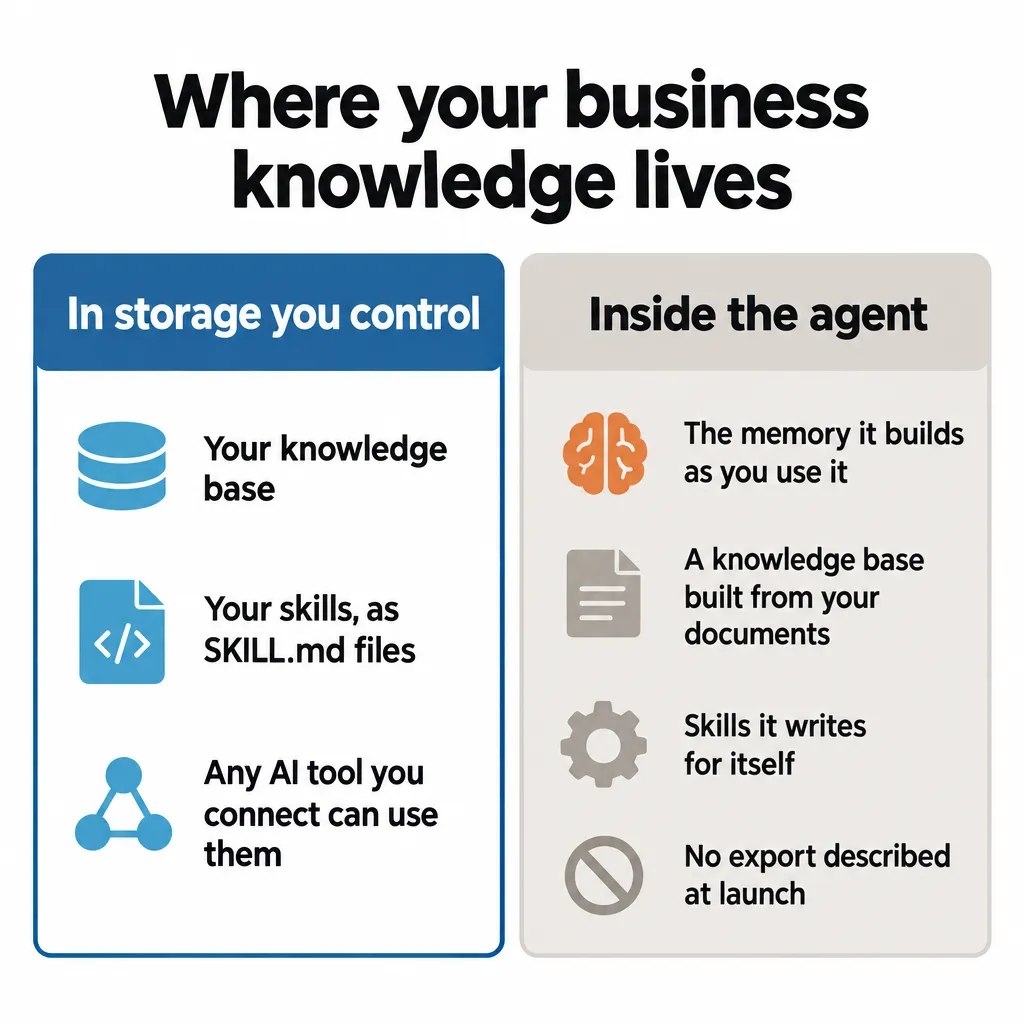
The catch is that what Gemini agent learns about your business stays with Google. As you use it, the agent builds its own memory of your business, like who you work with and how your team handles recurring jobs. Google hasn’t described any way to take that memory to ChatGPT, Claude or any other AI tool.
So keep your company’s knowledge, and your instructions for how your team does its work, in files your business controls, outside any one AI tool. Connect Claude, ChatGPT and Gemini agent to those files, and switching AI tools never means starting over.
At TJ Digital, our agency uses Google Workspace, and it connects and plays very nicely with Anthropic’s Claude and OpenAI’s ChatGPT. I think Gemini agent is going to be really helpful for small and medium-sized businesses like ours.
What is Gemini agent, and which AI models does it use?
Gemini agent is Google’s new AI agent for work, which Google Cloud announced on October 8, 2026. You give it a goal, and it plans the work, uses your company’s tools and comes back with something finished, right inside your inbox or your documents.
The name is a little confusing, because Gemini is now the name of Google’s AI models, its app and this agent. An AI agent and the model it runs on are separate pieces: the agent plans and carries out the work, and the model is the AI that does the thinking for it. That means Gemini agent can use models other than Gemini.
Today, Google says, the agent uses its own Gemini models and Anthropic’s Claude models. The agent picks whichever one fits each job. Google plans to add models from other companies later.
Claude may not be there when your plan first gets the agent, though. Google’s product page says the option to use other companies’ models is in early access, which means it isn’t open to all customers yet.
Gemini agent is also a different product from Gemini Spark, Google’s consumer agent inside the Gemini app.
What can Gemini agent do, and where does it work?
Gemini agent works inside the apps your team already uses. Google says you can use it:
- In Gmail, Drive, Docs, Slides, Sheets, Chat and Calendar, right inside the email thread or document you’re working in. 9to5Google reports that in most of these apps, you call it up by typing @Gemini.
- In Microsoft 365 and Slack, so your team can message it where they already talk.
- On the web. The mobile and desktop apps are listed as early access for now.
It keeps one memory across all of those places. Once it has learned something about your business in Gmail, you don’t have to explain it again in Slack.
It also runs in Google’s cloud, so a job that takes hours or days can keep going after you close your laptop. Google lists this kind of long background task as early access for now.
We’ve had Gemini inside Workspace apps for a while now. Even if you already pay for ChatGPT or Claude, what makes Gemini agent worth adding is that a single agent does the work inside all of these apps and connects to the rest of your systems and data.
What can Gemini agent connect to?
Gemini agent connects to the business software you already use. For small businesses, Google lists Asana, Box, Docusign, Dropbox, GitHub, Notion, Salesforce, Shopify, Slack and Wix, among others.
It can also connect to systems your business runs itself, like an internal database or your own collection of company documents. Gemini agent connects to those systems through MCP, short for Model Context Protocol, an open standard that gives AI tools a common way to connect to the places your data lives.
An MCP server is the connector for one of those places, like your CRM or your company files. The server lets an AI agent read information from that system or make changes in it.
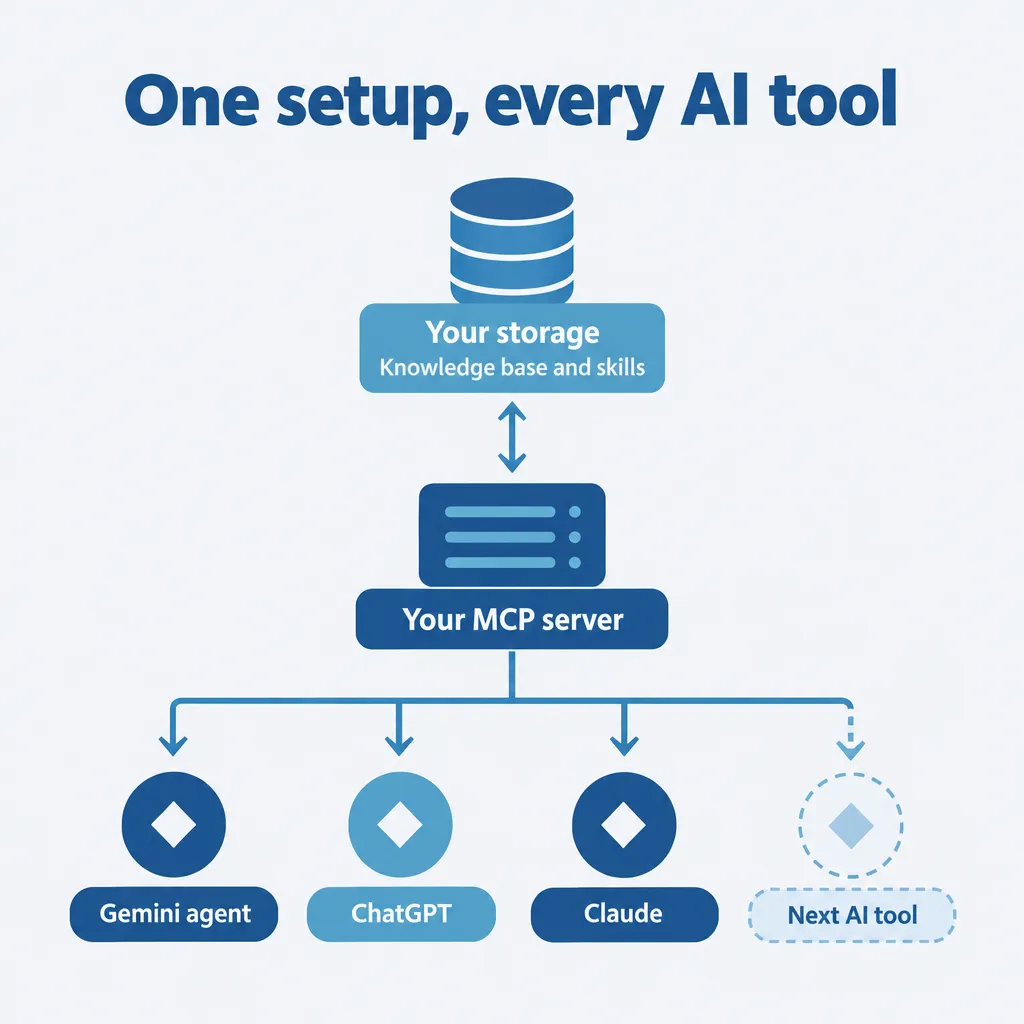
Gemini agent can connect to any MCP server, inside or outside your company network. Claude and ChatGPT support MCP too, so one MCP server can connect to all three.
Can I get Gemini agent now?
Most businesses can’t use Gemini agent yet. As of October 8, 2026:
- Status: private preview. Google says the customers who have it so far include small businesses.
- Who gets it next: Workspace customers on select Business and Enterprise plans, according to 9to5Google. Google hasn’t named the plans.
- When: soon, Google says, with no date.
Once Google names the plans, compare them with the plan listed in your Google Admin console, or ask your Google rep or reseller.
In the meantime, if your team prefers Claude to the Gemini already built into Workspace, you can use Claude inside your Google files today. Anthropic released Claude for Google Workspace in public beta on October 6, 2026, which adds Claude to Docs, Sheets and Slides on any paid Claude plan.
How much does Gemini agent cost?
Google hasn’t announced a price for Gemini agent. Today, Google sells Gemini for work two ways:
- Google Workspace, which includes Gemini in Gmail, Docs and the other apps, starting at $14 per user per month.
- Gemini Enterprise, Google’s separate AI app for businesses, starting at $21 per user per month for its Business edition.
9to5Google reports that Gemini agent will be available inside both products. Google hasn’t said whether it will come included with either plan or cost extra.
Will Claude cost more through Gemini agent?
Nobody knows yet whether using Claude through Gemini agent will cost more than a Claude subscription, because Google hasn’t said how it will bill Claude use.
How it’s billed matters, because paying for Claude by usage can cost far more than a subscription. A Claude Pro subscription is a flat $20 a month, with usage limits.
Usage pricing charges for every bit of text Claude reads and writes. For someone who uses Claude heavily every day, that adds up to many times the subscription price.
When Google sells Claude to developers through Google Cloud, it charges usage pricing at Anthropic’s own rates. If Gemini agent bills Claude the same way, heavy use could get expensive. So hopefully Google cut a deal with Anthropic that keeps your bill lower.
What’s the catch with Gemini agent?
The catch with Gemini agent is lock-in: the more your business depends on what the agent has learned, the harder it gets to switch to another AI tool. Lock-in comes down to three things an AI agent relies on:
- Knowledge base: the information about your company that the AI works from, like your services, policies and past projects.
- Skills: saved instructions for how a specific job gets done, like the steps your team follows to write a proposal.
- Memory: what the AI learns about you, your team and your work as it goes.
Google, just like Anthropic and OpenAI, wants all three stored on its platform, where its own agent uses them. That’s fine as long as the data belongs to you and other AI tools can reach it.
What these platforms really want is for you to depend on knowledge, skills or memory that exist only inside their platform. At that point you’re locked in, and it’s very hard to migrate.
With Gemini agent, the lock-in comes from what the agent builds for itself as you use it. Google calls all of it the agent’s memory, and that memory includes a knowledge base and skills the agent creates itself.
The agent builds its knowledge base as it reads your documents and talks to your team. It writes its own skills as it works. Nothing Google published at launch describes a way to export any of that.
Your files in Google Drive stay usable by other AI tools. ChatGPT can connect to Google Drive, and Claude now works inside Docs, Sheets and Slides.
Google does promise that what you type into the agent and what it produces belong to you. Owning your data and being able to take what the agent has learned to another tool are two different things, though. The promise covers ownership, and nothing in it lets you move the skills the agent wrote for your team into Claude or ChatGPT.
I wrote more about AI memory and vendor lock-in if you want to go deeper.
How do I use Gemini agent without getting locked in?
To use Gemini agent without getting locked in, keep the knowledge base and skills your business depends on in storage you control. Then connect Gemini agent, ChatGPT and Claude to that same storage.
Gemini agent will still build its own memory inside Google. But the knowledge and skills your business relies on will also live in your own storage, where any other AI tool you connect can work from them. Setting this up takes four steps:
- Keep your knowledge base and skills in storage you control. You could use a GitHub repository (an online folder that keeps a history of every change) or Amazon S3 (Amazon’s cloud file storage). If your company information is scattered today, start with how to structure your company data for AI.
- Write your skills as SKILL.md files. SKILL.md is an open, plain-text format for skills that Anthropic developed and released as a standard. Claude, ChatGPT, and Google’s Gemini app and Workspace all support it. Google also says you can copy skills you made on other platforms into Gemini.
- Set up your own MCP server for that storage. An internal MCP server is the connector that lets every AI tool you use read your knowledge base and use your skills. You’ll probably want someone technical to set it up. Hand them Google’s published requirements for connecting a custom MCP server to Gemini Enterprise’s Business edition: a public HTTPS address, the StreamableHTTP connection method and OAuth sign-in.
- Connect Gemini agent, ChatGPT and Claude to that same server. Each one then works from the same knowledge and the same skills.
Then you’re never locked in, and you have all the best agents working for you whenever you need them, where you need them. When a better agent or model comes along, you connect it to the same server.
If your team uses Gems in Gemini, Google is replacing them with skills. In business accounts, Gems stop working no sooner than March 1, 2027, so now is a good time to rewrite them as SKILL.md files in your own storage.
Is it safe to connect my business data to Gemini agent?
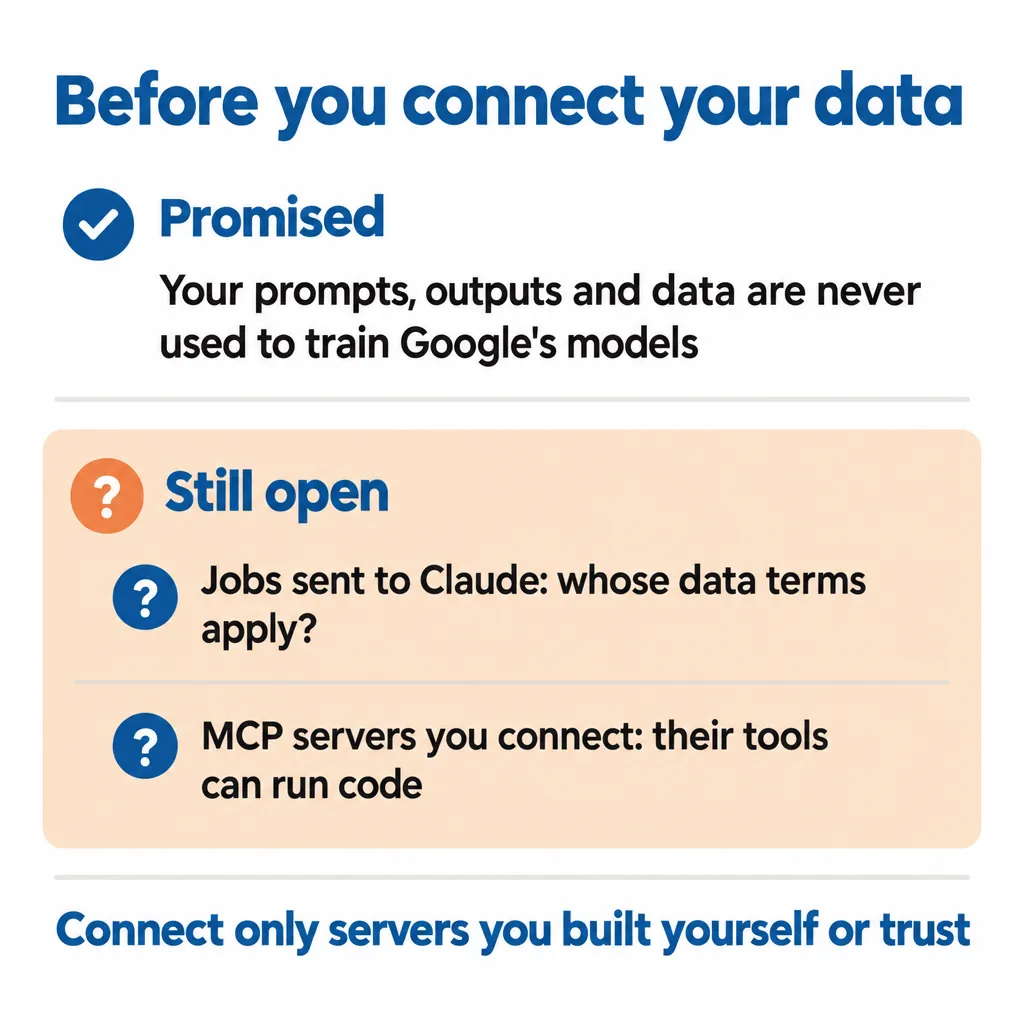
Google has put safeguards around Gemini agent, and it says your prompts, outputs and data are never used to train its models. Two questions are still open, though:
- Jobs that run on Claude. Google’s no-training promise covers its own models. When the agent sends a job to Claude, Google hasn’t said whose terms decide what happens to that data, Google’s or Anthropic’s.
- The MCP servers you connect. Each MCP server gives the agent tools, which are actions like looking up a customer or editing a record. The MCP standard warns that those tools can run code, so a badly built or malicious server could do things with your data you never asked for. Connect only servers you built yourself or trust.
Why is Google letting you use Claude in Gemini agent?
I think letting you use Claude in Gemini agent is Google admitting defeat in the race to build the best AI model. In both of its announcement posts, Google said the reason for adding other companies’ models is that “the leading model changes every few months.”
And yes, the top model does keep changing. What I think was left unsaid is that the leading model is just never Gemini. For much of 2026, Anthropic and OpenAI have been at the forefront of AI, as CNBC noted on October 2.
Google’s newest model, Gemini 4 Argon, might change that, but so far it’s only rolling out to selected users.
Adding Claude is still a big win for Google, because your AI work runs through Google’s agent even when Claude does the thinking. To me, this is Google saying: we know you don’t want to use our model, but you’re already in Google Workspace, so you might as well use our agent. And I think you should, just not exclusively.
If you have questions about any of this, reach out through our contact page or email me at tj@tjrobertson.com.