AI content watermarks are invisible statistical patterns woven into text as an AI model generates it, and they are not going to hurt your search performance. Anthropic started adding them to Claude’s output on August 2, 2026, and Google has been marking Gemini text with SynthID since 2024. At TJ Digital we produce AI-assisted content across roughly 40 to 50 active client campaigns, and this change hasn’t altered a single thing about how we write or publish.
This is very real and it will be hard to strip out of any given piece of text. It will also matter far less than the reaction to it suggests.
Table of Contents
ToggleWhat Is an AI Content Watermark?
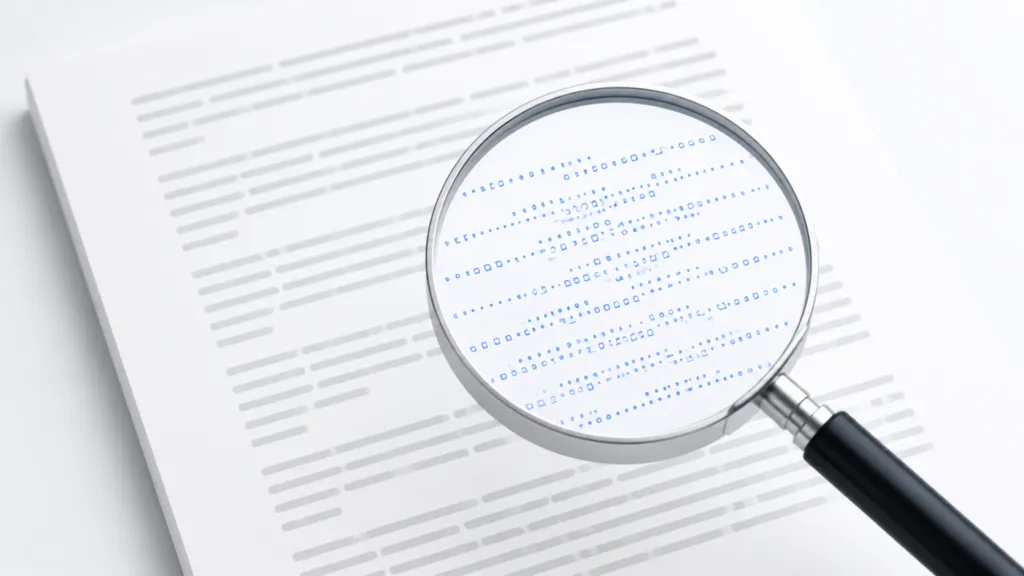
An AI content watermark is a statistical bias in word choice that a model applies while it writes. The model splits its vocabulary into two groups using a secret key, then slightly favors words from one group beyond what probability alone would predict. Across a few hundred words, those tiny nudges add up into a pattern that only someone holding the key can detect.
Nothing about the text looks strange to a reader. The wording stays natural and the meaning doesn’t change. The signal lives in the choices the model made, which is why it survives a copy and paste into Google Docs or anywhere else.
That last part is what surprises people. The instinct is that you could launder the output by moving it between applications, and you can’t.
@tjrobertson52 Will Google penalize AI watermarked content? Every AI lab except one just agreed to watermark. Why it won’t matter. #AISEO #AIWatermark #SEO
♬ original sound – TJ Robertson – TJ Robertson
Why Are AI Companies Adding These Marks Now?
The EU forced it. Article 50 of the EU AI Act requires providers of generative AI to mark their output in a machine-readable format so it can be identified as AI-generated, and those obligations came into force on August 2, 2026. The European Commission reports that roughly 190 organizations signed the voluntary code of practice that accompanies the rule.
Nearly every major lab is on board. Anthropic, OpenAI, Google, Microsoft, Meta, and Mistral have all committed to provenance signals of some kind, and Anthropic’s watermark announcement confirmed that the mark applies worldwide, including for users outside the EU.
You can probably guess the one holdout. Elon Musk’s xAI declined to sign the transparency commitments covering Grok.
Which AI Models Mark Their Text Output?
Here is where the major model makers stand as of August 2026:
| Model maker | Text watermarking status |
| Anthropic (Claude) | Invisible watermark on all text from models launched on or after August 2, 2026 |
| Google (Gemini) | SynthID text watermarking, in use since 2024 |
| OpenAI (ChatGPT) | Committed to expanding provenance signals to text, no text watermark shipped |
| Meta, Microsoft, Mistral | Signed the EU transparency code, text implementation varies by product |
| xAI (Grok) | No text watermarking commitment |
Anthropic has been clear that the mark applies whenever Claude touches the text. Ask it to proofread a paragraph you wrote yourself and the output can carry the same signal as a paragraph it drafted from scratch. That detail matters more than anything else here, and I’ll come back to it.
Can the Watermark Be Removed?
Moving Claude’s output into a Word document accomplishes nothing. The mark lives in the word choices themselves, so it travels wherever the text goes, including into your CMS.
Heavy editing is a different story. Anthropic says a substantial rewrite, a paraphrase, or a translation can knock the signal out, and very short passages may never carry enough of it to detect in the first place.
So pulling the mark out of one specific article takes real effort. Sidestepping the entire system takes about ten seconds.
Does Google Penalize AI-Generated Content?
No. Google has said so repeatedly and in writing. Google’s guidance on AI content states that its ranking systems reward original, high-quality, people-first content however that content was produced.
What does get penalized is scaled abuse. Mass-produced thin pages built to game rankings get demoted, and I’ve written about where the scaled content abuse line actually sits. The trigger is quality and intent.
Google also has no reason to start reading watermarks, which is the part most people miss.
Why AI Detection Will Not Work in Practice
Picture Google deciding tomorrow to demote watermarked content. The immediate result would be a ranking boost for anything drafted in Grok or one of the open-weight Chinese models, because none of that output carries a mark. Google would be handing free rankings to the labs that refused to cooperate.
Every institution that tries this hits the same wall. Universities, publishers, and hiring managers who lean on watermark detection get fooled by the first person who switches models.
Then there’s the editing problem. The mark shows up when AI wrote the content and when AI merely cleaned it up, so a human-written article that went through Claude for a grammar pass can look identical to a fully generated one.
False positives and false negatives will both run too high for anyone to build policy on. My guess is the model makers understand this perfectly well. Signing the EU’s code costs them almost nothing when the result will be close to meaningless.
What Should You Actually Do About This?
For your content workflow, nothing.
I want to be clear that I’d be fine with reliable watermarking, and it might even be a good thing. Trying to trick someone into believing a human wrote your content is unethical, and that’s the one place I’d draw a hard line.
For everything else, people don’t care. When you publish information about your product or service, your customer wants an accurate answer to the question that brought them there. Whether AI helped write it barely registers, and as more of the good content online gets written this way, it will register even less.
What still matters is the input. A blog post generated from a one-line prompt reads like nothing and earns nothing. A post built from a transcript of you explaining something you actually know reads like you, which is the entire point of a content machine.
Should You Worry About Watermarked Content?
Will an AI watermark hurt my Google rankings?
No. Google evaluates content on quality and helpfulness. How the content was produced carries no ranking signal of its own, and watermark detection carries none either.
Can I remove the watermark from AI-generated text?
Copying and pasting won’t do it. A heavy rewrite, a paraphrase, or a translation can break the signal, and so can drafting in a model that doesn’t watermark at all.
Does a detected watermark mean AI wrote the whole article?
No. The mark appears any time a supported model processed the text, including a light edit or a proofread of writing you did yourself.
Do I need to disclose that I used AI to write my content?
Legally, the marking obligation sits with the model makers who signed the EU code. Ethically, the standard I hold is that you never represent AI-assisted work as human-written to someone who is relying on that distinction.
How Should You Handle AI Content Going Forward?
AI-generated content will keep getting better and more common, and the watermark conversation will fade long before that trend does. What separates content that earns leads from content nobody reads has almost nothing to do with which tool produced the first draft.
Contact TJ Digital for a free digital marketing audit. I’ll review your site personally and show you exactly where your content is falling short.